Shopping Cart



Mastering the Elements: Setting Tide Graphs and Moon Phases on Your Tool Watch
By :
F. Nagy -
Categories :
Watch Care & Technical Guides
Table of contents
keyboard_arrow_down
- Key Takeaways
- The Horological Science Behind Tide and Moon Complications
- Understanding the 2026 Citizen Promaster Wave Tracker
- Step-by-Step: Calibrating the Citizen Promaster Tide Graph
- The Casio G-SHOCK G-LIDE: A Surfer’s Ultimate Instrument
- How to Set the Tide and Moon Data on the G-LIDE
- Manual Lunitidal Interval Adjustment
- Fine-Tuning the High Tide Time
- The Importance of the Lunitidal Interval in Coastal Navigation
- Maintaining Accuracy in Extreme Marine Environments
- Conclusion: Equip Yourself for the Next Swell at WatchExclusive
- References
Key Takeaways
- Lunitidal Interval Calibration: Accurate tide graphs require precise input of the local lunitidal interval, which dictates the delay between the moon's transit and the actual high tide.
- Synodic Month Tracking: Moon phase complications rely on the 29.53-day lunar cycle, requiring exact moon age data for flawless visual representation on your dial.
- Bluetooth vs. Manual Syncing: Modern tool watches like the Casio G-LIDE utilise smartphone connectivity for instant global tide data, while traditional modules demand manual coordinate and interval input.
- Environmental Durability: Advanced marine watches combine these astronomical complications with extreme shock and water resistance, essential for professional coastal navigation.
The relationship between timekeeping and the cosmos is nowhere more evident than in the tracking of tides and moon phases. For centuries, mariners, fishermen, and coastal explorers have relied on the predictable, yet complex, gravitational dance between the Earth, Moon, and Sun. Historically, understanding this celestial mechanics required bulky marine chronometers and extensive printed tide tables, which were cumbersome and prone to human error during high-stress navigation. Today, this profound astronomical data is distilled into highly capable, wrist-worn instruments. Whether you are navigating treacherous coastal waters, planning a deep-sea fishing expedition, or timing the perfect swell at a remote surf break, a properly calibrated tide and moon phase watch is an indispensable tool.
However, the utility of these advanced complications is entirely dependent on their accuracy. A tide graph is not a static, decorative feature; it is a dynamic, localised calculation that requires precise data input to function correctly. The introduction of modern digital and hybrid modules has revolutionised how we interact with this data, moving from complex mechanical gear trains to sophisticated microprocessors, proprietary algorithms, and seamless Bluetooth connectivity. Yet, despite these technological leaps, the fundamental principles of the lunitidal interval and the synodic month remain unchanged and must be understood by the wearer.
In this comprehensive technical guide, we will explore the deep horological science behind these features and provide detailed, step-by-step instructions on setting and calibrating two of the most formidable marine instruments available today: the highly anticipated 2026 Citizen Promaster Wave Tracker and the legendary Casio G-SHOCK G-LIDE series. By mastering these specific settings, you transform your timepiece from a simple time-teller into a vital navigational asset, ensuring you are always in sync with the rhythm of the ocean.
The Horological Science Behind Tide and Moon Complications
To truly appreciate the engineering within a modern marine watch, one must first understand the astronomical phenomena it attempts to track. The moon phase complication is one of the oldest and most revered in horology, originally designed not for aesthetic appeal, but to help sailors anticipate the dramatic shifts of spring and neap tides. The lunar cycle, scientifically known as the synodic month, lasts approximately 29.53 days. Traditional mechanical watches achieved this tracking using a 59-tooth gear driven by a single finger attached to the hour wheel, advancing once per day to display two full lunar cycles per complete rotation.
Modern digital instruments, however, calculate the moon age algorithmically rather than mechanically. By inputting the exact date, time, and your current longitude, the watch's internal microprocessor determines the moon's precise position in its 29.53-day cycle. This data is absolutely crucial because the gravitational pull of the moon is the primary driver of the Earth's tides. When the sun, moon, and Earth align during a full moon or new moon, their combined gravitational force creates the highest high tides and lowest low tides, known as spring tides. Conversely, when the sun and moon are at right angles to each other, we experience neap tides, which have the smallest variation between high and low water.
The tide graph complication builds directly upon this lunar data by incorporating a critical metric known as the lunitidal interval. As noted by horological experts in Hodinkee, the integration of such specific astronomical data into a wearable instrument represents a profound connection between the wearer and the natural world. The lunitidal interval is the specific time delay between the moon passing directly overhead (lunar transit) and the occurrence of the next high tide. Because water has immense mass and the Earth's coastlines are incredibly complex, the tidal bulge does not perfectly track the moon's movement. This delay varies drastically depending on your exact geographical location, making localised calibration the single most critical step in setting a tide watch.
Understanding the 2026 Citizen Promaster Wave Tracker
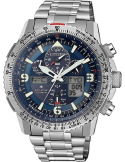
Citizen has long been a pioneer in developing purpose-built tool watches for extreme environments, consistently pushing the boundaries of what a quartz watch can achieve. The Citizen Promaster collection is globally renowned for its robust construction and innovative use of Eco-Drive technology, ensuring that critical navigational tools are never compromised by a sudden battery failure. The 2026 Citizen Promaster Wave Tracker represents the pinnacle of this design philosophy, integrating advanced tide prediction algorithms with precise moon phase displays tailored specifically for professional mariners and serious ocean enthusiasts.
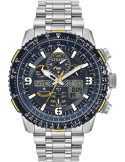
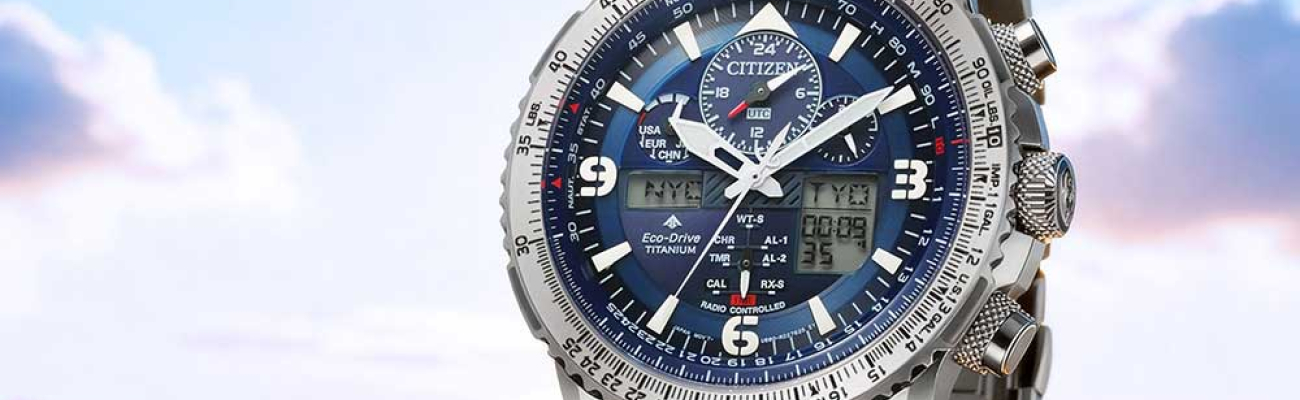
While the Wave Tracker focuses heavily on the marine environment, it shares its underlying technological DNA with the brand's highly sophisticated aviation models. For instance, the Citizen Promaster Sky Radio Controlled JY8100-80L showcases the brand's absolute mastery over complex, multi-layered data displays and atomic timekeeping. The immense precision required to sync with global radio towers in the Sky series is the exact same engineering rigour applied to the tidal algorithms of their marine counterparts. Both lines demand a microprocessor capable of handling vast amounts of data without sacrificing battery life or legibility.
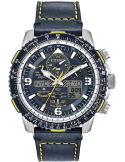
The Wave Tracker utilises a proprietary module that calculates tide heights based on a pre-programmed database of global coastal regions, supplemented by extensive manual input capabilities. This hybrid approach ensures that whether you are sailing familiar, well-charted waters or exploring remote, uncharted coastlines, your tidal data remains highly accurate. To explore the full range of these exceptional instruments and see how this technology scales across different disciplines, you can browse our complete Citizen Promaster collection, which includes other marvels of engineering like the striking Citizen Promaster Sky Blue Angels JY8078-52L.
Step-by-Step: Calibrating the Citizen Promaster Tide Graph
Setting the tide and moon data on a sophisticated Citizen module requires a methodical, step-by-step approach. Unlike simple quartz watches that only require the time of day, these advanced instruments demand precise geographical coordinates and time data to function correctly. The very first step is always ensuring that your home time, date, and year are set with absolute accuracy. The watch's internal perpetual calendar forms the baseline for all astronomical calculations; if the year is off, the leap year cycle will be incorrect, throwing off the moon age calculation entirely.
Once the foundational time is set, you must input your local longitude. The watch uses this specific coordinate to determine the exact timing of the lunar transit for your specific meridian. After setting the longitude, the next and most crucial step is establishing the lunitidal interval. You can find this specific time value—usually expressed in hours and minutes—on local maritime charts, harbour master office boards, or through official hydrographic office websites. It is imperative to use the interval for your exact beach or harbour, not just a general regional average.
To input this data, enter the watch's tide setting mode, which is typically accessed by holding the upper-left pusher until the digital display or indicator hand flashes. Scroll through the settings to input the lunitidal interval hours, followed by the minutes. Once confirmed, the watch's microprocessor will instantly align the visual tide graph with your local coastal conditions. For those who demand absolute precision, verifying the watch's calculated high tide against a local printed tide table for the first few days is a highly recommended best practice. If the graph appears inverted (showing low tide when it should be high), double-check your longitude setting, as an incorrect hemisphere input will reverse the data.
The Casio G-SHOCK G-LIDE: A Surfer’s Ultimate Instrument
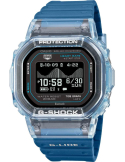
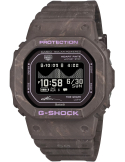
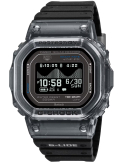
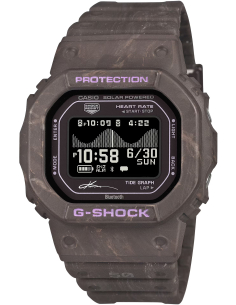
While Citizen approaches marine timekeeping from a traditional, highly technical navigational standpoint, Casio has engineered the G-LIDE series specifically for the dynamic, high-impact, and fast-paced world of surfing. The Casio G-SHOCK GBX-H5600 series is a masterclass in combining rugged, indestructible durability with cutting-edge smart technology. These watches are meticulously designed to withstand the crushing force of heavy surf, abrasive sand, and extreme UV exposure, all while providing real-time data that can make or break a surf session.
The standard Casio G-SHOCK GBX-H5600-2ER Watch and its stealthy, tactical counterpart, the Casio G-SHOCK GBX-H5600-1ER Watch, feature a revolutionary high-definition Memory in Pixel (MIP) LCD screen. This advanced display technology offers unparalleled contrast and pixel density, making the tide graph, moon phase, and time easily readable even under the glaring, direct midday sun. The watch displays not only the current tide level but also the specific high and low tide times, sunrise and sunset times, and the exact moon age, giving surfers a complete picture of the day's conditions at a single glance.
For enthusiasts seeking a piece of modern surfing history, the Casio G-SHOCK G-LIDE Kanoa Igarashi Signature GBX-H5600KI-5ER Watch offers a unique aesthetic inspired by the professional surfer and Olympic medallist's aggressive, precise style. Beyond its striking design and signature case back, it houses the exact same advanced module, ensuring that you have access to professional-grade tidal data. You can discover more models built for extreme conditions and demanding lifestyles in our dedicated G-Shock collection.
How to Set the Tide and Moon Data on the G-LIDE
The true brilliance of the modern G-LIDE series lies in its seamless connectivity and user-friendly interface. Gone are the days of manually calculating lunitidal intervals for every new beach you visit on a surf trip. The GBX-H5600 series utilises low-energy Bluetooth technology to pair seamlessly with the CASIO WATCHES smartphone application, streamlining the calibration process entirely and ensuring absolute accuracy.
To set your tide data via the app, simply ensure your watch is paired with your smartphone via Bluetooth. Open the application and navigate to the dedicated "Tide Point" setting. The app contains a massive, constantly updated database of approximately 3,300 major surf points worldwide. By selecting your desired location from the interactive map or searchable list, the app automatically transmits the precise coordinates, lunitidal interval, and local daylight saving time rules directly to the watch. Within seconds, your G-LIDE is perfectly calibrated for that specific break, displaying accurate tide graphs and moon phases without requiring a single manual calculation.
Manual Lunitidal Interval Adjustment
However, true tool watches must be able to function entirely independently of smartphones, especially in remote locations without cellular service. If you are at a secret break not listed in the app's database, you can manually calibrate the G-LIDE. Enter the timekeeping mode and hold the 'Adjust' button to access the settings menu. Navigate to the tide settings and manually input the known high tide time for your current location, which you can source from a local printed tide chart. The watch's internal algorithm will then reverse-engineer the lunitidal interval based on this high tide time and your current longitude, ensuring the graph remains accurate for subsequent lunar cycles.
Fine-Tuning the High Tide Time
Even with app synchronisation, local weather conditions such as extreme low pressure systems or strong onshore winds can temporarily alter the actual timing of the tide, causing it to arrive slightly earlier or later than astronomically predicted. The G-LIDE allows for micro-adjustments. By entering the manual tide setting mode, you can shift the high tide time forward or backward in minute increments. This fine-tuning capability ensures that your watch reflects the reality of the water in front of you, rather than just the theoretical astronomical model.
The Importance of the Lunitidal Interval in Coastal Navigation
Understanding exactly why these watches require such specific calibration is key to utilising them effectively and safely. The gravitational pull of the moon creates a massive tidal bulge in the Earth's oceans. If the Earth were a perfect, smooth sphere covered entirely by deep water, high tide would occur exactly when the moon was at its zenith. However, massive landmasses, varying ocean depths, and the Coriolis effect caused by the Earth's rotation create significant friction and obstruction to this movement of water.
This immense friction means the tidal bulge always lags behind the moon's actual position in the sky. According to the National Oceanic and Atmospheric Administration (NOAA), this delay—the lunitidal interval—can range from a few minutes to several hours depending on the specific coastal topography. For example, the interval on the open, deep-water coast of California will differ vastly from the interval deep within a complex, shallow estuary like the Chesapeake Bay, even if they share a very similar longitude. Furthermore, phenomena known as amphidromic points exist in the oceans where there is virtually no tidal movement at all, further complicating the global tidal map.
For a surfer, knowing the exact timing of the tide is critical, as certain reef breaks or sandbars only function optimally at specific tide heights; arriving an hour late can mean missing the swell entirely. For a mariner, navigating a shallow channel, crossing a coastal bar, or entering a tidal harbour requires absolute certainty about water depth. Relying on a watch's default factory settings without calibrating the lunitidal interval can result in tide graphs that are off by several hours, rendering the tool completely useless and potentially dangerous in serious navigational scenarios.
Maintaining Accuracy in Extreme Marine Environments
A highly accurate tide and moon phase module is only valuable if the watch housing it can survive the brutal environment it was built for. Both Citizen and Casio excel in creating specialised cases that protect their delicate microprocessors from the harsh realities of the ocean. Corrosive saltwater, extreme temperature fluctuations, and violent physical impacts are constant, daily threats to marine instruments.
The G-LIDE series utilises Casio's legendary hollow-core case structure and shock-absorbing urethane bezels to dissipate impacts that would instantly shatter the escapement of a traditional mechanical watch. Furthermore, the forged stainless steel case backs and specialised, multi-lipped rubber gaskets ensure a robust water resistance of 200 metres. This construction guarantees that the Memory in Pixel (MIP) display continues to deliver crisp tidal data even after a heavy wipeout where dynamic water pressure far exceeds static depth ratings.
Similarly, Citizen's Promaster line employs proprietary Super Titanium—treated with their Duratect surface hardening technology—and advanced sealing techniques to protect its Eco-Drive movements from both water ingress and magnetic fields. The integration of solar charging in both the Promaster and G-LIDE models is a critical safety feature for marine watches. Frequent use of Bluetooth syncing, daily alarms, and auto-illumination backlights can drain standard batteries incredibly quickly. By harnessing natural and artificial light energy, these watches ensure that your vital tide and moon phase data is always available, eliminating the risk of a dead battery during a critical coastal passage. The Citizen Promaster Sky Blue Angels JY8078-01L Watch perfectly exemplifies this seamless blend of high-tech functionality and relentless, self-sustaining power management.
Conclusion: Equip Yourself for the Next Swell at WatchExclusive
Mastering the tide graph and moon phase complications on your tool watch fundamentally elevates your connection to the natural world and the rhythms of the ocean. Whether you are utilising the advanced, self-contained algorithms of the 2026 Citizen Promaster Wave Tracker or leveraging the seamless Bluetooth connectivity of the Casio G-SHOCK G-LIDE, proper calibration is the absolute key to unlocking their full potential. By understanding the mechanics of the synodic month and accurately setting your local lunitidal interval, you transform these timepieces from mere accessories into indispensable instruments for coastal exploration and wave hunting.
At WatchExclusive, we deeply understand the uncompromising demands of the ocean and the critical importance of reliable, professional-grade gear. We meticulously curate a selection of the finest marine and aviation tool watches designed to perform flawlessly under pressure. If you are ready to upgrade your coastal navigation tools and take your timing to the next level, we invite you to explore the Casio G-SHOCK GBX-H5600-2ER Watch and the rest of our high-performance collections. Equip yourself with unmatched precision, embrace the elements with confidence, and discover your next ultimate timepiece at WatchExclusive today.
References
- Forster, Jack. "The Enduring Appeal of the Moon Phase Complication." Hodinkee.
- National Oceanic and Atmospheric Administration (NOAA). "Tides and Water Levels: The Lunitidal Interval." NOAA Ocean Service.
- Casio Computer Co., Ltd. "G-SHOCK GBX-H5600 Module Operation Guide." Casio Official Archives.
- Citizen Watch Co., Ltd. "Promaster Marine and Sky Series Technical Specifications." Citizen Global.
Share this content