Shopping Cart



Tritium vs. Super-LumiNova: Why Elite Forces Choose Luminox Gas Tubes
By :
F. Nagy -
Categories :
Interesting Watch Facts
Table of contents
keyboard_arrow_down
- Key Takeaways
- The Science of Watch Illumination: Photoluminescence vs. Radioluminescence
- Super-LumiNova: The Industry Standard for Lume Bloom
- Tritium Gas Tubes (GTLS): 25 Years of Uninterrupted Glow
- Why Elite Forces and Navy SEALs Choose Tritium
- Luminox Light Technology (LLT) and the mb-microtec Connection
- Spotlight on 2026: The Luminox Navy SEAL 3550 Series
- Conservation Meets Tactical Precision: The Luminox FORCE BLUE
- Conclusion: Discover Your Next Tactical Timepiece at WatchExclusive
- References
Key Takeaways
- Tritium gas tubes (GTLS): Provide a constant, self-powered glow for up to 25 years without ever needing an external light charge.
- Super-LumiNova: Offers an intense initial "lume bloom" but fades over several hours, requiring UV or ambient light to recharge.
- Luminox Light Technology (LLT): The proprietary illumination system preferred by the U.S. Navy SEALs for its absolute reliability in prolonged, pitch-black tactical operations.
- 2026 Tactical Releases: The latest Luminox Navy SEAL 3550 Series and FORCE BLUE editions showcase the pinnacle of modern tool watch engineering, combining lightweight Carbonox cases with uncompromising nighttime legibility.
When evaluating a purpose-built tool watch, horological enthusiasts and military professionals alike scrutinise one critical specification above almost all others: low-light legibility. The ability to read the time at a glance in absolute darkness is not merely a convenience; in tactical and subaquatic environments, it is a matter of survival. For decades, the watch industry has relied on various luminous materials to achieve this, evolving from the highly radioactive and hazardous radium paints of the early 20th century to the safe, highly engineered technologies we use today.
At the forefront of this evolution are two dominant but fundamentally different illumination technologies: photoluminescent paint, universally known by the brand name Super-LumiNova, and radioluminescent micro gas tubes, commonly referred to as Tritium gas tubes (GTLS). While the broader luxury watch market has overwhelmingly adopted photoluminescent paints for their intense initial brightness and ease of application, elite military units, first responders, and professional divers often demand a completely different solution.
The debate between these two technologies is a cornerstone of modern tool watch discourse. It pits the impressive, albeit temporary, glow of traditional painted indices against the relentless, self-powered, 25-year illumination of tritium. Understanding the physics, manufacturing complexities, and real-world applications of these materials reveals exactly why brands like Luminox have built their entire legacy on the latter, engineering timepieces that thrive in the most unforgiving conditions on Earth.
The Science of Watch Illumination: Photoluminescence vs. Radioluminescence
To truly appreciate the engineering inside a modern tactical timepiece, one must understand the physics that makes a watch dial glow. The watch industry primarily relies on two distinct scientific principles: photoluminescence and radioluminescence. While both achieve the end goal of emitting visible light in the dark, their methods of generating that light are entirely different, leading to vastly different real-world performance characteristics.
Photoluminescence is a process where a material absorbs photons (light energy) from an external source—such as the sun or an LED torch—and then slowly re-emits those photons over time. This is the principle behind strontium aluminate, the chemical compound that forms the basis of most modern luminous watch paints. It acts like a light battery; it must be charged to function, and once the charge is depleted, the watch goes dark.
Radioluminescence, on the other hand, requires absolutely no external energy source. Instead, it relies on the natural radioactive decay of a specific isotope to generate light. In modern horology, this isotope is hydrogen-3, commonly known as tritium. As the tritium undergoes beta decay, it emits low-energy electrons. When these electrons strike a phosphor-coated surface, they excite the phosphor, causing it to emit a continuous, steady glow. This chemical reaction is entirely self-sustaining, meaning a radioluminescent watch will glow just as brightly in a pitch-black vault as it would in broad daylight.
Super-LumiNova: The Industry Standard for Lume Bloom
If you own a modern mechanical dive watch or a luxury sports watch, it almost certainly utilises Super-LumiNova. Developed in the 1990s by the Swiss company RC Tritec, this non-radioactive photoluminescent pigment revolutionised the watch industry by providing a safe, highly effective alternative to the ageing tritium paints of the 1970s and 1980s. Today, it is the undisputed industry standard for dial illumination.
The greatest advantage of this technology is its initial brightness, often referred to in horological circles as the "lume bloom." When freshly charged by a strong UV light source, a heavily applied layer of this pigment can glow with astonishing intensity, sometimes bright enough to cast a visible shadow on a piece of paper. For the average wearer transitioning from a sunny street into a dimly lit room, this intense burst of light is highly legible and visually striking.
However, this technology has a significant tactical limitation: the rapid degradation of light output. According to WatchTime, Super-LumiNova must be charged by exposure to light. Its brightness gradually diminishes in darkness. The strength and duration of the glow depend on how much light energy was absorbed beforehand.
Within the first 60 to 90 minutes of darkness, the light output drops exponentially. For a desk diver, this is rarely an issue. But for a professional operator on a 12-hour night mission, a watch that fades to black is a critical point of failure.
Tritium Gas Tubes (GTLS): 25 Years of Uninterrupted Glow
To solve the problem of fading luminescence, specialised watchmakers turned to Gaseous Tritium Light Sources (GTLS). Unlike the tritium paint of the mid-20th century, which was exposed to the air and degraded relatively quickly, modern GTLS technology seals the radioactive gas safely inside microscopic glass vials. This ensures a consistent, maintenance-free light source that remains functional for decades.
The manufacturing process of these tubes is a marvel of micro-engineering. Borosilicate glass capillaries are drawn to incredibly thin dimensions—sometimes as small as 0.30 millimetres in diameter, roughly the thickness of a few human hairs. The inside of the glass is coated with a luminescent powder, typically zinc sulfide. The tubes are then filled with tritium gas and hermetically sealed using a highly automated laser melting process. The colour of the light emitted (green, blue, orange, or yellow) is determined entirely by the specific chemical makeup of the phosphor coating, not the gas itself.
Because tritium has a half-life of approximately 12.32 years, the gas slowly and predictably decays over time. This means that a watch equipped with these tubes will maintain a highly legible, continuous glow for up to 25 years. There is no need to hold the watch under a lamp, no need to worry if it has been hidden under a tactical jacket sleeve all day, and no sudden drop-off in brightness. It simply works, 24 hours a day, 7 days a week.
Why Elite Forces and Navy SEALs Choose Tritium
The preference for gas tube illumination among elite military units is not based on aesthetics; it is rooted in the harsh realities of combat and tactical operations. When the U.S. Navy SEALs first approached Luminox in the early 1990s to develop a purpose-built dive watch, their primary requirement was absolute reliability in prolonged, zero-light environments. A SEAL conducting a covert nighttime amphibious assault cannot risk compromising their position by shining a torch on their wrist to charge their watch.
Furthermore, the human eye's biological response to darkness plays a crucial role in this preference. When transitioning from a bright environment to total darkness, the human eye takes up to 30 minutes to fully dark-adapt, shifting reliance from the colour-sensitive cones to the light-sensitive rods. An intense burst of photoluminescent light can actually hinder this dark adaptation. Tritium, by contrast, provides a steady, low-level illumination.
As noted by horology experts discussing dark adaptation, while tritium may appear dimmer than freshly charged paint in the first minute of darkness, its true strength is revealed hours later. When traditional lume has faded to an illegible smudge and the operator's eyes are fully adjusted to the dark, the tritium tubes appear brilliantly clear and sharp. This persistent orientation in darkness is exactly why Luminox Light Technology (LLT) remains the gold standard for tactical timekeeping.
Luminox Light Technology (LLT) and the mb-microtec Connection
The story of modern tactical watch illumination is inextricably linked to a Swiss microtechnology company named mb-microtec. Based in Niederwangen, near Bern, this firm is the inventor and undisputed global market leader in the development of self-powered illumination technology, which they market under the brand name trigalight.
A trigalight consists of a glass capillary, the inside of which is coated with a luminescent powder (zinc sulphide) and filled with tritium gas... delivering luminescence for decades without any external energy source.
In 1989, Luminox founder Barry Cohen recognised the immense potential of this technology for the watch industry. He partnered with mb-microtec to integrate these microscopic light sources into rugged, military-grade timepieces. This collaboration birthed Luminox Light Technology (LLT). Integrating these tubes into a watch dial and hands is a complex horological challenge. The tubes must be robust enough to withstand the extreme shocks of military use, yet light enough not to disrupt the delicate torque requirements of the watch's movement.
Today, mb-microtec continues to supply Luminox with these precision-engineered components. Every Luminox watch undergoes rigorous quality control to ensure that the glass capillaries are perfectly seated and hermetically sealed, guaranteeing the 25-year lifespan that operators have come to rely on.
Spotlight on 2026: The Luminox Navy SEAL 3550 Series
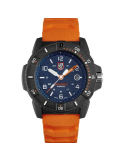
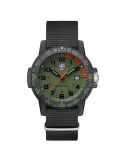
Continuing its decades-long legacy of supplying elite forces, the brand's 2026 release of the Luminox Navy SEAL 3550 Series represents a refined evolution of the ultimate tactical dive watch. This new collection reimagines the iconic silhouette with a slightly slimmer, more ergonomic 44mm Carbonox case. Carbonox is a proprietary carbon compound that is six times lighter than steel, hypoallergenic, and extremely durable, making it ideal for high-impact field use.
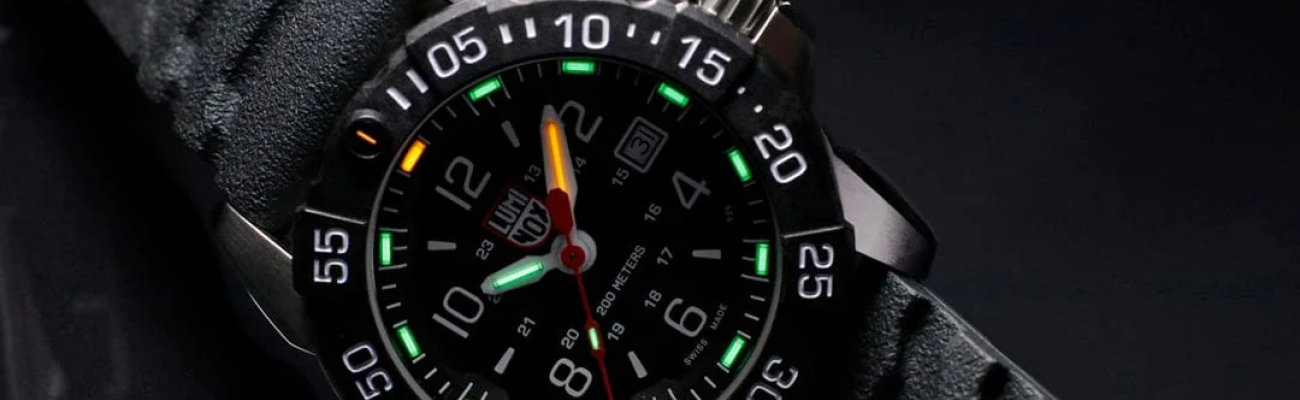
The 3550 Series is powered by a highly reliable Ronda 515 Swiss quartz movement and boasts a 200-metre water resistance rating, secured by a protected screw-down crown and an anti-reflective sapphire crystal. Most importantly, the dial features 16 self-powered light tubes, ensuring that the military-style numerals and hands remain visible in the darkest depths of the ocean or the dead of night.
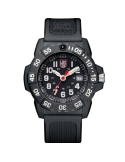
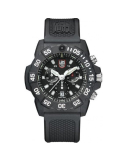
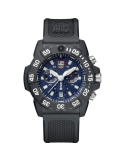
The core DNA of this tactical lineage is perfectly preserved in models like the Luminox Navy Seal XS.3501.F Watch, which features the signature lightweight construction and uncompromising LLT illumination that professionals demand. For operators requiring precise timing complications for mission coordination, the Luminox Navy Seal Chronograph XS.3581 Watch offers a robust chronograph function integrated seamlessly into the rugged Carbonox architecture.
Conservation Meets Tactical Precision: The Luminox FORCE BLUE
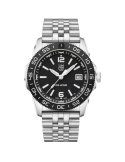
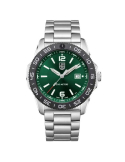
Beyond the battlefield, the unique properties of gas tube illumination are highly valued in the world of professional marine conservation. In 2026, the brand expanded its commitment to the oceans with the release of the Luminox FORCE BLUE Pacific Diver. Developed in collaboration with FORCE BLUE—a unique non-profit organisation that deploys former Special Operations veterans on critical marine conservation missions—this watch is built for those who protect the world's coral reefs.
Based on the popular Pacific Diver 3120 platform, the FORCE BLUE edition trades the ultra-lightweight carbon case for a robust 316L stainless steel case, paired with a unidirectional Carbonox bezel. According to Hodinkee, this collection trades that tactical exterior for a more relaxed, California-inspired vibe
while maintaining strict military-grade specifications. The dial features a signature rope motif and, crucially, the blue and yellow LLT tubes that guarantee underwater legibility during deep-sea coral transplantation dives.
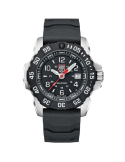
Divers who appreciate the ruggedness and subaquatic reliability of the Force Blue edition will also find exceptional utility in the Luminox Navy Seal RSC XS.3251.CB Watch, which utilises a robust rubber strap and a reinforced steel core to withstand the crushing pressures of deep-water exploration.
Conclusion: Discover Your Next Tactical Timepiece at WatchExclusive
The debate between Tritium and Super-LumiNova ultimately comes down to the intended use of the timepiece. For a luxury dress watch worn to a well-lit dinner, photoluminescent paint is more than sufficient. But for a tool watch that must perform flawlessly in the harshest, darkest environments on the planet, there is simply no substitute for the self-powered, 25-year reliability of gas tube technology.
By harnessing the power of beta decay and precision Swiss micro-engineering, Luminox has created a lineup of watches that truly never sleep. Whether you are a military professional, a first responder, a deep-sea diver, or simply an enthusiast who appreciates uncompromising tactical gear, a watch equipped with LLT is an indispensable tool.
We invite you to explore our complete Luminox collection at WatchExclusive. From the streamlined precision of the Luminox Navy Seal XS.3501.F Watch to the advanced functionality of our chronograph models, discover the timepiece that will light your way through the darkest nights for decades to come.
References
- WatchTime. (2026). Super-LumiNova Explained: Why Watches Glow in the Dark. Available at: WatchTime
- mb-microtec ag. (2026). trigalight - Self-Powered Illumination Technology. Available at: mb-microtec
- Hodinkee. (2026). Hands-On: Luminox Pacific Diver Official Force Blue Watch Brings The Mission To The Wrist. Available at: Hodinkee
- Teddy Baldassarre. (2025). Tritium Watches: How They Work, And How They're Still Being Made. Available at: Teddy Baldassarre
- Deployant. (2020). Lord of the lume - Six recommendations for watches with good lume. Available at: Deployant
Share this content