Shopping Cart



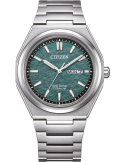
How Structural Colour Dials Work: The Science Behind Citizen's 2026 Eco-Drive 50th Anniversary
By :
F. Nagy -
Categories :
Interesting Watch Facts
Table of contents
keyboard_arrow_down
- Key Takeaways
- The 50-Year Legacy of Citizen Eco-Drive
- What is Structural Colour? The Science of Light
- Fujifilm and Citizen: A Technological Breakthrough
- The 2026 Attesa 'Purple Aurora' and 'Green Flash'
- Exploring the Citizen Attesa Collection
- Accessible Eco-Drive Innovations for Every Enthusiast
- The Rugged Field Watch Appeal
- Why Structural Colour is the Future of Watch Dials
- Conclusion: Experience the Mastery of Light at WatchExclusive
- References
Key Takeaways
- Revolutionary Dial Technology: Citizen’s 2026 Eco-Drive 50th Anniversary models utilise structural colour, a pigment-free technology that creates vibrant hues through light reflection and microscopic surface structures.
- The Fujifilm Collaboration: Developed in partnership with Fujifilm Corporation, the proprietary structural colour ink is printed on 100% recycled polycarbonate, allowing light to pass through to the solar cell.
- Nature-Inspired Aesthetics: The 'Purple Aurora' and 'Green Flash' Attesa models mimic the dynamic, shifting colours of natural phenomena, offering unprecedented visual depth without compromising solar charging efficiency.
- Advanced Material Science: Beyond the dial, these timepieces feature Citizen’s proprietary Super Titanium and Duratect surface hardening, ensuring they are lightweight, hypoallergenic, and highly scratch-resistant.
- Sustainable Horology: By eliminating chemical pigments and utilising recycled materials, alongside the battery-free Eco-Drive technology, Citizen sets a new standard for eco-conscious watchmaking.
In the realm of modern horology, light is traditionally viewed through two distinct lenses: as a tool for legibility via luminescent compounds, or as an adversary that degrades dial pigments over decades of ultraviolet exposure. However, for the Japanese watchmaking giant Citizen, light has always been the fundamental engine of timekeeping. In 2026, as the brand celebrates the 50th anniversary of its pioneering solar technology, they have unveiled a mesmerising intersection of physics and watchmaking: the structural colour dial. Inspired by natural phenomena and engineered through cutting-edge material science, the new 'Purple Aurora' and 'Green Flash' Attesa models redefine how we perceive colour on a watch face.
This breakthrough moves away from traditional chemical pigments and galvanic treatments, relying instead on microscopic surface structures that manipulate light wavelengths. It is a technique that not only produces breathtaking, dynamic hues but also perfectly complements the light-absorbing requirements of solar-powered calibres. For watch enthusiasts, this represents a rare moment where aesthetic innovation and mechanical purpose are flawlessly aligned. The dial is no longer just a canvas; it is an active optical component.
Understanding the mechanics behind these dials requires a deep dive into both the history of solar horology and the physics of light interference. As we explore the science behind Citizen's 2026 anniversary releases, we will uncover how a collaboration with a photography pioneer led to one of the most significant dial manufacturing breakthroughs of the 21st century, and how this technology is trickling down to elevate the everyday tool watch.
The 50-Year Legacy of Citizen Eco-Drive
To appreciate the magnitude of the 2026 structural colour breakthrough, one must first understand the historical context of Citizen's relationship with light. The journey began in 1976, amidst the height of the quartz crisis and a global energy shortage. While the Swiss industry was reeling from the influx of battery-powered quartz watches, Citizen was already looking past the disposable battery. They introduced the Crystron Solar Cell, the world's first light-powered analogue watch. By today's standards, its dial—dominated by four prominent, dark solar panels—was utilitarian, but it laid the groundwork for a revolution in autonomous timekeeping.
Over the next five decades, the technology evolved into what we now know as Eco-Drive. The core mechanical principle remains elegantly simple yet technically profound: a highly sensitive solar cell positioned beneath the dial converts any light source, whether natural sunlight or faint indoor luminescence, into electrical energy. This energy is stored in a rechargeable lithium-ion titanium cell, which powers the quartz oscillator and stepper motors. The primary engineering challenge for Citizen has always been the dial itself. For the in-house calibre to function, the dial must be translucent enough to allow light to pass through, which historically limited designers to basic plastics or heavily perforated metals.
The 50th anniversary in 2026 marks the culmination of a decades-long quest to completely mask the solar cell without starving it of energy. The evolution from the visible grids of the 1970s to the hidden ring-solar technology of the 2000s, and finally to the highly decorative, light-permeable dials of today, is a testament to Citizen's relentless R&D. The introduction of structural colour is the ultimate triumph in this lineage, proving that a solar watch can rival, and even surpass, the aesthetic complexity of traditional haute horlogerie dials.
What is Structural Colour? The Science of Light
In traditional watchmaking, achieving a vibrant dial colour involves applying chemical pigments, lacquers, or utilising galvanic baths. These materials work by absorbing certain wavelengths of white light and reflecting others. A blue enamel dial, for instance, absorbs red and yellow light while reflecting blue. However, pigments are inherently opaque, which poses a significant barrier to light transmittance—the very lifeblood of an Eco-Drive movement. Furthermore, chemical pigments are susceptible to UV degradation, leading to the "tropical" fading highly prized in vintage circles, but technically representing a material failure.
Structural colour, by contrast, contains absolutely no pigment. It is a phenomenon found abundantly in nature, most famously in the iridescent wings of the Morpho butterfly, the feathers of a peacock, or the shimmering surface of a soap bubble. The colour is generated by microscopic physical structures—often layered scales or ridges—that are engineered to exact nanometer dimensions. When light hits these microstructures, it undergoes thin-film interference. Specific wavelengths of light are amplified through constructive interference, while others are cancelled out through destructive interference.
According to horological experts analysing this technology, the result is a dynamic, shifting colour that changes depending on the viewing angle and the intensity of the light source. Because the colour is a product of physical geometry rather than chemical composition, it is entirely immune to UV fading. More importantly for Citizen, because there are no opaque pigment particles blocking the light, a significant portion of the light spectrum can pass through the micro-gaps in the structure, reaching the solar cell beneath. It is a masterclass in optical engineering applied to a watch face.
Fujifilm and Citizen: A Technological Breakthrough
Translating the biological marvel of the Morpho butterfly into a mass-producible watch dial required expertise beyond traditional horology. To achieve this, Citizen partnered with Fujifilm Corporation, a company with a century of experience in optical films, light manipulation, and advanced inkjet printing. Together, they developed a proprietary structural colour ink, a groundbreaking material that applies the principles of nanostructure interference into a printable medium.
The manufacturing process is incredibly exacting. The pigment-free ink is printed onto 100% recycled polycarbonate dials. This requires immense precision; if the microstructures within the ink are crushed, misaligned, or printed too thickly, the interference effect fails, and the dial appears dull or transparent. Fujifilm's advanced inkjet technology ensures that the nanostructures are deposited with perfect uniformity, creating a dial that shimmers with intense, metallic hues while remaining highly permeable to light.
As noted in the official Citizen Press Release, this innovative technology produces a captivating glitter and sheen on the dial, creating a sense of depth inspired by countless layers of rocks and minerals formed over millennia.
This collaboration solves the decades-old dilemma of solar watches: how to create a vibrant, opaque-looking, highly decorative dial without compromising the efficiency of the power reserve. It is a perfect synergy of Japanese technological prowess.
The 2026 Attesa 'Purple Aurora' and 'Green Flash'
The pinnacle of this technology is showcased in the 2026 50th Anniversary models, specifically the highly anticipated 'Purple Aurora' and 'Green Flash' editions within the Attesa line. The Attesa collection has long been Citizen's testing ground for high-end titanium and advanced timekeeping, making it the perfect vessel for this optical revolution. The dials of these specific models are designed to mimic the ethereal, shifting curtains of the aurora borealis and the elusive green flash sometimes visible at the exact moment of sunset.
When viewed head-on, the 'Purple Aurora' dial exhibits a deep, almost abyssal violet. However, as the wrist turns, the structural colour film catches the light, shifting through spectrums of magenta, deep blue, and flashes of emerald. The visual depth is staggering, resembling a cosmic nebula trapped beneath the sapphire crystal. This aesthetic brilliance is housed within cases crafted from Super Titanium, Citizen's proprietary alloy that is five times harder than standard stainless steel and 40% lighter. The cases are further treated with Duratect DLC (Diamond-Like Carbon) coating, providing a stealthy, scratch-resistant armour that contrasts beautifully with the vibrant dials.
Mechanically, these anniversary models are equipped with advanced Eco-Drive calibres featuring satellite GPS synchronisation or multi-band radio control. This ensures that the watch not only powers itself autonomously but also adjusts to the exact atomic time anywhere on the planet. The integration of structural colour dials with Super Titanium cases and GPS-synchronised movements represents the absolute zenith of the modern, zero-maintenance luxury tool watch.
Exploring the Citizen Attesa Collection
While the limited-edition anniversary models highlight the absolute peak of structural colour technology, the core Attesa line offers exceptional everyday technology that benefits from the same rigorous R&D. For enthusiasts looking to experience Citizen's mastery of titanium and light-powered precision, the standard Attesa collection is unequalled in its value and execution.
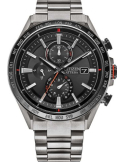
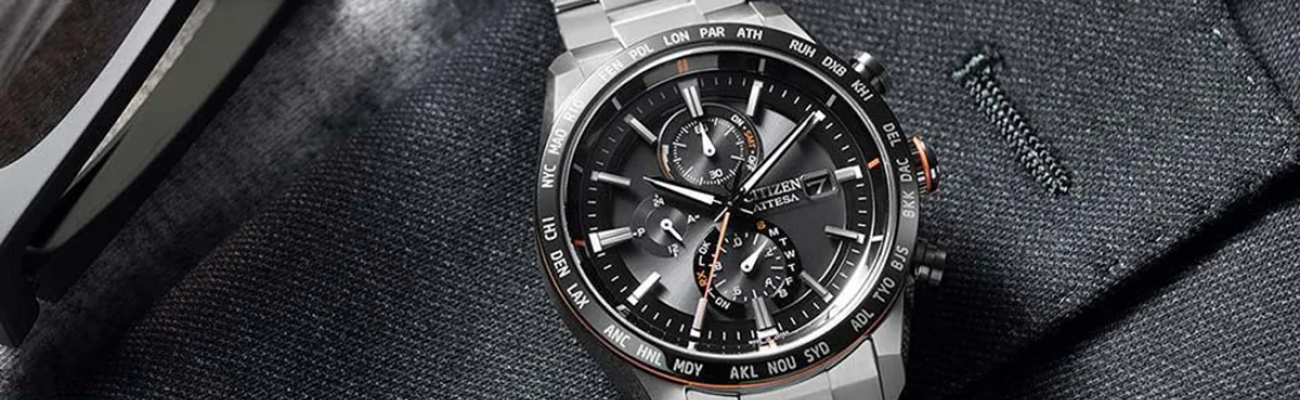
Consider the Citizen Attesa AT8189-61E. This model is a masterclass in functional design, featuring a multi-subdial layout that tracks a chronograph complication, a 24-hour indicator, and a day-date display. The crisp bezel action of its inner slide rule and the flawless application of its luminous indices demonstrate a level of architectural precision usually reserved for watches thrice its price. Powered by a radio-controlled Eco-Drive movement, it receives atomic time signals to ensure absolute accuracy, all housed within a lightweight, hypoallergenic Super Titanium case.
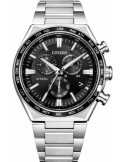
Similarly, the Citizen Attesa CB5966-69E offers a slightly more streamlined aesthetic without sacrificing capability. It features a stealthy, dark-coated titanium profile that perfectly frames its highly legible dial. The integration of a perpetual calendar means the watch automatically adjusts for odd and even months, as well as leap years, until the year 2100. Combined with global time zone tracking and a robust power reserve, it is the ultimate travel companion for the modern professional.
Accessible Eco-Drive Innovations for Every Enthusiast
The beauty of Citizen's horological philosophy is that their technological advancements do not remain locked behind luxury price tags. The efficiency of the Eco-Drive system scales beautifully to accessible, robust daily wearers, ensuring that every watch enthusiast can experience the reliability of a light-powered calibre. You can explore a wide variety of these models in our dedicated Eco-Drive collection.
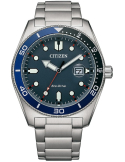
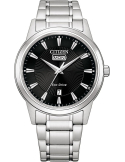
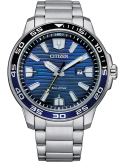
For those who appreciate clean, sporty aesthetics, the Citizen Eco-Drive AW1761-89L is a standout. It features a stunning blue dial that, while utilising traditional light-permeable plastics rather than structural ink, still showcases Citizen's mastery of dial finishing. Its robust stainless steel case and integrated bracelet design give it a dynamic visual presence on the wrist. Alternatively, the Citizen Eco-Drive AW1524-84E provides a sleek, monochromatic look with a black dial and bold, highly legible hands, making it an incredibly versatile daily wearer.
The Rugged Field Watch Appeal
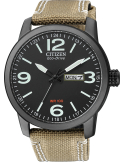
Eco-Drive technology is perhaps most at home in the realm of the field watch, where reliability and autonomy are paramount. The Citizen Eco-Drive BM8470-11EE and the Citizen Eco-Drive BM8476-23EE perfectly encapsulate this utilitarian spirit. These models feature large, luminous Arabic numerals, rugged matte cases, and durable canvas or leather straps. The knowledge that the watch will never require a battery change, combined with a water resistance suitable for outdoor adventures, makes these models indispensable tools for the active enthusiast.
Why Structural Colour is the Future of Watch Dials
The introduction of structural colour dials is not merely a celebratory gimmick for a 50th anniversary; it represents a fundamental shift in how the watch industry may approach dial manufacturing in the future. The implications extend far beyond the immediate visual appeal of the 'Purple Aurora' or 'Green Flash' models. First and foremost is the issue of longevity. Because structural colour relies on physical microstructures rather than chemical dyes, it is entirely immune to the fading caused by ultraviolet light. A structural colour dial will remain exactly as vibrant in fifty years as it is on the day it leaves the factory, adding a profound level of permanence to the timepiece.
Secondly, the environmental aspect cannot be overstated. The watch industry is increasingly under pressure to adopt sustainable manufacturing practices. By utilising recycled polycarbonate for the dial base and eliminating toxic heavy metal dyes and chemical solvents from the colouring process, Citizen is setting a new standard for eco-conscious horology. When paired with the battery-eliminating Eco-Drive movement, these watches represent some of the most environmentally friendly timepieces ever produced.
Finally, the aesthetic versatility offered by structural ink is unprecedented. The ability to engineer dials that shift from deep blue to vibrant purple, or from emerald green to gold, without adding physical thickness to the dial plate, gives watch designers a massive advantage. As this technology matures, we can expect to see even more complex optical illusions, perhaps mimicking the intricate engine-turned patterns of traditional guilloché, all achieved through the precise manipulation of light interference.
Conclusion: Experience the Mastery of Light at WatchExclusive
From the rudimentary solar panels of the 1976 Crystron to the breathtaking, pigment-free structural colour dials of the 2026 anniversary models, Citizen's 50-year journey with light is a testament to their unwavering commitment to innovation. They have transformed light from a mere utility into the very essence of the watch's aesthetic and mechanical identity. The collaboration with Fujifilm to create dials that mimic the iridescent beauty of nature, while simultaneously powering highly advanced, atomic-synchronised calibres, cements Citizen's position at the forefront of modern horology.
Whether you are captivated by the high-tech allure of the Citizen Attesa AT8189-61E, the stealthy sophistication of the Citizen Attesa CB5966-69E, or the rugged reliability of their accessible field watches, there is an Eco-Drive timepiece designed to elevate your collection. We invite you to discover the mastery of light and explore our complete Citizen collection at WatchExclusive, where the future of timekeeping is always in stock.
References
- Citizen Watch Global Network. (2024). LAYERS of TIME Collection with Structural Colour Dials to celebrate the First CITIZEN Watch. Official Press Release.
- Adams, A. (2024). New Release: Citizen Layers Of Time Watches With Structural Color Dials. aBlogtoWatch.
- Hodinkee. (2026). Introducing: Citizen's New 'Photon' Celebrates 50 Years of Eco-Drive With An Attractive Physics Demonstration.
- Fujifilm Design. (2026). Structural Color Inkjet Technology. Fujifilm Corporation.
Share this content