Shopping Cart





The Skeleton Watch Renaissance: Poljot International's Open-Worked Dials in 2026
By :
F. Nagy -
Categories :
Industry News & Market Trends
Table of contents
keyboard_arrow_down
- Key Takeaways
- The 2026 Shift Towards Visual Mechanics
- Demystifying the Art of Skeletonization
- Poljot International: A Bridge Between Heritage and Accessibility
- The Allure of the Accessible Tourbillon
- Technical Mastery in the Caliber 3360
- The Hermitage Collection: Art on the Wrist
- The Automatic Caliber 7500 PTS
- Why Open-Worked Dials Resonate with Modern Collectors
- Discover Your Next Masterpiece at WatchExclusive
- References
Key Takeaways
- The 2026 Skeleton Renaissance: Watch enthusiasts are increasingly drawn to open-worked dials that reveal the intricate micro-engineering of mechanical movements.
- Accessible High Horology: Poljot International bridges the gap between luxury finishing and affordability, offering meticulously skeletonised timepieces assembled in Germany.
- Tourbillon Mastery: The Poljot International Tourbillon Skeleton 3360 series features a classic hand-wound tourbillon with GMT and day/night complications, making the pinnacle of watchmaking accessible.
- Artistic Heritage: Inspired by the famous St. Petersburg museum, the Poljot International Hermitage 7500 collection showcases a beautifully decorated automatic calibre 7500 PTS with a 75-hour power reserve.
The 2026 horological landscape is witnessing a profound shift. While minimalist dials and vintage reissues dominated the early part of the decade, today's collectors are demanding transparency—literally. The skeleton watch renaissance is in full swing, driven by a desire to connect with the beating heart of mechanical timekeeping. Enthusiasts no longer just want to know what powers their watch; they want to see the escapement pulse, the mainspring uncoil, and the gear train interact in real-time. This visual engagement transforms the act of checking the time into a moment of mechanical appreciation.
Yet, for decades, the barrier to entry for a truly well-executed skeleton watch—especially one featuring a high complication like a tourbillon—has been prohibitively high. Swiss haute horlogerie houses have long guarded the gates of open-worked mastery, attaching astronomical price tags to their creations. The intensive labour required to hand-finish microscopic components meant that skeletonised watches were reserved for the elite. This is where the narrative changes. In 2026, the spotlight is shifting towards independent brands that offer exceptional value without compromising on the artistry of traditional watchmaking.
Enter Poljot International, a brand that has quietly perfected the art of accessible high horology. By blending robust mechanical architectures with meticulous German assembly and finishing, they are democratising the skeletonised dial. For the modern collector, this means the dream of owning a hand-finished, open-worked masterpiece—or even a mechanical tourbillon—is no longer confined to the realm of fantasy. It is a reality that invites both seasoned aficionados and new enthusiasts to experience the kinetic theatre of watchmaking up close, without the traditional luxury markup.
The 2026 Shift Towards Visual Mechanics
The resurgence of skeletonised watches in 2026 is not merely a passing aesthetic trend; it is a reflection of how watch enthusiasts interact with their timepieces. In an increasingly digital and intangible world, the mechanical watch remains a bastion of micro-engineering. Collectors are seeking a deeper, more visceral connection to the objects they wear. An open-worked dial transforms a watch from a simple time-telling instrument into a kinetic sculpture on the wrist, offering a constant reminder of the physical laws that govern time and energy.
This shift is also driven by a more educated consumer base. Today's buyers understand the difference between a stamped, mass-produced movement and one that has been thoughtfully skeletonised. They look for specific finishing techniques—such as anglage (chamfering), perlage, and guilloché—that elevate the visual depth of the calibre. The demand is for transparency that showcases the balance wheel's oscillation, the intricate dance of the pallet fork, and the slow unwinding of the mainspring over its power reserve. Every visible component must be finished to a standard that withstands the scrutiny of a loupe.
Brands that can deliver this level of visual mechanical engagement without the traditional luxury markup are capturing the market's attention. The modern enthusiast wants the horological theatre of a skeleton watch, but they also demand reliability, wearability, and value. This intersection of desire and accessibility is exactly where the current renaissance is taking root, paving the way for niche manufacturers to shine on a global stage and redefine what is possible at an accessible price point. The focus has shifted from mere brand prestige to tangible, visible craftsmanship.
Demystifying the Art of Skeletonization
To truly appreciate the modern skeleton watch, one must understand the historical and technical weight of the craft. The concept of skeletonisation—the deliberate removal of non-essential metal from a watch's mainplate, bridges, and barrel—is not a modern invention. According to horological historians, the technique was pioneered in 1760 by French watchmaker Andre-Charles Caron, who sought to reveal the hidden beauty of his pocket watch movements to a fascinated clientele. His pioneering work laid the foundation for centuries of open-worked horology, proving that the mechanics themselves could be the primary aesthetic draw.
The process is inherently risky and requires immense skill. A watch movement relies on the structural integrity of its plates and bridges to maintain the precise alignment of the gear train and the jewel bearings. Removing too much material can compromise the movement's stability, leading to poor chronometry or catastrophic mechanical failure. Therefore, skeletonisation requires a masterful understanding of tension and load-bearing architecture. The watchmaker must carefully calculate exactly how much brass or steel can be cut away while preserving the calibre's rigidity and shock resistance, ensuring the watch remains a reliable timekeeper.
Once the structural skeleton is achieved, the artistry begins. The remaining surfaces are often painstakingly decorated to catch the light and draw the eye. In 2026, the best accessible skeleton watches utilise a combination of precision CNC milling for the initial cuts, followed by hand-applied finishes. This duality of modern engineering and traditional art is what makes an open-worked dial so captivating, turning the mechanical components into the primary visual focus of the timepiece and creating a stark, beautiful contrast against the synthetic ruby bearings and blued steel screws.
Poljot International: A Bridge Between Heritage and Accessibility
While Swiss giants often dominate the conversation around high horology, the story of Poljot International offers a refreshing alternative. Founded in 1994 by Alexander Shorokhov in the picturesque town of Alzenau, Bavaria, the brand was built on a unique premise: combining the rich, emotive design heritage of Russian watchmaking with the uncompromising precision of German engineering and quality control. This cross-cultural DNA has allowed the brand to carve out a highly respected niche in the industry, appealing to collectors who look beyond the traditional borders of watchmaking.
Shorokhov, a trained civil engineer and architect, brought a distinct structural eye to watch design. Under his guidance, the brand began taking robust, reliable mechanical calibres and transforming them through extensive decoration and skeletonisation. The movements are disassembled, engraved, plated, and reassembled in Germany, ensuring that each piece meets strict European standards for accuracy and longevity. This meticulous process guarantees that the visual beauty of the watch is matched by its mechanical dependability, a crucial factor for modern collectors.
This hybrid approach is the secret to the brand's success in 2026. By leveraging global supply chains for base calibres and applying high-touch, localised finishing in Bavaria, the brand manages to offer a level of aesthetic complexity that punches far above its price bracket. It is a brand tailored for the astute collector who values the story, the craftsmanship, and the visual impact of a watch over a mainstream logo, proving that true horological art does not have to be exclusive or prohibitively expensive.
The Allure of the Accessible Tourbillon
In the pantheon of watchmaking complications, the tourbillon reigns supreme. Patented by Abraham-Louis Breguet in 1801, the tourbillon was originally designed to counter the effects of gravity on a pocket watch's escapement by placing the balance wheel and escapement inside a continuously rotating cage. As Jack Forster noted in Hodinkee, while its chronometric benefits in a modern wristwatch are debated, its status as a mesmerising display of micro-mechanical prowess is undeniable. It remains the ultimate flex of watchmaking capability.
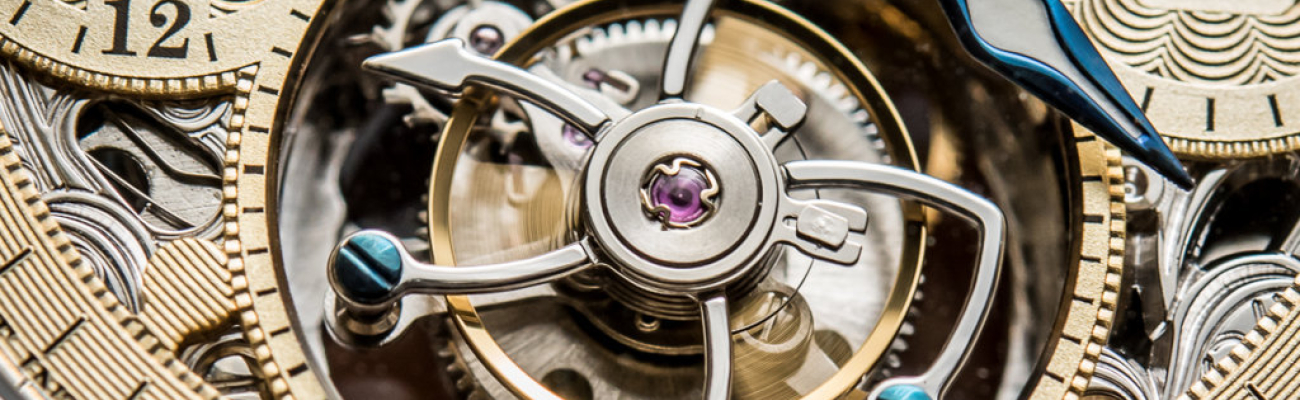
Historically, acquiring a tourbillon meant spending tens, if not hundreds, of thousands of euros. However, the Poljot International Tourbillon Skeleton 3360 collection shatters this paradigm. By offering a genuine, rotating tourbillon escapement within a fully skeletonised architecture, the brand provides an entry point into the upper echelons of horology. The visual drama of the rotating cage at the 6 o'clock position is amplified by the absence of a traditional dial, allowing light to pass completely through the movement and illuminating the intricate mechanics from all angles.
For collectors looking to experience the pinnacle of mechanical watchmaking, this collection represents an extraordinary value proposition. It is not merely a watch; it is a statement piece that invites conversation and admiration. By making the tourbillon accessible, the brand is allowing a new generation of enthusiasts to experience the hypnotic rotation of the cage, proving that high complications can be enjoyed without the traditional barriers to entry that have long plagued the luxury watch market.
Technical Mastery in the Caliber 3360
At the heart of this collection beats the hand-wound caliber 3360, a movement that has been extensively refined and skeletonised. Operating at 28,800 vibrations per hour (4Hz) and featuring 19 jewels, this caliber offers a robust 40-hour power reserve. Beyond the tourbillon itself, the movement integrates highly practical complications for the modern traveller: a GMT (second time zone) indicator at 9 o'clock and a beautifully executed day/night display at 3 o'clock, adding functional depth to the mechanical spectacle.
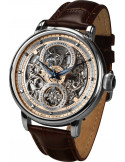
The finishing is where the caliber truly shines. The bridges are perfectly designed and skeletonised, visible through both the front sapphire crystal and the exhibition case back. Models like the Poljot International Tourbillon Skeleton 3360.T40 Watch showcase a red gold-plated stainless steel case that contrasts beautifully with the silver-coloured, guilloché-decorated movement. This intricate detailing ensures that the watch is as captivating from the back as it is from the front, rewarding the owner with endless visual discovery.
For those who prefer a cooler aesthetic, the Poljot International Tourbillon Skeleton 3360.T05 Watch and the limited edition Poljot International Tourbillon Skeleton 3360.T04 Watch offer variations in plating and strap pairings. All models maintain a highly wearable 43mm case diameter and a 5 ATM water resistance rating, ensuring that these mechanical marvels are robust enough for regular wear while remaining elegant enough for formal occasions. You can explore the full range of these masterpieces in our Tourbillon collection.
The Hermitage Collection: Art on the Wrist
If the Tourbillon series represents the pinnacle of mechanical complexity, the Poljot International Hermitage 7500 collection is a masterclass in artistic skeletonisation. Named after the legendary State Hermitage Museum in St. Petersburg—the second-largest art museum in the world—this collection is designed to be a wearable piece of art. It draws inspiration from the opulent, classical architecture and the rich historical artifacts housed within the former winter palace of the Russian Tsars, translating that grandeur into micro-mechanics.
The Hermitage collection takes a more classical approach to the open-worked dial. The skeletonisation here is highly ornate, featuring sweeping, curved bridges that frame the mainspring barrel and the balance wheel. The dial is reduced to an outer chapter ring with applied indices, ensuring that time-telling remains legible while maximising the view of the mechanics beneath. The sweeping lines of the bridges mimic the grand staircases and vaulted ceilings of the museum itself, creating a sense of architectural depth within the case.
This collection is perfectly suited for the enthusiast who appreciates the baroque elegance of traditional watchmaking. It is a dress watch that refuses to blend into the background, offering a dynamic visual experience that changes with every flick of the wrist as the light catches the polished bevels of the skeletonised movement. It is a testament to the brand's ability to infuse historical artistry into modern horology, creating timepieces that are as culturally resonant as they are mechanically sound.
The Automatic Caliber 7500 PTS
Powering this artistic endeavour is the automatic caliber 7500 PTS. Unlike the hand-wound tourbillon, this movement offers the convenience of self-winding, making it an excellent choice for daily wear. It features 21 jewels and beats at a smooth 28,800 vibrations per hour. Most impressively, it boasts an extended 75-hour power reserve, meaning you can take the watch off on Friday evening and it will still be keeping perfect time on Monday morning without needing to be wound manually.
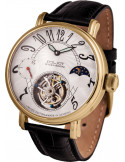
The skeletonisation of the 7500 PTS is comprehensive and thoughtfully executed. The rotor itself is open-worked so as not to obscure the view of the movement through the sapphire exhibition case back. The Poljot International Hermitage 7500.1940711 Skeleton Watch pairs a warm, red gold-plated case with a silver dial, creating a classic and luxurious aesthetic that commands attention in any setting.
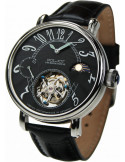
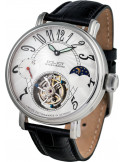
For a slightly different visual impact, the Poljot International Hermitage 7500.1940712 Skeleton Watch offers a striking contrast with a black outer dial ring, while the Poljot International Hermitage 7500.1940713 Skeleton Watch provides another stunning variation within the Majesties collection. Each model is housed in a 43mm case and is limited to just 500 pieces worldwide, adding an element of exclusivity to their highly accessible price point and ensuring that you are wearing a truly rare piece of horological art.
Why Open-Worked Dials Resonate with Modern Collectors
The appeal of an open-worked dial in 2026 goes beyond mere aesthetics; it taps into the psychology of the modern collector. In an era where most of the technology we interact with is a sealed black box—smartphones, smartwatches, electric vehicles—a mechanical watch is a rare celebration of visible, understandable physics. When you look at a skeleton watch, you can trace the flow of energy from the tightly coiled mainspring, through the gear train, to the precise ticking of the escapement. It is a grounding experience that connects the wearer to the physical world.
Furthermore, a skeleton watch serves as a badge of horological honesty. A skeletonised movement cannot hide poor finishing or sloppy assembly. Every surface, every bevel, and every gear tooth is on display for the wearer to scrutinise. This transparency builds a profound level of trust between the brand and the collector. It signals to others that the wearer values the traditional arts of micro-engineering and hand-finishing over mere brand recognition, marking them as a true connoisseur of the craft.
Brands like Poljot International understand this sentiment perfectly. By focusing their efforts on maximising the visual impact of the movement and ensuring high-quality German assembly, they provide collectors with exactly what they want: a front-row seat to the heartbeat of their timepiece. It is a piece of kinetic jewellery that invites closer inspection and serves as a constant reminder of the enduring magic of mechanical watchmaking, proving that the soul of horology is alive and well.
Discover Your Next Masterpiece at WatchExclusive
The skeleton watch renaissance is an open invitation to explore the deeper, more intricate side of horology. Whether you are captivated by the gravitational dance of a tourbillon or the classical elegance of an ornately decorated automatic movement, there has never been a better time to add an open-worked timepiece to your collection. Poljot International stands at the forefront of this movement, proving that exceptional craftsmanship, rich heritage, and accessibility can indeed coexist in perfect harmony.
We invite you to explore the full range of these mechanical marvels at WatchExclusive. From the breathtaking complexity of the Poljot International Tourbillon Skeleton 3360.T40 Watch to the artistic grace of the Poljot International Hermitage 7500.1940711 Skeleton Watch, our curated selection offers something for every discerning enthusiast looking to elevate their wrist game.
Dive into our Poljot International collection today, and discover a timepiece that doesn't just tell time, but beautifully reveals exactly how time is kept. Elevate your collection with a watch that offers a window into the soul of traditional watchmaking, and experience the thrill of visual mechanics for yourself.
References
- Forster, Jack.
Does The Tourbillon Have Any Real Benefits In A Wristwatch?
Hodinkee, July 26, 2018. - Culted.
A Brief History of the Skeleton Watch & Why It Screams Luxury.
Culted, December 11, 2021. - Europa Star.
Russian watches from Germany.
Europa Star, September 15, 2026. - Poljot International Official Archives.
History of Alexander Shorokhov and the Brand.
Poljot International, 2026.
Share this content