Shopping Cart



The Rise of the Accessible Mechanical Diver: Why the Citizen Promaster Automatic is the 2026 Standard
By :
F. Nagy -
Categories :
Industry News & Market Trends
Table of contents
keyboard_arrow_down
- Key Takeaways
- The 2026 Horological Landscape: Redefining the Sub-€1000 Diver
- The Anatomy of a True Tool Watch: ISO 6425 and Beyond
- The Fujitsubo Phenomenon: Heritage Meets Modern Metallurgy
- The Classic Blue: NB6026-56L
- The Stealth Aesthetic: NB6025-59H
- Super Titanium and Duratect: The Material Advantage
- The Heart of the Machine: Caliber 9051 and Magnetic Resistance
- Beyond the Depths: The Broader Accessible Automatic Movement
- Why the Citizen Promaster is the Undisputed 2026 Standard
- Discover Your Next Mechanical Companion at WatchExclusive
- References
Key Takeaways
- In-House Dominance: The 2026 market heavily favours vertically integrated manufacturers, with Citizen’s proprietary movements setting the benchmark for sub-€1000 reliability.
- Advanced Metallurgy: The widespread adoption of Super Titanium and Duratect coatings provides luxury-level scratch resistance and lightweight comfort at an accessible price point.
- Heritage Revival: The "Fujitsubo" (Challenge Diver) re-issues prove that authentic archival storytelling combined with modern specifications resonates deeply with today's collectors.
- Uncompromising Standards: Strict adherence to ISO 6425 certification ensures these timepieces remain true professional tool watches, not just desk divers.
- Magnetic Resistance: The integration of the Miyota Caliber 9051 addresses modern environmental magnetism, offering 16,000 A/m resistance crucial for daily wear.
The horological landscape of 2026 is defined by a fascinating paradox: as the upper echelon of luxury watchmaking continues to push further into the stratosphere of exclusivity and price, the entry-level and mid-tier segments are experiencing a golden age of unprecedented quality. For decades, the mechanical dive watch was the undisputed gateway into serious watch collecting. It offered robust construction, utilitarian aesthetics, and a romantic connection to subaquatic exploration. However, as traditional Swiss powerhouses steadily moved their entry-level divers upmarket, a vacuum was created in the sub-€1000 category. This space, once dominated by basic off-the-shelf calibres and standard steel cases, demanded a new champion.
Enter the modern era of Japanese watchmaking, where vertical integration and relentless material innovation have completely rewritten the rules of value. Enthusiasts are no longer willing to accept compromises in finishing, movement architecture, or historical pedigree simply because a watch is accessible. They demand in-house calibres, advanced metallurgy, and authentic heritage. In this highly competitive arena, one collection has risen above the rest to establish itself as the definitive standard for the accessible mechanical diver: the Citizen Promaster series.
By leveraging decades of proprietary research in titanium processing and movement manufacturing, Citizen has transformed the expectations of collectors worldwide. The brand has successfully bridged the gap between professional-grade tool watches and everyday mechanical companions. This article explores the technical, historical, and market-driven reasons why the Citizen Promaster Automatic—specifically the celebrated Fujitsubo lineage—has become the undisputed benchmark for dive watches in 2026, and why it deserves a place in every serious enthusiast's watch box.
The 2026 Horological Landscape: Redefining the Sub-€1000 Diver
To understand the dominance of the Promaster series, one must first analyse the broader market dynamics of 2026. Over the past five years, the watch industry has seen a significant realignment. Swiss brands that historically occupied the €500 to €1,000 price bracket have largely migrated toward the €1,500 to €3,000 range. This upward mobility, driven by inflation, increased production costs, and a strategic desire for premium positioning, left traditional collectors feeling alienated. The "accessible mechanical watch" was in danger of becoming an oxymoron.
However, nature abhors a vacuum, and the horological market is no different. Japanese manufacturers, with their massive economies of scale and deep engineering reserves, recognised this shift. According to a recent market analysis by Fratello Watches, the sub-€1000 category is now the most fiercely contested battleground in modern watchmaking, where true innovation is required to stand out.
Citizen, a brand with a century-long history of democratising timekeeping technology, was perfectly positioned to capture this audience.
The strategy was not simply to undercut competitors on price, but to over-deliver on specifications. In 2026, a standard 316L stainless steel case and a 3Hz movement are no longer enough to excite the educated consumer. Collectors now expect features that were previously reserved for luxury tiers: high-beat movements, advanced anti-magnetic properties, and exotic case materials. By integrating these high-end specifications into the Promaster collection, Citizen effectively raised the barrier to entry for any brand attempting to compete in the accessible diver space.
The Anatomy of a True Tool Watch: ISO 6425 and Beyond
The term "dive watch" is often used loosely in the modern watch industry, frequently applied to any timepiece featuring a unidirectional rotating bezel and a modicum of water resistance. However, true horological purists and professional divers recognise a distinct difference between a "diver-style" watch and a certified professional dive watch. The Citizen Promaster Automatic series is built upon a foundation of uncompromising adherence to the ISO 6425 certification, the international standard that separates genuine aquatic tools from mere aesthetic homages.
Achieving ISO 6425 certification is a rigorous process that tests every aspect of a watch's durability. It requires a minimum depth rating of 100 metres (though Promaster models typically boast 200 metres or more), but the testing goes far beyond simple static pressure. Each individual watch must be tested to 125% of its rated depth, ensuring a critical safety margin. Furthermore, the standard mandates strict criteria for magnetic resistance, shock resistance, chemical resistance (specifically to saltwater), and legibility in total darkness from a distance of 25 centimetres.
Citizen's commitment to these standards is not a recent marketing pivot; it is deeply ingrained in the brand's DNA. The Promaster line, introduced in 1989, was conceived specifically for professionals who required absolute reliability in extreme environments. When you manipulate the 120-click bezel of a modern Promaster, the tactile feedback—crisp, precise, and devoid of back-play—is a direct result of engineering designed to be operated with thick neoprene diving gloves. This dedication to functional integrity ensures that while most Promasters will spend their lives in boardrooms and coffee shops, they remain fully capable of surviving the crushing depths of the ocean.
The Fujitsubo Phenomenon: Heritage Meets Modern Metallurgy
In the realm of watch collecting, technical specifications are only half the equation; the other half is storytelling. The most successful timepieces are those that connect the wearer to a rich historical narrative. In 2026, no story has captivated the dive watch community quite like the revival of the 1977 Challenge Diver, affectionately known as the "Fujitsubo."
The legend began in 1983 on Long Reef Beach in Australia, where a Citizen Challenge Diver was discovered washed ashore. The watch was heavily encrusted with barnacles—fujitsubo in Japanese—indicating it had been submerged in the Pacific Ocean for years. Astonishingly, the internal mechanical movement was completely protected from the corrosive saltwater and was still ticking. This incredible testament to Citizen's case engineering became a cornerstone of the brand's lore. When Citizen decided to revive this iconic silhouette for the modern era, they did not merely create a visual replica; they engineered a watch that honoured the past while utilising the technology of the future.
The Classic Blue: NB6026-56L
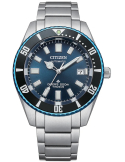
The modern iteration of this legend is perfectly embodied in the Citizen Promaster Fujitsubo Automatic Diver NB6026-56L. This model captures the essence of the 1970s original with its embossed indices, Mercedes-style hands, and perfectly proportioned 41mm case. However, the execution is entirely contemporary. The deep blue dial and matching bezel insert evoke the oceanic depths where its ancestor was found, providing a versatile aesthetic that transitions seamlessly from a wetsuit to a tailored jacket.
The Stealth Aesthetic: NB6025-59H
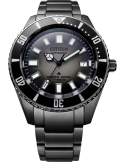
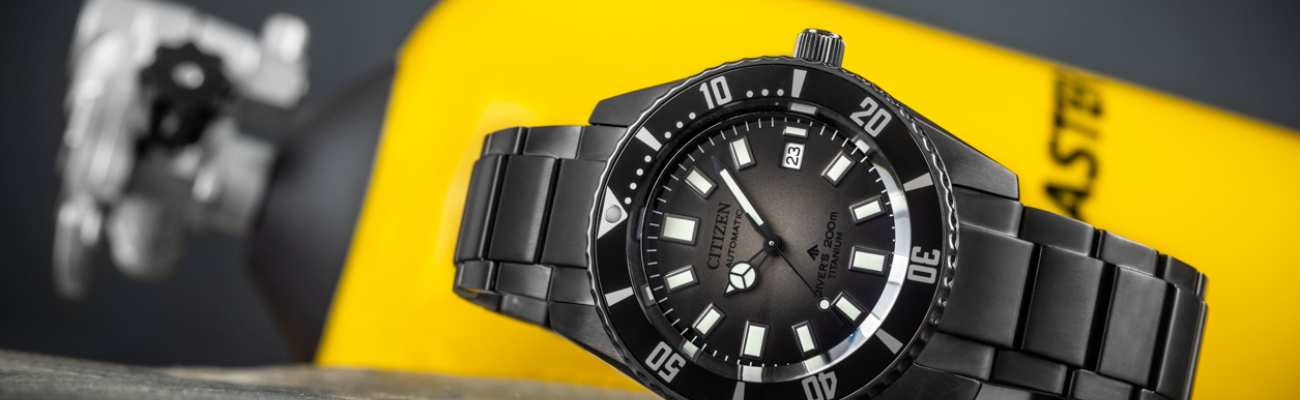
For those who prefer a more tactical, aggressive aesthetic, the Citizen Promaster Fujitsubo Automatic Diver NB6025-59H offers a striking alternative. This variant utilizes a dark grey dial paired with a black DLC (Diamond-Like Carbon) coating over its titanium case and bracelet. The result is a stealthy, ultra-modern tool watch that absorbs light rather than reflecting it. The DLC coating not only alters the visual profile but adds an extra layer of surface hardness, making an already robust watch virtually impervious to daily wear and tear.
Super Titanium and Duratect: The Material Advantage
If there is one technological pillar that elevates the Citizen Promaster above its Swiss and Japanese rivals in 2026, it is the brand's absolute mastery of titanium. While other brands treat titanium as a premium novelty, Citizen has spent over five decades perfecting its application, dating back to the release of the X-8 Chronometer in 1970—the world's first titanium watch.
Standard titanium is prized for being approximately 40% lighter than stainless steel and completely hypoallergenic, making it incredibly comfortable on the wrist. However, raw titanium (Grade 2 or Grade 5) has a significant drawback: it is prone to surface scratching and oxidation. Citizen solved this problem with the development of Super Titanium, a proprietary material created by treating solid titanium with their patented Duratect surface hardening technology.
As noted by materials experts at Worn & Wound, Citizen's Duratect process fundamentally alters the surface structure of the metal, achieving a Vickers hardness rating of 1,000 to 1,200.
To put this into perspective, standard 316L stainless steel has a Vickers hardness of roughly 200. This means a Super Titanium Promaster is five times harder than a standard steel dive watch. It retains the featherweight comfort and warm, gunmetal hue of titanium, but resists the desk-diving scratches and scuffs that inevitably plague traditional watches.
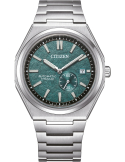
This material advantage is not limited strictly to the dive watch category. Citizen has wisely expanded this technology across its portfolio. For instance, the Citizen Super Titanium Automatic NJ0180-80X demonstrates how this lightweight, scratch-resistant metal can be applied to a sleek, everyday sports watch, offering the same durability in a more refined, non-diving silhouette.
The Heart of the Machine: Caliber 9051 and Magnetic Resistance
A dive watch is only as reliable as the engine that powers it. In the sub-€1000 category, the market has long been dominated by reliable but rudimentary 3Hz (21,600 vibrations per hour) movements. While these calibres are durable workhorses, they lack the smooth sweep and refined architecture expected by modern enthusiasts. Citizen disrupted this status quo by equipping the Fujitsubo models with the Miyota Caliber 9051.
Miyota, a movement manufacturer wholly owned by Citizen, developed the 9000 series to compete directly with premium Swiss calibres like the ETA 2824 and Sellita SW200. The Caliber 9051 operates at a high-beat frequency of 28,800 vph (4Hz), resulting in a noticeably smoother sweep of the seconds hand and greater stability against physical shocks. It features a 42-hour power reserve, hand-winding capability, and hacking seconds for precise time synchronisation.
However, the true party piece of the Caliber 9051 is its exceptional magnetic resistance. In 2026, the greatest threat to a mechanical watch is not water, but magnetism. We are constantly surrounded by magnetic fields generated by smartphones, laptops, tablet cases, and audio equipment. A magnetised watch will run erratically, often gaining minutes per day. The Caliber 9051 utilises specialised anti-magnetic materials for its balance spring and escapement components, achieving a magnetic resistance of 16,000 A/m (approximately 200 Gauss). This ensures the watch maintains its chronometric precision even when exposed to the magnetic hazards of modern daily life, making it a vastly superior choice for the contemporary urban professional.
Beyond the Depths: The Broader Accessible Automatic Movement
The runaway success of the Promaster Fujitsubo has had a profound halo effect on the broader market for accessible mechanical watches. As consumers experience the quality of Citizen's in-house manufacturing in their dive watches, they are increasingly exploring the brand's other mechanical offerings. The demand for high-quality, affordable automatics has never been higher, and the Citizen brand is perfectly positioned to meet it across all genres.
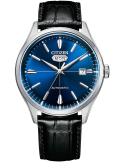
For those seeking a more traditional, everyday aesthetic without the rotating bezel, the Citizen Automatic NH8390-20LE offers incredible value. It distils the reliability of Citizen's mechanical engineering into a classic, versatile design that pairs perfectly with business attire. It serves as an excellent entry point into the world of mechanical horology for those who may find a dedicated dive watch too aggressive for daily office wear.
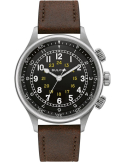
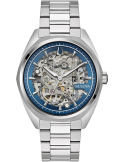
Furthermore, this mechanical renaissance extends to Citizen's sister brands. Bulova, operating under the Citizen Watch Group umbrella, has leveraged this manufacturing prowess to release stunning mechanical pieces of their own. The Bulova A-15 Pilot 96A245 is a masterful recreation of a 1944 military prototype, featuring dual internal rotating bezels for tracking elapsed time and dual time zones. Similarly, the Bulova Surveyor Automatic 96A292 offers a refined, open-heart dial design that allows the wearer to view the beating escapement of the mechanical movement. These models prove that the commitment to accessible, high-quality mechanical watchmaking—whether you are browsing the Citizen Automatic or Bulova Automatic collections—is a corporate-wide philosophy.
Why the Citizen Promaster is the Undisputed 2026 Standard
When evaluating the landscape of mechanical dive watches in 2026, the criteria for excellence are clear: a watch must possess genuine heritage, utilise advanced materials, house a robust and modern movement, and offer undeniable value. The Citizen Promaster Automatic series, spearheaded by the Fujitsubo models, does not merely meet these criteria; it defines them.
Jack Forster, a renowned horological commentator, once noted in Hodinkee that the true test of a tool watch is not how it performs in a laboratory, but how it integrates into the life of the wearer.
The Promaster excels precisely because it requires no compromises. You do not have to sacrifice the lightweight comfort of titanium to get a mechanical movement. You do not have to sacrifice anti-magnetic properties to stay under a €1000 budget. You do not have to choose between a rich historical narrative and modern build quality.
By combining the high-beat, anti-magnetic Miyota 9051 with the virtually scratch-proof Super Titanium case, and wrapping it in a design validated by decades of oceanic exposure, Citizen has created the ultimate everyday mechanical diver. It is a watch that commands respect from seasoned collectors who own pieces worth ten times as much, yet remains entirely accessible to the enthusiast buying their very first mechanical timepiece. In an industry often characterised by artificial scarcity and inflated pricing, the Promaster stands as a beacon of authentic horological integrity.
Discover Your Next Mechanical Companion at WatchExclusive
The evolution of the mechanical dive watch has reached a thrilling pinnacle in 2026, and there has never been a better time to add a piece of this history to your collection. Whether you are drawn to the deep oceanic blue of the Citizen Promaster Fujitsubo Automatic Diver NB6026-56L or the stealthy, tactical presence of the DLC-coated NB6025-59H, these timepieces represent the absolute zenith of accessible horology.
At WatchExclusive, we are passionate about connecting enthusiasts with watches that offer genuine substance, history, and uncompromising quality. We invite you to explore our curated selection of these remarkable timepieces. Experience the featherweight feel of Super Titanium, the smooth sweep of a high-beat calibre, and the confidence that comes with wearing a true, ISO-certified professional tool watch. Dive into our comprehensive Promaster collection today, and discover why Citizen has set the standard for the modern mechanical era.
References
- Fratello Watches. (2026). The Evolution of the Sub-€1000 Dive Watch Market. Available at: https://www.fratellowatches.com
- Hodinkee. (2024). In-Depth: The Return of the Citizen Challenge Diver. Available at: https://www.hodinkee.com
- Worn & Wound. (2025). Understanding Watch Materials: The Science of Citizen's Super Titanium and Duratect. Available at: https://wornandwound.com
- International Organization for Standardization. (2018). ISO 6425:2018 Horology — Divers' watches. Available at: https://www.iso.org/standard/66517.html
- Citizen Watch Global Archives. (2026). The History of the Promaster and the 1977 Challenge Diver.
Share this content