Shopping Cart



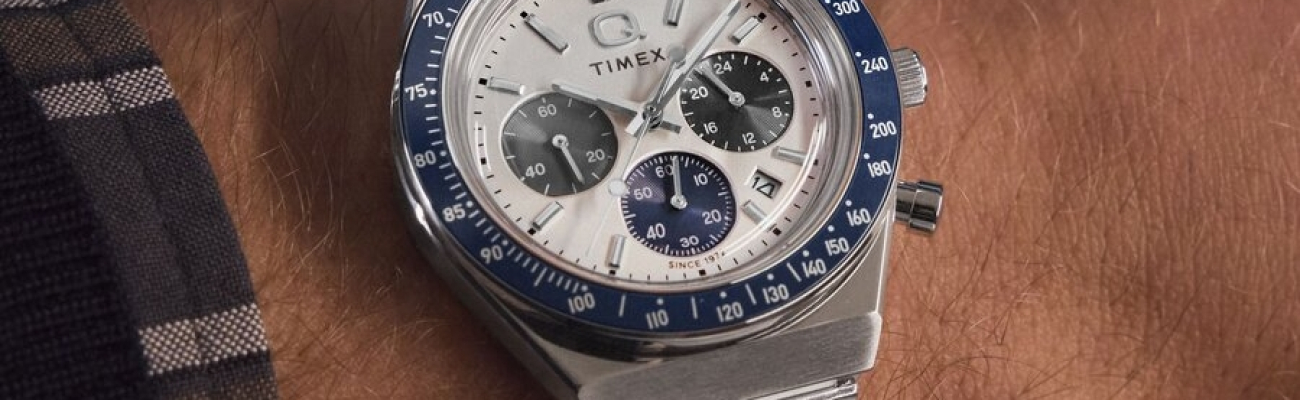
Timex Watches: The Ultimate Guide to America's Timekeeper
By :
F. Nagy -
Categories :
Industry News & Market Trends
, Interesting Watch Facts
Table of contents
keyboard_arrow_down
- Key Takeaways
- The Genesis of the Integrated Design: A 1970s Revolution
- Gérald Genta and the Audemars Piguet Royal Oak
- The Nautilus and the Holy Trinity
- The Anatomy of an Integrated Sports Watch
- Seamless Architecture and Ergonomics
- The Interplay of Light: Brushing and Polishing
- Why the Integrated Bracelet is Dominating Modern Horology
- The Ultimate GADA (Go Anywhere, Do Anything) Timepiece
- The Nostalgia Factor and the 1970s Revival
- The Democratization of the Integrated Sports Watch
- The Tissot PRX Phenomenon
- The Citizen Tsuyosa: Japanese Precision
- Independent Challengers: Christopher Ward and Formex
- What to Consider Before Buying an Integrated Watch
- The "True" Lug-to-Lug Measurement
- Strap Versatility (or Lack Thereof)
- Movement Architecture and Thickness
- Conclusion: Find Your Integrated Masterpiece at WatchExclusive
- References
Key Takeaways
- Architectural Cohesion: An integrated bracelet sports watch is defined by a seamless transition between the watch case and the bracelet, eliminating traditional lugs to create a single, unified piece of kinetic metal art.
- The 1970s Genesis: The category was birthed during the Quartz Crisis by legendary designer Gérald Genta, who created the Audemars Piguet Royal Oak in 1972 and the Patek Philippe Nautilus in 1976, proving that stainless steel could be treated as a precious metal.
- The GADA Philosophy: These timepieces are the ultimate "Go Anywhere, Do Anything" (GADA) watches, offering the robust water resistance of a dive watch with the slim profile and refined finishing of a dress watch.
- The Accessible Revolution: While the "Holy Trinity" models command astronomical prices, brands like Tissot (with the PRX Powermatic 80) and Citizen (with the Tsuyosa) have democratized the aesthetic, offering exceptional mechanical value to the modern collector.
- Ergonomic Considerations: When purchasing an integrated watch, buyers must pay close attention to the articulation of the first bracelet link, as these watches typically wear larger than their stated case diameter suggests.
If you were to take a snapshot of the global luxury watch market over the past five years, one dominant, inescapable trend would immediately command your attention: the absolute supremacy of the integrated bracelet sports watch. Walk into any high-end boutique, scroll through any horological forum, or observe the wrists of collectors at a metropolitan café, and you will see the unmistakable geometric bezels and flowing steel bracelets that define this category.
But what exactly is an integrated bracelet watch, and why has it captured the collective imagination of the watch world with such ferocity? Unlike traditional watches, where the strap or bracelet is attached via spring bars between two protruding lugs, an integrated design treats the case and the bracelet as a single, continuous architectural entity. The lines of the case flow directly into the first link of the bracelet without interruption. It is a design philosophy that prioritizes fluidity, industrial brutalism, and the masterful interplay of light across brushed and polished steel.
This comprehensive guide delves deep into the origins of the integrated sports watch, the mechanical and aesthetic reasons behind its modern renaissance, and how the democratization of this design has allowed enthusiasts to acquire world-class horology without liquidating their savings. Whether you are hunting for your first serious mechanical timepiece or looking to diversify a seasoned collection, understanding the integrated sports watch is essential.
The Genesis of the Integrated Design: A 1970s Revolution
To understand the modern obsession with integrated bracelets, we must travel back to the early 1970s—a period of existential dread for the Swiss watch industry. The advent of cheap, hyper-accurate quartz technology from Japan (the "Quartz Crisis") was rendering traditional mechanical watches obsolete. The Swiss needed a miracle to survive. They needed to convince the world that a mechanical watch was not just a tool for telling time, but a luxury lifestyle statement.
Gérald Genta and the Audemars Piguet Royal Oak
The miracle arrived in 1972, courtesy of a maverick watch designer named Gérald Genta. On the eve of the Swiss Watch Show (now Watches & Wonders), the managing director of Audemars Piguet tasked Genta with designing an unprecedented steel sports watch for the Italian market. Genta famously sketched the design overnight, drawing inspiration from a vintage deep-sea diving helmet.
The result was the Audemars Piguet Royal Oak (Reference 5402). It was a massive, 39mm stainless steel watch featuring an octagonal bezel secured by eight visible hexagonal screws, a complex Tapisserie guilloché dial, and a bracelet that was integrated directly into the case. It was a shocking proposition. At the time, luxury watches were small, round, and made of gold. The Royal Oak was steel, aggressively angular, and priced higher than many of AP's gold dress watches.
As noted by horological historians at Hodinkee, the Royal Oak was initially met with skepticism, but it fundamentally changed the industry. It established the concept that the craftsmanship, the finishing, and the design of a steel watch could elevate it to the status of high luxury.
The Nautilus and the Holy Trinity
Genta did not stop there. In 1976, he designed the Patek Philippe Nautilus (Reference 3700). Inspired by the porthole of a transatlantic ocean liner, the Nautilus featured a softer, more rounded octagonal bezel and a highly complex integrated bracelet with polished center links. Patek Philippe marketed it with the legendary slogan: One of the world's costliest watches is made of steel.
Shortly after, Vacheron Constantin introduced the 222 (designed by Jorg Hysek), which later evolved into the Overseas collection. Together, these watches formed the foundation of the luxury integrated sports watch category. They proved that a watch could be robust enough to wear on a yacht, yet elegant enough to wear with a tuxedo.
The Anatomy of an Integrated Sports Watch
What makes the integrated bracelet design so visually arresting? The appeal lies in the strict architectural discipline required to manufacture these timepieces. Creating a seamless transition from case to bracelet is an engineering marvel that demands incredibly tight manufacturing tolerances.
Seamless Architecture and Ergonomics
In a traditional watch, the gap between the case and the strap breaks the visual flow. An integrated bracelet eliminates this gap. The first link of the bracelet is often machined to fit perfectly into a notch in the case, secured by a hidden pin or screw system. This creates a continuous ribbon of metal that wraps around the wrist.
From an ergonomic standpoint, a well-designed integrated bracelet acts like a second skin. Because the links are engineered to articulate smoothly from the exact edge of the case, the watch distributes its weight evenly across the wrist. This prevents the watch from feeling top-heavy, a common issue with large dive watches on standard straps.
The Interplay of Light: Brushing and Polishing
The true hallmark of a premium integrated sports watch is its finishing. Because these watches feature broad, flat surfaces and sharp geometric angles, they serve as the perfect canvas for advanced metalwork.
Watchmakers utilize a technique called alternating finishing. The flat top surfaces of the case and the bracelet links are typically treated with a vertical or sunburst satin brushing. This matte-like finish gives the watch its rugged, industrial character and helps hide daily micro-scratches. However, the angled edges (the chamfers or bevels) of the case and the sides of the links are polished to a flawless, mirror-like gleam.
When the wearer moves their wrist, these polished chamfers catch the ambient light, creating a dynamic, flashing effect. It is this precise contrast between the raw, brushed steel and the brilliant, polished edges that gives the integrated sports watch its luxurious, expensive appearance.
Why the Integrated Bracelet is Dominating Modern Horology
The 1970s birthed the design, but the 2020s have seen it explode into a global phenomenon. The resurgence of the integrated sports watch is driven by a combination of shifting cultural norms and a deep appreciation for vintage aesthetics.
The Ultimate GADA (Go Anywhere, Do Anything) Timepiece
The modern professional's wardrobe has evolved. The strict boundaries between formal business attire and casual weekend wear have dissolved. Today's collector wants a "One Watch Collection"—a single timepiece that can seamlessly transition through every aspect of their life.
The integrated sports watch is the ultimate GADA timepiece. It possesses the robust water resistance (typically 100 meters or more) and the durable stainless steel construction of a dive watch, meaning it can survive the pool, the shower, and the gym. Yet, because it lacks a bulky external rotating bezel, it maintains a slim profile (often under 11mm thick) that slides effortlessly under a tailored shirt cuff. It is the horological equivalent of a high-performance grand tourer: aggressive, capable, and undeniably refined.
The Nostalgia Factor and the 1970s Revival
Watch collecting is an inherently nostalgic hobby. As the industry looks to its archives for inspiration, the bold, unapologetic designs of the 1970s have struck a chord with modern buyers. The geometric shapes, the textured dials, and the heavy use of steel offer a refreshing departure from the minimalist, Bauhaus-inspired dress watches that dominated the early 2000s.
Furthermore, as the original Genta-designed models from Patek Philippe and Audemars Piguet became virtually unobtainable—commanding multi-year waitlists and astronomical secondary market premiums—a massive void was created in the market. Enthusiasts loved the integrated aesthetic but needed it at an accessible price point.
The Democratization of the Integrated Sports Watch
Nature abhors a vacuum, and the watch industry is no different. Recognizing the immense demand for integrated designs, several highly respected heritage brands stepped up to democratize the aesthetic. Today, you do not need to spend €30,000 to experience the thrill of a beautifully finished integrated sports watch.
The Tissot PRX Phenomenon
No watch defines the accessible integrated revolution quite like the Tissot PRX. Relaunched in 2021 and based directly on a model from Tissot's 1978 archives, the PRX became an overnight, global sensation.
The PRX features a sharp, barrel-shaped 40mm (or 35mm) case, a flat sapphire crystal, and a brilliantly executed integrated bracelet with tightly packed, flat links that reflect light like a disco ball. While the quartz versions are excellent, the enthusiast's choice is the PRX Powermatic 80.
This mechanical variant features a stunning, waffle-patterned dial (a respectful nod to the Royal Oak) and is powered by the Swatch Group's Powermatic 80 caliber. This movement offers a massive 80-hour power reserve and utilizes a Nivachron™ hairspring, rendering it highly resistant to the magnetic fields generated by modern electronics. Offering this level of Swiss mechanical engineering and 1970s swagger for under €800 completely disrupted the market.
The Citizen Tsuyosa: Japanese Precision
Not to be outdone by the Swiss, the Japanese giant Citizen entered the fray with the Citizen Tsuyosa (meaning "strength" in Japanese). The Tsuyosa takes a slightly softer, more elegant approach to the integrated design.
It features a 40mm stainless steel case with a polished, smooth bezel and a crown tucked away at the 4 o'clock position for enhanced comfort. The bracelet is a rounded, three-link design heavily inspired by the classic "President" style, offering a fluid, liquid-like drape around the wrist.
The Tsuyosa is famous for its vibrant, sunburst dials—ranging from classic marine blue to striking yellow and Pantone-style turquoise. Powered by the robust, in-house Citizen Caliber 8210 automatic movement and featuring a sapphire crystal with a cyclops date magnifier, the Tsuyosa offers an unbeatable finishing-to-price ratio, often retailing for under €300.
Independent Challengers: Christopher Ward and Formex
The integrated trend has also empowered independent watchmakers to showcase their capabilities. Brands operating outside the massive conglomerates are producing timepieces that rival the finishing of watches costing five times as much.
The Christopher Ward The Twelve is a prime example. It features a highly complex, 12-sided bezel, a deeply textured 3D dial, and a bracelet that tapers aggressively for maximum comfort. Similarly, the Formex Essence utilizes a patented case suspension system that absorbs shocks and a micro-adjustable clasp integrated directly into the bracelet, proving that independent brands are pushing the boundaries of ergonomic engineering.
What to Consider Before Buying an Integrated Watch
If you are ready to add an integrated bracelet sports watch to your collection, there are a few unique physical characteristics you must consider before making a purchase.
The "True" Lug-to-Lug Measurement
In traditional watches, the lug-to-lug distance dictates how the watch will fit your wrist. However, integrated bracelets often feature a "fixed" or "flared" first link. This means the first link of the bracelet extends outward from the case and cannot articulate straight down.
Consequently, a 40mm integrated sports watch will almost always wear larger and wider than a standard 40mm dive watch. When evaluating an integrated watch, you must measure the distance from the end of the first fixed link to the end of the opposite fixed link. If you have a smaller wrist (under 6.5 inches), you may want to look at the 35mm or 38mm variants of these watches to ensure the bracelet drapes comfortably without overhanging your wrist bones.
Strap Versatility (or Lack Thereof)
The defining feature of an integrated watch is also its biggest limitation. Because there are no standard lugs, you cannot simply remove the bracelet and attach a generic leather or NATO strap. You are locked into the manufacturer's ecosystem.
Fortunately, modern brands have recognized this pain point. Many integrated watches now feature proprietary quick-release systems. With the push of a button or the pinch of two tabs, the steel bracelet can be removed and swapped for a custom-fitted rubber or leather strap provided by the brand. Before buying, check if the manufacturer offers alternative strap options for the specific model, as this drastically increases the versatility of the timepiece.
Movement Architecture and Thickness
The elegance of an integrated sports watch relies heavily on its profile. A watch that is too thick will look like a hockey puck on the wrist, ruining the sleek, 1970s aesthetic. Pay close attention to the thickness of the case. Ideally, an integrated sports watch should measure under 12mm thick. This requires a relatively slim mechanical movement. Brands that utilize the Sellita SW300, the ETA 2892, or the Powermatic 80 are generally able to keep the case proportions refined and elegant.
Conclusion: Find Your Integrated Masterpiece at WatchExclusive
The integrated bracelet sports watch is far more than a passing trend; it is a fundamental pillar of modern horological design. It represents the perfect synthesis of industrial engineering, architectural beauty, and everyday utility. By treating the case and the bracelet as a single, cohesive unit, watchmakers have created timepieces that feel less like accessories and more like kinetic sculptures.
We are living in a golden age for the collector. You no longer need to spend the equivalent of a luxury car to experience the thrill of a Genta-inspired design. From the Swiss precision of the Tissot PRX to the vibrant, Japanese reliability of the Citizen Tsuyosa, the accessible luxury market is overflowing with masterpieces of integrated design.
At WatchExclusive, we are passionate about helping you find the perfect timepiece to anchor your collection. We curate a diverse selection of the finest integrated sports watches, ensuring that you receive uncompromising quality, robust mechanical performance, and stunning aesthetics. We invite you to explore our collection, discover the flawless interplay of brushed and polished steel, and elevate your wristwear with a watch that truly defines the modern era of horology.
References
- Bues, J. (2021). The Tissot PRX Powermatic 80. Hodinkee. Retrieved from Hodinkee.
- Broer, R. (2023). Hands-On With The Citizen Tsuyosa Automatic. Fratello Watches. Retrieved from Fratello Watches.
- Goulard, B. (2022). A History of the Integrated Bracelet Sports Watch. Monochrome Watches. Retrieved from Monochrome Watches.
- Patek Philippe Official Archives. (n.d.). The History of the Nautilus. Retrieved from Patek Philippe.
- Audemars Piguet Heritage. (n.d.). The Royal Oak: A Revolution in Steel. Retrieved from Audemars Piguet.
Share this content