Shopping Cart



The Titanium Takeover: How Citizen and Seiko Lead the Lightweight Revolution
By :
F. Nagy -
Categories :
Industry News & Market Trends
, Interesting Watch Facts
Table of contents
keyboard_arrow_down
- Key Takeaways
- The Heavy Burden of Stainless Steel and the Titanium Promise
- The Science of Titanium: Grade 2 vs. Grade 5
- Grade 2 Titanium: Commercially Pure
- Grade 5 Titanium: The Aerospace Alloy
- Citizen and the Invention of Super Titanium™
- Duratect: The Surface Hardening Miracle
- From the Wrist to the Moon: The Hakuto-R Mission
- Seiko’s High-Intensity Titanium and the Art of Zaratsu
- The Diashield Advantage
- High-Intensity Titanium and Grand Seiko
- The Ergonomic and Biological Benefits of Titanium
- Total Hypoallergenicity
- Superior Thermal Conductivity
- Standout Titanium Models Defining the Modern Market
- The Citizen Promaster and Attesa Collections
- The Seiko Prospex "Shogun" and "Samurai"
- The Future of Aerospace Metallurgy in Horology
- Elevate Your Collection at WatchExclusive
- References
Key Takeaways
- The Aerospace Upgrade: Titanium is approximately 40% lighter than 316L stainless steel and boasts a superior strength-to-weight ratio, making it the ultimate material for modern, fatigue-free sports watches.
- Citizen's Super Titanium™: Pioneering titanium horology since 1970, Citizen utilizes proprietary Duratect surface-hardening technology to create a super-metal that is up to five times harder and vastly more scratch-resistant than standard steel.
- Seiko's High-Intensity Titanium: Seiko combats titanium's natural softness with their Diashield coating and utilizes specialized alloys that allow for flawless, distortion-free Zaratsu polishing, a feat once thought impossible on titanium.
- Hypoallergenic and Thermal Superiority: Unlike stainless steel, which contains nickel, titanium is biologically inert and highly resistant to extreme temperatures, offering unparalleled comfort for sensitive skin and extreme environments.
- The Lunar Connection: The metallurgy developed by these Japanese giants is so advanced that Citizen's Super Titanium is currently utilized in the landing legs of the Hakuto-R commercial lunar exploration program.
For the better part of a century, the luxury watch industry has been anchored by a single, ubiquitous material: stainless steel. From the depths of the Marianas Trench to the boardrooms of Manhattan, 316L and 904L stainless steel have served as the default armor for the world's most celebrated timepieces. Steel is relatively inexpensive to mill, highly resistant to corrosion, and capable of taking a brilliant, mirror-like polish. However, as the modern watch collector becomes increasingly educated and demanding, the inherent flaws of stainless steel—namely its significant weight and its susceptibility to daily scratches—have opened the door for a metallurgical revolution.
We are currently witnessing the "Titanium Takeover." What was once an exotic, impossibly difficult-to-machine metal reserved for supersonic spy planes and Apollo space capsules has now become the most highly sought-after material in contemporary horology. While Swiss heritage brands are slowly beginning to adopt this aerospace metal, the true pioneers and undisputed masters of titanium watchmaking reside in Japan.
Citizen and Seiko have spent decades quietly perfecting the art of titanium manipulation. They have solved the material's greatest weaknesses and elevated it to a standard that rivals the finest precious metals. This comprehensive guide delves deep into the complex material science of titanium, explores the proprietary hardening technologies like Duratect and Diashield, and explains why your next luxury daily wearer should be forged from the metal of the gods.
The Heavy Burden of Stainless Steel and the Titanium Promise
To understand why titanium is taking over the market, one must first understand the physical toll of wearing a modern steel sports watch. Over the past two decades, consumer preferences drove watch cases to massive proportions. A 44mm stainless steel dive watch on a solid steel bracelet can easily weigh over 200 grams. Wearing a quarter of a kilogram of steel on your wrist for twelve hours a day causes tangible physical fatigue. The watch becomes a pendulum, sliding uncomfortably down the wrist and constantly reminding the wearer of its presence.
Titanium offers a miraculous solution. Named after the Titans of Greek mythology, titanium (atomic number 22) possesses the highest strength-to-weight ratio of any naturally occurring metal on Earth. It is approximately 40% lighter than stainless steel, yet it offers equal or superior structural rigidity. When you strap a solid titanium watch to your wrist, the sensation is jarring in the best possible way. The watch virtually disappears. It provides the visual heft and aggressive architecture of a heavy-duty tool watch without the physical burden.
However, early titanium watches suffered from two massive drawbacks. First, raw titanium oxidizes instantly when exposed to air, creating a dull, dark grey, matte finish that many collectors found visually unappealing compared to the bright gleam of polished steel. Second, while titanium is incredibly strong (meaning it will not easily bend or break), its surface is relatively soft. Commercially pure titanium scratches and scuffs much faster than stainless steel, quickly turning a luxury timepiece into a battered, heavily patinated tool.
The Swiss watch industry largely abandoned titanium because of these finishing difficulties. The Japanese, driven by the philosophy of Kaizen (continuous improvement), saw these flaws not as dealbreakers, but as engineering challenges waiting to be solved.
The Science of Titanium: Grade 2 vs. Grade 5
Before examining the proprietary technologies of Citizen and Seiko, it is crucial to understand the baseline materials used in watchmaking. Not all titanium is created equal. The industry primarily relies on two distinct classifications: Grade 2 and Grade 5.
Grade 2 Titanium: Commercially Pure
Grade 2 titanium is considered "commercially pure." It contains roughly 99% titanium with trace amounts of oxygen, iron, and carbon. It is highly resistant to chemical corrosion and saltwater, making it an excellent baseline material for dive watches. However, Grade 2 is relatively soft, registering around 160 on the Vickers hardness scale (Hv)—which is actually softer than standard 316L stainless steel (which sits around 200 Hv). Without advanced surface treatments, a Grade 2 titanium watch will accumulate "desk-diving" scratches almost immediately.
Grade 5 Titanium: The Aerospace Alloy
Grade 5 titanium (scientifically known as Ti-6Al-4V) is an alloy consisting of 90% titanium, 6% aluminum, and 4% vanadium. This is the exact alloy used in jet engine turbines and biomechanical implants. The addition of aluminum and vanadium drastically alters the metal's crystalline structure, increasing its hardness to approximately 350 Hv. Furthermore, Grade 5 titanium can be polished to a high shine, allowing watchmakers to achieve the brilliant, luxurious finishes typically associated with steel or white gold. Because it is incredibly difficult and expensive to machine, Grade 5 is usually reserved for high-end luxury timepieces.
Citizen and the Invention of Super Titanium™
If there is one brand that owns the history of titanium watchmaking, it is Citizen. In 1970, while the rest of the world was focused on the Quartz Crisis, Citizen achieved a monumental horological milestone: the release of the X-8 Chronometer. It was the world's first commercially available wristwatch featuring a case forged entirely from solid titanium. It proved that the metal could be tamed, but Citizen knew the surface softness was an issue that needed to be rectified.
Duratect: The Surface Hardening Miracle
Citizen spent the next several decades developing a solution, ultimately leading to the creation of Super Titanium™. Super Titanium is not a new raw alloy; rather, it is solid titanium that has been subjected to Citizen's proprietary surface-hardening technology, known as Duratect.
Duratect is not a simple, cheap coating that can flake off. It is a highly advanced metallurgical process that fundamentally alters the outer molecular structure of the titanium. Citizen utilizes several different Duratect applications depending on the desired aesthetic and functional outcome:
- Duratect TIC (Titanium Carbide): Through a complex ion-plating process conducted in a vacuum chamber, a microscopic layer of titanium carbide is bonded to the surface. This pushes the hardness of the watch to over 1,000 Hv, making it five times harder than stainless steel.
- Duratect MRK: Instead of adding a layer on top of the metal, the MRK process infuses gas directly into the surface of the titanium under intense heat. This hardens the metal itself up to 20 to 30 microns deep, providing immense resistance against deep dents and heavy impacts.
- Duratect DLC (Diamond-Like Carbon): For stealthy, blacked-out tactical watches, Citizen applies an amorphous carbon coating that mimics the atomic structure of a diamond, resulting in a sleek, dark finish with a hardness exceeding 1,500 Hv.
- Duratect Platinum: By infusing real platinum into the surface treatment, Citizen achieves a brilliant, bright silver hue that completely eliminates the dull, dark grey look of raw titanium, offering the visual prestige of a precious metal with the indestructible nature of aerospace engineering.
From the Wrist to the Moon: The Hakuto-R Mission
The durability of Citizen's Super Titanium is not mere marketing hyperbole; it is literally space-grade. Citizen is a corporate partner of ispace, inc., the aerospace company behind the Hakuto-R commercial lunar exploration program. Citizen provides their proprietary Super Titanium to be used in the construction of the landing legs for the lunar lander. The material was chosen because it offers the absolute highest strength-to-weight ratio available, a critical factor when calculating the payload costs of a rocket launch. When you wear a Citizen Attesa or Promaster forged from Super Titanium, you are wearing the exact same metallurgy that touches the surface of the moon.
Seiko’s High-Intensity Titanium and the Art of Zaratsu
While Citizen focused on making titanium indestructible for the masses, Seiko took a slightly different approach. Seiko, and particularly its ultra-luxury division Grand Seiko, focused on elevating titanium to the absolute pinnacle of Haute Horlogerie finishing.
The Diashield Advantage
For their accessible and mid-tier Prospex and Presage lines, Seiko utilizes a proprietary transparent coating known as Diashield. Applied over their titanium (and often stainless steel) cases, Diashield increases the surface hardness to approximately 500 Hv. While not quite as hard as Citizen's Duratect TIC, Diashield provides excellent protection against the daily micro-scratches that plague watch collectors, ensuring the brushed and polished surfaces remain pristine for years.
High-Intensity Titanium and Grand Seiko
The true magic happens within the Grand Seiko manufacture. Grand Seiko utilizes a proprietary alloy they call High-Intensity Titanium (which is functionally equivalent to Grade 5 titanium, but with a specific blend of niobium and iron). This alloy is significantly harder than pure titanium and, crucially, it is much brighter in color.
The greatest challenge in titanium watchmaking is polishing. Titanium is a "sticky" metal. When applied to a polishing wheel, it generates immense heat and tends to drag, gall, and warp, making it historically impossible to achieve a perfectly flat, mirror-like finish. Grand Seiko's master artisans refused to accept this limitation.
Through years of trial and error, they adapted their legendary Zaratsu polishing technique—a method of tin-plate polishing originally used for crafting Katana swords—to work on High-Intensity Titanium. The result is breathtaking. Watches like the iconic Grand Seiko "Snowflake" (SBGA211) or the Evolution 9 "White Birch" (SLGA009) feature titanium cases with razor-sharp, distortion-free mirror finishes that rival the finest platinum watches in the world. Seiko proved that titanium does not have to look like a dull, utilitarian tool; it can be a canvas for the highest levels of artistic metalwork.
The Ergonomic and Biological Benefits of Titanium
Beyond the incredible scratch resistance and the featherweight comfort, the titanium takeover is being driven by two massive biological and environmental advantages that stainless steel simply cannot match.
Total Hypoallergenicity
A significant percentage of the global population suffers from nickel contact dermatitis. Standard 316L stainless steel contains roughly 10% to 14% nickel. When a steel watch is worn tightly against a sweating wrist, the nickel can leach into the skin, causing severe rashes, redness, and discomfort. Titanium is completely biologically inert and contains zero nickel. It is the same material used for hip replacements and dental implants. For watch collectors with sensitive skin, a titanium timepiece is not just a luxury; it is a medical necessity.
Superior Thermal Conductivity
If you have ever strapped on a heavy steel dive watch in the dead of winter, you know the freezing, uncomfortable shock it delivers to your wrist. Conversely, a steel watch left in the blazing summer sun can become hot enough to burn the skin. Titanium has a remarkably low thermal conductivity. It does not absorb or retain extreme temperatures like steel does. The moment you strap a titanium watch to your wrist, it instantly adapts to your exact body temperature, providing a warm, organic, and incredibly comfortable wearing experience regardless of the external environment.
Standout Titanium Models Defining the Modern Market
The democratization of advanced titanium has resulted in a flood of exceptional timepieces across all price points. Here is how Citizen and Seiko are deploying their technology in the modern market.
The Citizen Promaster and Attesa Collections
For the hardcore adventurer, the Citizen Promaster Titanium collection offers fully ISO-certified dive watches that feel light as a feather. Models like the Promaster Dive Automatic "Fujitsubo" (Barnacle) draw inspiration from a legendary 1977 Citizen diver that was found covered in barnacles on an Australian beach, still ticking after years underwater. By recreating this iconic design in Super Titanium, Citizen offers a vintage aesthetic with space-age durability, completely impervious to the corrosive effects of saltwater.
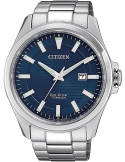
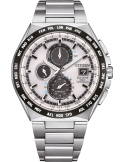
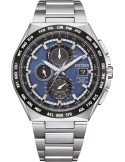
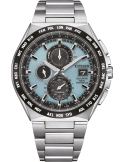
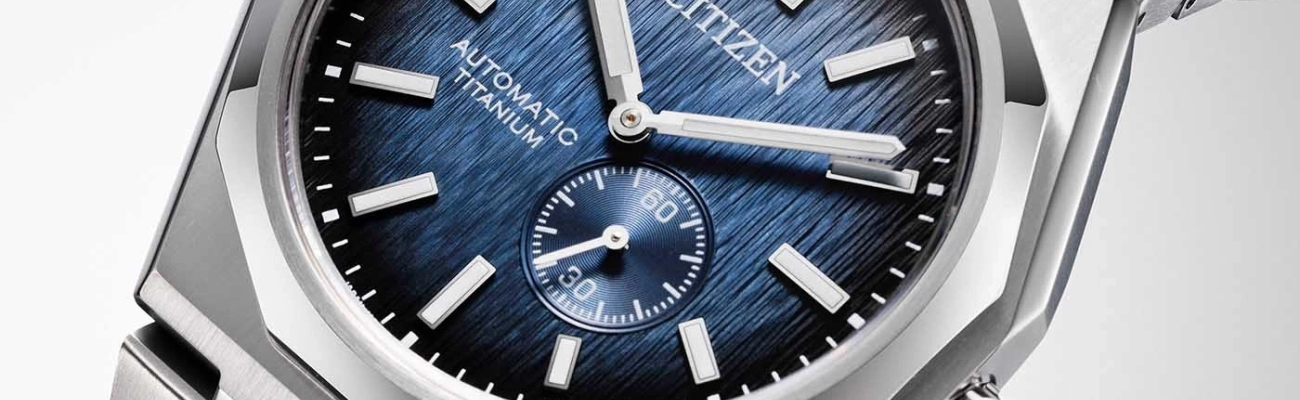
For the global traveler, the Citizen Attesa line represents the absolute zenith of high-tech elegance. Forged entirely from Super Titanium and powered by advanced Eco-Drive movements, flagship Attesa models feature GPS Satellite Wave technology, capable of receiving time signals from orbiting satellites in as little as three seconds. The finishing on the Attesa line features sharp, Zaratsu-style polishing that proves Citizen's titanium can be just as brilliant and reflective as their competitors.
The Seiko Prospex "Shogun" and "Samurai"
Seiko has aggressively integrated titanium into their legendary Prospex dive watch lineage. By taking massive, angular case designs like the "Samurai" or the "Shogun" and forging them from titanium treated with Diashield, Seiko has solved the primary complaint regarding their professional divers: the weight. These watches offer the aggressive, wrist-dominating presence that Seiko fans love, but with a lightweight comfort that allows them to be worn daily without fatigue.
The Future of Aerospace Metallurgy in Horology
As we look toward the future of the watch industry, it is clear that the reign of stainless steel is being heavily challenged. The modern consumer is highly educated. They understand that paying a premium for a luxury watch should guarantee not just a prestigious brand name, but tangible, functional superiority. They want watches that are harder, lighter, and more comfortable.
The Swiss conglomerates are finally waking up to this reality, with brands like Rolex (introducing RLX Titanium on the Yacht-Master) and Tudor (with the Pelagos 39) entering the fray. However, they are decades behind the metallurgical mastery achieved by Citizen and Seiko. The Japanese giants have already perfected the surface-hardening treatments and the high-polish finishing techniques that make titanium the ultimate horological material.
Elevate Your Collection at WatchExclusive
The Titanium Takeover is not a passing trend; it is a permanent evolution in how we manufacture and wear timepieces. A titanium watch is the ultimate expression of the "Go Anywhere, Do Anything" (GADA) philosophy. It offers the mechanical romance and finishing of a luxury watch, the indestructible nature of a tactical tool, and the lightweight comfort of a resin sports watch.
Whether you are drawn to the lunar-proven, scratch-proof armor of Citizen's Super Titanium™ or the breathtaking, Zaratsu-polished brilliance of Seiko's High-Intensity Titanium, the perfect lightweight masterpiece is waiting for you.
At WatchExclusive, we are passionate about the intersection of advanced material science and traditional horology. We meticulously curate our collection to feature the finest titanium watches from the world's most respected Japanese and European brands. We invite you to explore our extensive portfolio, experience the shocking lightness of aerospace metallurgy, and discover the unparalleled comfort of a watch that instantly adapts to your wrist. Step into the future of watchmaking and secure your titanium daily wearer at Watch Exclusive today.
References
- Citizen Watch Global. (2026). The Technology of Super Titanium™: 50 Years of Innovation. Retrieved from Citizen Watch Global.
- Grand Seiko Official. (2026). The Art of Zaratsu Polishing on High-Intensity Titanium. Retrieved from Grand Seiko.
- Hodinkee. (2024). In-Depth: Why Titanium is the Watch Industry's Favorite Metal. Retrieved from Hodinkee.
- Monochrome Watches. (2025). Understanding Watch Case Materials: Grade 2 vs. Grade 5 Titanium. Retrieved from Monochrome Watches.
- Worn & Wound. (2025). Review: The Impact of Citizen's Duratect Coating on Everyday Wear. Retrieved from Worn & Wound.
Share this content