Shopping Cart




The Survival of the Oversized Watch: Why Big Tool Watches Are Here to Stay
By :
F. Nagy -
Categories :
Industry News & Market Trends
Table of contents
keyboard_arrow_down
- Key Takeaways
- The Pendulum of Watch Sizing: A Brief Historical Context
- Form Follows Function: The Engineering Behind 46mm+ Cases
- Uncompromising Legibility in Extreme Environments
- The Vostok Europe Expedition North Pole: A Case Study in Robust Proportions
- Harnessing Solar Power for Ultimate Reliability
- The Mechanical Alternative
- Wrist Presence and the Psychology of the Oversized Watch
- Modern Ergonomics: How Big Watches Wear Smaller
- The Market Reality: Why Brands Continue to Produce Giants
- Conclusion: Embracing the Heavyweights at WatchExclusive
- References
Key Takeaways
- Functional Necessity: Oversized cases (46mm and above) are specifically engineered to house robust shock-absorption systems, thick sapphire crystals, and massive gaskets required for extreme environments.
- Uncompromising Legibility: Expansive dial real estate allows for oversized hands and maximum application of luminous material, which is a non-negotiable requirement for professional tool watches.
- Ergonomic Evolution: Modern case geometry, specifically drastically shortened lug-to-lug distances and curved profiles, allows massive timepieces to wear comfortably and securely on average-sized wrists.
- Market Resilience: Despite the vocal enthusiast push for sub-40mm vintage sizing, global retail data proves that the demand for bold, heavy-duty tool watches remains exceptionally strong.
If you spend enough time reading contemporary horology blogs or scrolling through watch enthusiast forums, you might be led to believe that any timepiece measuring over 40mm is a relic of a bygone era. The current industry narrative heavily favours a return to mid-century proportions, with brands racing to release 36mm field watches and 38mm skin divers. This vocal preference for smaller, vintage-inspired dimensions has created an echo chamber that often ignores a fundamental reality of the global watch market: the oversized tool watch is not only surviving; it is thriving.
The narrative that "smaller is universally better" fundamentally misunderstands the purpose of a true tool watch. While a 37mm dress watch slips elegantly under a tailored shirt cuff, it is entirely out of its depth when strapped over a thick neoprene wetsuit or a heavy arctic parka. Extreme environments demand extreme specifications, and those specifications require physical space. You cannot cheat physics. Housing a highly shock-resistant movement, ensuring deep-water impermeability, and providing instant legibility in zero-light conditions necessitates a substantial case architecture.
Beyond mere functionality, there is an undeniable psychological and aesthetic appeal to a massive, heavy-duty timepiece. It serves as a piece of wearable armour, a statement of rugged individualism, and a testament to uncompromising engineering. By examining the structural necessities, the evolution of case ergonomics, and the enduring market demand, it becomes clear why 46mm+ giants continue to sell out and why they will always hold a vital place in the horological landscape.
The Pendulum of Watch Sizing: A Brief Historical Context
To understand the current state of watch sizing, one must look at the cyclical nature of horological trends. For decades, the standard men's watch hovered between 32mm and 36mm. It wasn't until the mid-to-late 1990s and early 2000s that the industry experienced a seismic shift toward massive proportions. Brands with military heritage began releasing civilian versions of their historical diving and aviation instruments, suddenly making 44mm and 47mm cases the pinnacle of luxury sports watches. According to Ariel Adams in aBlogtoWatch, this era redefined masculine accessories, turning the wristwatch from a subtle time-teller into a prominent statement of personal style.
However, trends operate like a pendulum. Over the last five years, that pendulum has swung aggressively back toward the dimensions of the 1950s and 1960s. Enthusiasts began demanding smaller lug-to-lug profiles and thinner cases, prompting a wave of "downsizing" across major Swiss and Japanese catalogues. Yet, this shift created a false dichotomy, suggesting that the rise of the 38mm watch necessitated the death of the 46mm watch. In reality, the market simply bifurcated. The dress and everyday sports watch categories shrank, while the dedicated, extreme tool watch category maintained its robust proportions because its size was dictated by utility, not just fashion.
The survival of the oversized watch is rooted in its authenticity. When a timepiece is designed to withstand the crushing pressures of deep-sea diving or the violent kinetic shocks of mountaineering, its size is a byproduct of its capability. As long as there are professionals and adventurers who require uncompromising durability, the large-format tool watch will remain a cornerstone of the industry.
Form Follows Function: The Engineering Behind 46mm+ Cases
At the heart of the oversized watch's survival is the undeniable law of physics: extreme durability requires mass and volume. When horological engineers set out to build a watch capable of surviving hostile environments, they are immediately confronted with spatial constraints. Consider the requirements for extreme water resistance. To prevent a case from imploding at great depths, it requires a remarkably thick sapphire crystal, a reinforced case back, and massive rubber gaskets. These components inherently add millimetres to both the diameter and the thickness of the watch.
Furthermore, protecting the delicate escapement and the oscillating balance wheel from violent impacts requires sophisticated shock-absorption systems. In a true extreme tool watch, the movement is rarely seated directly against the inner walls of the steel case. Instead, it is suspended within thick, energy-absorbing movement spacers—often crafted from specialised polymers or anti-magnetic iron cages. This internal architecture acts as a crumple zone, dissipating kinetic energy before it can disrupt the power reserve or damage the gear train. You simply cannot fit this level of structural protection into a 38mm case.
As noted by technical horology experts at Hodinkee, "The physical constraints of building a watch that can survive a 10-metre drop or a 100-atmosphere pressure test dictate a certain volume. The case must be built like a vault, and vaults are rarely small."
Additionally, oversized cases allow for larger, more robust crowns and pushers. When operating a watch with thick gloves—whether in sub-zero arctic conditions or during a technical dive—a tiny, recessed crown is entirely useless. A massive, deeply knurled crown ensures that the user can adjust the time or operate the bezel action with absolute precision, regardless of the environmental challenges.
Uncompromising Legibility in Extreme Environments
The primary directive of any tool watch is to communicate the time instantly and unambiguously. In high-stress situations, a fraction of a second matters. This is where the expansive dial real estate of a 46mm+ watch becomes a critical functional asset. A larger dial allows for the implementation of oversized, high-contrast hands and massive hour markers, drastically reducing the cognitive load required to read the time at a glance.
Moreover, this increased surface area is essential for low-light visibility. Whether navigating a dark underwater cave or enduring the long nights of a polar expedition, luminescence is a matter of survival. Oversized watches provide the necessary space for deep, voluminous applications of Super-LumiNova or the integration of large, self-illuminating tritium gas tubes. The physics of luminescence dictate that more luminous material yields a brighter and longer-lasting glow. A compact vintage diver simply cannot compete with the sheer photonic output of a massive, modern tool watch.
This focus on legibility extends to the bezel as well. A wide, oversized bezel allows for larger, deeply engraved numerals that can be read easily through a diving mask or snow goggles. The tactile feedback of a large bezel, combined with its visual clarity, reinforces the concept that in the realm of professional instruments, bigger often equates to better performance.
The Vostok Europe Expedition North Pole: A Case Study in Robust Proportions
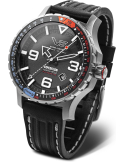
To truly understand the enduring appeal and functional necessity of the oversized tool watch, one must look at brands that have mastered the art of utilitarian brutalism. A prime example is the Expedition North Pole collection by Vostok Europe. Designed to commemorate the first Soviet manned drifting station in the Arctic Ocean, this line of timepieces perfectly encapsulates why massive watches remain highly sought after by adventurers and collectors alike.
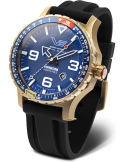
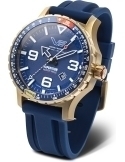
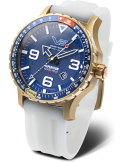
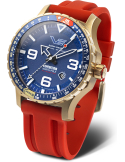
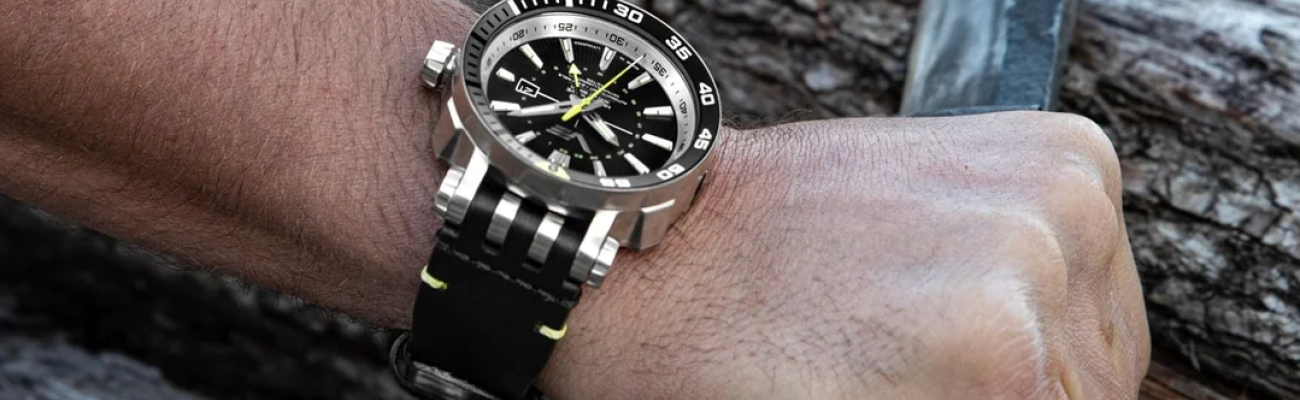
Measuring an imposing 47mm in diameter, these watches make no apologies for their size. Instead, they leverage their massive footprint to deliver exceptional durability and legibility. The cases are sculpted from high-grade stainless steel, featuring a rugged, angular geometry that deflects impacts and protects the internal mechanics. This is not a watch designed to slip under a tuxedo cuff; it is a piece of survival equipment built for the harshest environments on Earth.
Harnessing Solar Power for Ultimate Reliability
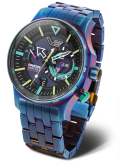
Within this formidable collection, the solar-powered models stand out as the pinnacle of modern tool watch engineering. The Vostok Europe Expedition North Pole Solar Power VS57-595D736 utilises a highly efficient solar-powered Epson movement. By harnessing light energy, this calibre eliminates the need for regular battery changes—a crucial feature when operating in remote locations where watchmakers are non-existent. The massive dial serves a dual purpose here: providing incredible legibility while acting as a large solar panel to keep the movement fully charged.
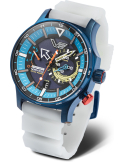
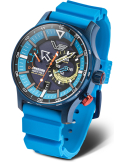
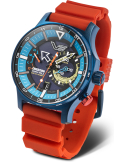
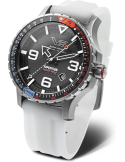
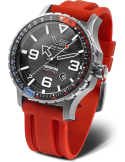
For those who prefer a distinct aesthetic without sacrificing capability, the collection offers striking colour variations. The Vostok Europe Expedition North Pole Solar Power VS57-595D736_blue introduces a deep, arctic-inspired hue to the dial, while the Vostok Europe Expedition North Pole Solar Power VS57-595D736_red provides aggressive, high-contrast accents that enhance readability against snow and ice. Each variant maintains the robust 47mm architecture, ensuring that the watch remains a highly capable instrument regardless of the chosen colourway.
The Mechanical Alternative
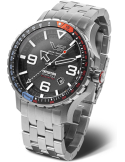
For purists who prefer traditional mechanics, the Vostok Europe Expedition North Pole VS57-595D737B offers the same indestructible 47mm case housing a robust mechanical heart. This model exemplifies the tactile satisfaction of a heavy-duty tool watch, from the reassuring weight on the wrist to the precise, mechanical feedback of the crown. It stands as a testament to the fact that traditional horology still has a vital role to play in the realm of extreme exploration.
Wrist Presence and the Psychology of the Oversized Watch
While the engineering and functional benefits of large watches are quantifiable, their psychological impact is equally important. Strapping a 47mm block of precision-machined steel to your wrist fundamentally changes how you interact with your timepiece. It provides a sense of reassurance, a tangible reminder of durability and capability. In a world increasingly dominated by fragile, ephemeral smart devices, a massive mechanical or solar-powered tool watch feels permanent and indestructible.
This concept of "wrist presence" is a major driving force behind the continued sales of oversized watches. Collectors and enthusiasts often seek out timepieces that make a bold statement. A large watch projects confidence and a rugged, adventurous spirit. It is a conversation starter, a piece of wearable architecture that refuses to be ignored. The tactile satisfaction of interacting with a heavy, substantial watch—feeling the inertia of the case when you move your arm, or the crisp, heavy clicks of an oversized bezel—is an experience that smaller, lighter watches simply cannot replicate.
Furthermore, the oversized watch serves as a rebellion against the homogenisation of modern style. As mainstream fashion leans toward minimalist, unobtrusive accessories, the massive tool watch stands as a proud outlier. It appeals to those who appreciate utilitarian design, where every millimetre of steel and every gram of weight serves a distinct, functional purpose.
Modern Ergonomics: How Big Watches Wear Smaller
One of the most common arguments against oversized watches is that they are unwearable for individuals with average-sized wrists. However, this argument often relies on a fundamental misunderstanding of watch geometry. The wearability of a timepiece is not dictated solely by its case diameter; it is primarily determined by its lug-to-lug distance and the curvature of its case back.
Modern horological design has evolved significantly to address the ergonomics of large watches. Brands have realised that by drastically shortening the lugs and angling them sharply downward, a massive 47mm case can conform comfortably to a 7-inch wrist. This design philosophy ensures that the watch sits securely on the flat plane of the wrist without the lugs overhanging the edges, which is the primary cause of discomfort and aesthetic awkwardness in poorly designed large watches.
Additionally, the strategic use of case back curvature and the integration of articulated straps or bracelets allow heavy watches to distribute their weight evenly. When a watch is properly balanced, even a heavy stainless steel giant can be worn all day without causing fatigue. According to ergonomic analyses published in Fratello Watches, the integration of the strap directly into the case—minimising the gap between the case and the wrist—drastically improves the centre of gravity, making modern oversized watches far more wearable than their predecessors from the early 2000s.
The Market Reality: Why Brands Continue to Produce Giants
If the vocal minority on internet forums truly represented the entirety of the watch-buying public, production of 46mm+ watches would have ceased years ago. Yet, a quick glance at the catalogues of major luxury and tool watch brands reveals a different reality. The production of massive, over-engineered timepieces continues unabated because the global market demand remains incredibly strong.
There is a "silent majority" of watch consumers who do not participate in online horology debates but who consistently purchase large, rugged timepieces. These are military personnel, law enforcement officers, commercial divers, and outdoor enthusiasts who view their watch as a critical piece of gear. For this demographic, a 38mm vintage reissue is not a practical option; they require the durability, legibility, and tactile operability that only a large-format watch can provide.
Furthermore, the global market is diverse. While certain Western markets may currently favour smaller sizes, other massive markets across the globe continue to show a strong preference for large, statement-making timepieces. Watch brands are driven by sales data, and the data consistently shows that the oversized tool watch is a highly profitable and necessary segment of the industry. The survival of these giants is not an accident; it is a direct response to enduring consumer demand.
Conclusion: Embracing the Heavyweights at WatchExclusive
The narrative that the oversized watch is dead is a myth perpetuated by a narrow segment of the enthusiast community. In reality, the 46mm+ tool watch remains a vital, thriving category within modern horology. Driven by the uncompromising laws of physics, the necessity for extreme durability, and the demand for instant legibility, these massive timepieces serve a purpose that smaller watches simply cannot fulfill. They are testaments to utilitarian engineering, offering a bold aesthetic and a reassuring wrist presence that continues to captivate collectors and professionals alike.
Modern advancements in case ergonomics have made these giants more wearable than ever, proving that you do not need a massive wrist to enjoy a massive watch. Whether you are drawn to the indestructible nature of the case, the brilliant luminosity of the oversized dial, or the sheer mechanical audacity of the design, there is an undeniable appeal to a watch built without compromise.
We invite you to experience the power and presence of these extraordinary timepieces for yourself. Explore the rugged capability of the Vostok Europe Expedition North Pole VS57-595D737B, or harness the power of light with the Vostok Europe Expedition North Pole Solar Power VS57-595D736. Discover our full range of heavy-duty instruments at WatchExclusive, and find the perfect oversized tool watch to accompany you on your next great adventure.
References
- Adams, Ariel.
The Evolution of Watch Sizes and Why Big Watches Still Matter.
aBlogtoWatch. Accessed October 2026. - Forster, Jack.
In Defense of the Oversized Tool Watch.
Hodinkee. Accessed October 2026. - Broer, Robert-Jan.
Understanding Lug-to-Lug Measurements and Watch Ergonomics.
Fratello Watches. Accessed October 2026. - Official Technical Specifications. Vostok Europe Expedition North Pole Collection. WatchExclusive Archives.
Share this content