
Shopping Cart

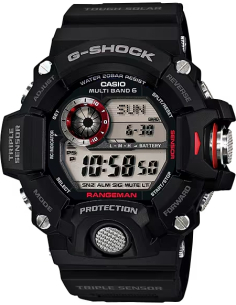






Tritium Illumination Explained: Why GTLS is the Ultimate Watch Lume
By :
F. Nagy -
Categories :
Interesting Watch Facts
Table of contents
keyboard_arrow_down
- Key Takeaways
- The Evolution of Watch Luminescence
- What is GTLS and How Does it Work?
- Tritium Tubes vs. Super-LumiNova: The Ultimate Showdown
- The Safety of Tritium in Modern Watches
- Why Extreme Tool Watches Rely on Tritium
- Spotlight on the Vostok Europe Expedition North Pole Collection
- The Solar-Powered Marvel: VS57-595D736 Series
- The Tactical Heavyweight: VS57-595D737B
- The Lifespan and Maintenance of Tritium Watches
- Discover Your Next Tritium Watch at WatchExclusive
- References
Key Takeaways
- Continuous Illumination: GTLS (Gaseous Tritium Light Sources) provides a constant, self-sustaining glow for up to 25 years without ever needing an external light charge.
- Radioluminescence vs. Photoluminescence: Unlike standard Super-LumiNova which fades over a few hours, tritium tubes rely on the beta decay of hydrogen-3 to excite phosphor coatings, ensuring unwavering legibility in total darkness.
- Uncompromising Safety: Modern tritium tubes are hermetically sealed in borosilicate glass; the low-energy beta particles cannot penetrate the glass or human skin, making them entirely safe for daily wear.
- The Ultimate Tool Watch Choice: Because of their reliability in prolonged darkness, GTLS is the preferred luminous technology for military personnel, deep-sea divers, and polar explorers.
- Expedition-Ready Timepieces: Brands like Vostok Europe integrate GTLS into rugged models like the Expedition North Pole series, combining solar-powered movements with always-on illumination.
For horology enthusiasts, the allure of a finely crafted timepiece extends far beyond daylight hours. When the lights go out, a completely different dimension of watchmaking awakens: luminescence. However, not all glowing dials are created equal. If you have ever woken up in the pitch black of night, glanced at your wrist, and found your watch dial completely illegible, you have experienced the fundamental limitation of traditional photoluminescent paint. It requires an external light source to charge, and its energy inevitably depletes as the hours tick by, leaving you in the dark when you need legibility the most.
Enter Gaseous Tritium Light Sources (GTLS). Unlike standard luminous paints that act as temporary light storage batteries, tritium tubes are microscopic, self-sustaining light generators. They require absolutely no exposure to sunlight, no charging from an LED torch, and no electronic pushers to activate. For up to a quarter of a century, they emit a constant, unwavering glow. This remarkable technology has revolutionised the tactical and tool watch industry, providing uncompromising legibility in the most extreme and unforgiving environments on Earth.
In this comprehensive guide, we will delve deep into the science, history, and practical application of tritium illumination in modern horology. We will explore the fascinating physics behind radioluminescence, compare GTLS directly against industry-standard Super-LumiNova, and examine why elite military units and polar explorers trust this technology above all others. Finally, we will showcase how brands are integrating these micro-gas tubes into rugged, expedition-ready timepieces available right here at WatchExclusive.
The Evolution of Watch Luminescence
To truly appreciate the marvel of modern tritium tubes, one must understand the somewhat dark and dangerous history of watch luminescence. In the early 20th century, the demand for legible dials in low-light conditions—driven largely by the needs of soldiers in the trenches of World War I—led to the widespread use of Radium-226. Radium was highly radioactive, but when mixed with zinc sulfide, it produced a brilliant, continuous glow. As noted by Cole Pennington in Hodinkee, In 1908 when radium paint was invented, the wristwatch wasn't commonplace quite yet – but in a few short years, it would become a mainstream accessory
. Unfortunately, the devastating health impacts on the factory workers who hand-painted these dials, tragically known as the Radium Girls, eventually forced the industry to seek safer alternatives.
By the 1960s, watchmakers transitioned to safer radioactive isotopes, primarily Promethium-147 and Tritium paint. Tritium, a mildly radioactive isotope of hydrogen, was mixed directly into the dial paint. You can often identify vintage watches from this era by the small "T Swiss T" or "T<25" markings at the bottom of the dial. While significantly safer than radium, tritium paint still had drawbacks. The paint itself was exposed to the elements inside the watch case, and the phosphor degraded relatively quickly, leading to the yellowed, non-glowing "patina" that vintage collectors covet today.
The true breakthrough occurred in 1969, courtesy of the Swiss microtechnology company mb-microtec. They pioneered a method to safely encapsulate tritium gas inside microscopic glass tubes, completely isolating the radioactive material from the environment and the wearer. This invention, branded as trigalight, marked the birth of modern GTLS. It offered the continuous glow of early radioactive paints but with an unprecedented level of safety and longevity.
Today, while the vast majority of the luxury watch industry has moved towards non-radioactive photoluminescent materials, GTLS remains the gold standard for purpose-built tactical timepieces. The evolution from dangerous hand-painted radium to laser-sealed borosilicate glass tubes represents one of the most significant, yet underappreciated, technological advancements in 20th-century horology.
What is GTLS and How Does it Work?
The science behind Gaseous Tritium Light Sources is a fascinating intersection of nuclear physics and micro-manufacturing. At the core of this technology is Tritium (H-3), a rare and radioactive isotope of hydrogen. Unlike standard hydrogen, which has one proton and zero neutrons, tritium has one proton and two neutrons. This atomic structure makes it unstable, causing it to undergo beta decay. During this decay process, the tritium atom releases a beta particle—essentially a low-energy electron.
However, tritium gas itself does not glow. The magic happens when this gas is introduced into a microscopic capillary made of borosilicate glass. Before the gas is injected, the interior walls of these tiny glass tubes—some of which are barely thicker than a human hair—are coated with a highly specialised phosphor powder. When the tritium gas undergoes beta decay, the emitted electrons strike the phosphor coating. This collision excites the phosphor atoms, causing them to release energy in the form of visible photons. This continuous physical process is known as radioluminescence.
The manufacturing of these tubes is an incredibly delicate operation. According to the inventors at mb-microtec,
trigalight® is a brand of the Swiss microtechnology company mb-microtec ag... representing a unique self-luminous technology. mb-microtec ag is the inventor and global leader in the development, production, and sale of tritium gas light sources. The glass capillaries are drawn to precise dimensions, coated internally, filled with the exact required pressure of tritium gas, and then hermetically sealed using a highly focused CO2 laser. This laser sealing ensures that the gas cannot escape and that moisture cannot enter.
Interestingly, the colour of the light emitted by a GTLS tube is not determined by the tritium gas, but entirely by the chemical composition of the phosphor coating. Green GTLS tubes are universally perceived as the brightest because the human eye is naturally most sensitive to light in the 555-nanometer wavelength range. While manufacturers can produce tubes in blue, yellow, orange, red, and white, green remains the most efficient and legible choice for critical timekeeping.
Tritium Tubes vs. Super-LumiNova: The Ultimate Showdown
When discussing watch luminescence, the debate inevitably comes down to GTLS versus Super-LumiNova. Super-LumiNova, based on strontium aluminate, is the current industry standard for the vast majority of mechanical watches. It is a photoluminescent material, meaning it operates like a light sponge. It absorbs ultraviolet light from the sun or artificial sources, stores that energy, and slowly releases it as a visible glow.
The primary advantage of Super-LumiNova is its initial peak brightness. When you walk from bright sunlight into a dark room, a dial heavily applied with high-grade Super-LumiNova (such as the popular C3 or BGW9 variants) will blaze with an intensity that tritium tubes simply cannot match. As noted in a technical breakdown by Fratello Watches, Green and blue are the most effective pigments, which is why they dominate the lume space
. However, this intense brightness is fleeting. The discharge curve of photoluminescent paint is exponential; it loses a significant percentage of its brightness within the first 30 to 60 minutes, eventually tapering off to a faint glow that may become unreadable by the early hours of the morning.
GTLS, on the other hand, operates on a completely different paradigm. Because it is a self-sustaining radioluminescent generator, it requires zero external light to function. If you lock a tritium-equipped watch in a pitch-black safe for five years and open it in the dark, it will be glowing exactly as brightly as the day you put it in. The light output is entirely linear and consistent over the short term.
Therefore, the "ultimate showdown" depends entirely on the use case. For a desk diver who occasionally walks into a dark cinema, Super-LumiNova provides a fun, bright burst of light. But for a professional who operates in sustained darkness—such as a spelunker, a deep-sea saturation diver, or a soldier on a multi-night covert operation—the fading nature of photoluminescence is a critical point of failure. In these high-stakes scenarios, the unwavering reliability of GTLS is the only logical choice.
The Safety of Tritium in Modern Watches
The word "radioactive" naturally triggers alarm bells for many consumers, leading to common misconceptions about the safety of tritium watches. However, the reality of modern GTLS technology is that it is exceptionally safe, heavily regulated, and poses virtually zero risk to the wearer. The key to this safety lies in the specific type of radiation emitted by the hydrogen-3 isotope.
Tritium is a pure beta emitter. Unlike the highly penetrating gamma radiation associated with historical radium dials, beta particles are incredibly weak. The electrons released during tritium decay do not have enough energy to penetrate the borosilicate glass of the micro-tubes, let alone the stainless steel case of the watch or the sapphire crystal. Even if a tube were to somehow break outside the watch, the beta particles cannot penetrate the dead outer layer of human skin. According to the U.S. Nuclear Regulatory Commission, tritium emits very weak radiation, and strict manufacturing standards ensure consumer safety .
To further ensure public safety, the watch industry adheres to strict regulatory limits regarding the amount of radioactive material allowed in a single timepiece. You will often see watches designated with a T25 standard or a T100 standard. A T25 watch contains a maximum of 25 millicuries (mCi) of tritium gas, which is the standard limit for most civilian markets. T100 watches contain up to 100 mCi, allowing for more tubes or larger, flat tubes that provide a brighter overall dial. Both classifications are rigorously tested and deemed entirely safe for everyday wear, ensuring that you can enjoy the benefits of radioluminescence without any health concerns.
Why Extreme Tool Watches Rely on Tritium
The unique properties of GTLS make it the undisputed champion for extreme tool watches. A tool watch is defined by its ability to perform a specific function flawlessly under duress, and when that function is time-telling in absolute darkness, tritium has no equal. This is why military special forces, law enforcement tactical teams, and search-and-rescue operators specifically request tritium-illuminated timepieces.
Consider the environment of a polar expedition. During the winter months at the North or South Pole, explorers face weeks or even months of continuous darkness. A standard watch relying on Super-LumiNova would be rendered completely useless within hours, as there is no sunlight available to recharge the dial. A watch equipped with GTLS, however, will remain perfectly legible 24 hours a day, 7 days a week, regardless of the external lighting conditions.
Similarly, in the realm of deep cave diving or extended submarine operations, professionals cannot afford to rely on a light source that depletes over time. The psychological comfort and practical utility of looking at your wrist after 12 hours in the dark and seeing a crisp, glowing handset cannot be overstated. It is this uncompromising reliability that drives brands focused on extreme environments to engineer their flagship models around micro-gas tube technology.
Spotlight on the Vostok Europe Expedition North Pole Collection
When it comes to integrating GTLS into robust, accessible, and highly functional timepieces, few brands do it better than Vostok Europe. Known for their "watches for going to extremes," their designs are purpose-built to withstand the harshest conditions on the planet. A prime example of this philosophy is the Vostok Europe Expedition North Pole collection, which perfectly marries rugged construction with advanced illumination.
The Solar-Powered Marvel: VS57-595D736 Series
One of the most compelling models in this lineup is the Vostok Europe Expedition North Pole Solar Power VS57-595D736. This timepiece represents the ultimate off-grid survival tool by combining two self-sustaining technologies: a solar-powered movement and tritium illumination. The calibre VS57 movement charges via any light source, offering months of power reserve, while the GTLS tubes on the hands and indices ensure that even if you are plunged into darkness for days, you will never lose track of time.
For those who prefer a touch of colour in their tactical gear, Vostok Europe offers striking variations of this model. The Vostok Europe Expedition North Pole Solar Power VS57-595D736 (Blue) features a deep, arctic blue dial that contrasts beautifully with the glowing tritium tubes. The blue aesthetic pays homage to the freezing waters and glacial ice of the polar regions it is designed to conquer.
Alternatively, the Vostok Europe Expedition North Pole Solar Power VS57-595D736 (Red) injects a bold, aggressive aesthetic into the collection. The vibrant red accents on the dial and strap make a strong visual statement during the day, while the micro-gas tubes take over the heavy lifting at night. All three of these solar-powered variants feature robust stainless steel cases, thick K1 mineral crystals, and impressive water resistance, making them true go-anywhere, do-anything companions.
The Tactical Heavyweight: VS57-595D737B
For those who demand a stealthier, more tactical aesthetic, the Vostok Europe Expedition North Pole VS57-595D737B is an exceptional choice. This model features a stealthy PVD-coated stainless steel case that eliminates reflections, a crucial feature for military and tactical applications. The dark case perfectly frames the dial, allowing the vertically mounted tritium tubes to stand out with incredible clarity in low-light conditions. With its 200-metre water resistance and rugged build, it is a testament to Vostok Europe's commitment to extreme durability.
The Lifespan and Maintenance of Tritium Watches
While GTLS is often described as a permanent light source, it is important to understand the physics of its lifespan. Because the illumination relies on the radioactive decay of an isotope, the brightness of the tubes will slowly decrease over time. Tritium has a half-life of 12.32 years. This means that exactly 12.32 years after the tubes are manufactured, half of the tritium gas will have decayed into stable helium-3, and the tubes will glow at approximately half of their original brightness.
After roughly 24 to 25 years (two half-lives), the tubes will emit about 25% of their original light. While they will still be visible in pitch darkness to a dark-adjusted eye, they will lack the crisp, vibrant punch they had when new. It is a slow, graceful ageing process, entirely different from the rapid nightly fade of photoluminescent paint.
The good news for collectors and professionals is that a dimming tritium watch is not the end of the road. When the tubes eventually reach the end of their practical lifespan, the watch can be sent back to the manufacturer or a certified service centre. During a major overhaul, the dial and hands (which house the glass capillaries) can be entirely replaced with fresh components, instantly restoring the watch to its original, blazing glory for another quarter-century of service.
Discover Your Next Tritium Watch at WatchExclusive
The technology behind Gaseous Tritium Light Sources represents a perfect marriage of high-end micro-engineering and practical, real-world utility. Whether you are an outdoor adventurer, a tactical professional, or simply a horology enthusiast who appreciates the uncompromising reliability of a self-illuminating dial, a tritium-equipped watch is a mandatory addition to your collection. The peace of mind that comes from knowing your watch will be perfectly legible at 4:00 AM, regardless of where you are or what you are doing, is an experience that standard luminous paints simply cannot replicate.
We invite you to experience the power of GTLS for yourself. Explore our curated selection of extreme tool watches, including the formidable Vostok Europe Expedition North Pole Solar Power VS57-595D736 and its tactical siblings, available now at WatchExclusive. Equip yourself with a timepiece that refuses to fade into the dark, and discover the ultimate standard in nocturnal legibility.
References
- Pennington, C. (2022). Weekend Edition: Let There Be Light: Appreciating The Execution Of Lume. Hodinkee. Available at: https://www.hodinkee.com/articles/weekend-edition-let-there-be-light-appreciating-the-execution-of-lume
- mb-microtec ag. (2024). trigalight Technology and History. mb-microtec. Available at: https://mbmicrotec.com/en/technologies/trigalight/
- Garzón, N. C. (2025). Lume Wars: Why Green and Blue Dominate the Dark. Fratello Watches. Available at: https://www.fratellowatches.com/lume-wars-why-green-and-blue-dominate-the-dark/
- U.S. Nuclear Regulatory Commission. (2019). Backgrounder on Tritium, Radiation Protection Limits, and Drinking Water Standards. NRC.gov. Available at: https://www.nrc.gov/reading-rm/doc-collections/fact-sheets/tritium-radiation-fs.html
Share this content