Shopping Cart




The Ultimate Cleaning Guide for Stainless Steel and Resin Hybrid Watches
By :
F. Nagy -
Categories :
Watch Care & Technical Guides
Table of contents
keyboard_arrow_down
- Key Takeaways
- The Anatomy of a Hybrid: Understanding Stainless Steel and Resin
- Essential Tools for Proper G-Steel Maintenance
- Step-by-Step: How to Clean G-SHOCK Resin Components
- Restoring the Shine: Cleaning a Stainless Steel Watch Case
- How to Safely Remove Dirt from a Watch Bezel
- Dealing with Pushers and Sensor Guards
- Managing Articulated Lugs and Bracelets
- What to Avoid: Common Mistakes in Hybrid Watch Care
- Upgrading Your Collection: The Evolution of the G-Steel Line
- Conclusion: Preserve Your Timepiece and Explore WatchExclusive
- References
Key Takeaways
- Use gentle cleaning agents: Mild washing-up liquid and lukewarm water are the safest and most effective solutions for cleaning both polyurethane resin and stainless steel without causing chemical degradation or micro-abrasions.
- Avoid harsh solvents: Never expose hybrid watches to acetone, bleach, or DEET-based insect repellents, as these chemicals will rapidly break down resin components and compromise rubber gaskets.
- Target crevices carefully: Use a soft-bristled toothbrush and wooden toothpicks to safely remove dirt from the watch bezel, pushers, and articulated lugs without scratching the metal finishes.
- Understand material differences: Stainless steel requires careful drying with a high-GSM microfibre cloth to prevent hard water spots, while resin benefits from regular removal of body oils to prevent hydrolysis and brittleness.
- Skip the ultrasonic cleaner: Never place a complete watch head into an ultrasonic cleaner, as the high-frequency cavitation can destroy water-resistance seals and damage internal electronic or mechanical components.
The modern horological landscape has seen a massive surge in the popularity of hybrid watches—timepieces that seamlessly blend the rugged, shock-absorbing qualities of synthetic polymers with the refined, structural rigidity of metal. This architectural approach to watchmaking is perhaps best exemplified by the Casio G-SHOCK brand, which revolutionised the industry by proving that a watch could be virtually indestructible. However, as these tool watches evolved from purely utilitarian plastic instruments into sophisticated, multi-material accessories, the requirements for their upkeep have fundamentally changed. Owning a timepiece that features both high-grade steel and flexible urethane means you are managing two vastly different materials, each with its own specific vulnerabilities and maintenance needs.
For watch enthusiasts and everyday wearers alike, the challenge lies in preserving the factory finish of the metal while preventing the synthetic components from degrading over time. Sweat, sebum, environmental dust, and chemical exposure interact differently with a brushed steel bezel than they do with a flexible resin strap. If left unaddressed, the accumulation of particulate matter in the tight tolerances between these materials can lead to premature wear, unpleasant odours, and a dulling of the watch's aesthetic appeal. Proper maintenance is not just about keeping the watch looking pristine; it is a critical aspect of preserving the integrity of the water-resistance gaskets and the shock-absorbing structures that protect the internal module.
This comprehensive guide is designed to equip you with the knowledge and techniques required to maintain your hybrid timepieces at a professional level. Whether you are trying to figure out the best method for G-Steel maintenance, looking for safe ways to restore the lustre of a metal case, or simply wanting to extend the lifespan of your daily wearer, understanding the science behind watch cleaning is essential. By utilising the right tools and avoiding common, catastrophic mistakes, you can ensure that your hybrid watch remains a reliable and visually striking companion for decades to come.
The Anatomy of a Hybrid: Understanding Stainless Steel and Resin
To properly care for a hybrid watch, one must first understand the engineering behind its construction. The integration of metal and synthetic polymers is not merely an aesthetic choice; it is a highly calculated structural design meant to maximise durability. In premium hybrid lines, the core philosophy revolves around the Layered Guard Structure. This engineering marvel utilises a dual-layer bezel—often combining a rigid outer layer of metal with an inner layer of shock-absorbing resin—to disperse impact forces away from the delicate internal module.
The metal components of these watches are typically forged from 316L stainless steel, a marine-grade alloy renowned for its exceptional resistance to pitting and corrosion. This specific alloy contains molybdenum, which drastically increases its resilience against chlorides found in sweat and seawater. However, while 316L stainless steel is highly resistant to rust, its surface finishes—whether high-polish or satin-brushed—are susceptible to micro-scratches and the accumulation of smudges from natural skin oils. When dirt mixes with these oils, it creates a mild abrasive paste that, over time, can dull the sharp transitions between the polished and brushed facets of the case.
Conversely, the synthetic components are usually crafted from polyurethane resin or advanced fine resin composites. While incredibly resilient to blunt force trauma, polyurethane is chemically sensitive. According to horological maintenance experts, the primary enemy of watch resin is a chemical process known as hydrolysis. Polyurethane naturally breaks down over time when exposed to moisture and heat, a process accelerated by the acidic nature of human sweat and sebum,
notes a technical guide published by Fratello Watches. If a resin strap or bumper is not regularly cleaned of these biological oils, the material will eventually harden, discolour, and crack—a phenomenon collectors colloquially refer to as "resin rot." Understanding this dichotomy is the first step in mastering hybrid watch care.
Essential Tools for Proper G-Steel Maintenance
Before you begin the cleaning process, assembling the correct toolkit is paramount. Using the wrong implements can cause irreversible damage to both the metal finishes and the synthetic components of your watch. The goal is to lift and remove debris without applying abrasive friction. You do not need expensive, specialised horological equipment for routine exterior maintenance; rather, you need gentle, effective household items repurposed for delicate work.
The cornerstone of your cleaning kit should be a premium, ultra-soft toothbrush. A children's toothbrush or a brush specifically labelled "extra soft" is ideal. The bristles must be pliable enough to bend into the intricate crevices of the watch without scratching the 316L stainless steel or leaving micro-abrasions on the mineral or sapphire crystal. Alongside the brush, you will need a high-quality, lint-free microfibre cloth. Look for cloths with a high GSM (grams per square metre) rating, similar to those used by automotive detailers for final polishing. These cloths are designed to trap dust particles deep within their fibres rather than dragging them across the polished surfaces of the watch case.
For the cleaning solution, avoid commercial jewellery cleaners, as they often contain ammonia or other harsh solvents that can degrade resin and dry out the rubber O-rings responsible for the watch's water resistance. Instead, use a mild, unscented liquid dish soap. Dish soap is formulated with gentle surfactants that are specifically designed to break down grease and oils—exactly what you need to remove sebum from the watch without causing chemical damage. Finally, keep a supply of wooden toothpicks on hand. Wood is softer than steel and most watch crystals, making it the perfect tool for dislodging stubborn grime from tight spaces without risking scratches.
Step-by-Step: How to Clean G-SHOCK Resin Components
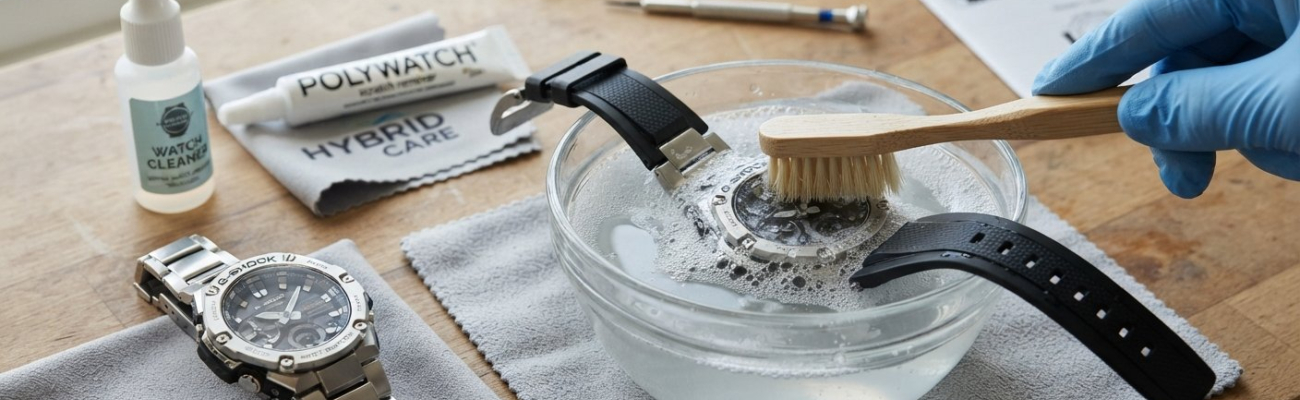
When addressing the question of how to clean G-SHOCK resin, the approach must be thorough yet chemically gentle. The resin bands and protective bumpers on hybrid watches bear the brunt of daily wear, absorbing sweat, sunscreen, and environmental dirt. To begin, ensure that the crown (if applicable) is fully screwed down and that you do not press any pushers while the watch is submerged or wet. Fill a small bowl with lukewarm water—never hot, as extreme heat can warp synthetic materials and compromise the internal gaskets—and add a single drop of mild dish soap.
Dip your soft-bristled toothbrush into the soapy solution and begin gently scrubbing the resin components. Focus heavily on the inner side of the strap, particularly the corrugated sections near the lugs, as this is where sweat and dead skin cells accumulate most rapidly. For watches with intricate resin armour, such as the Casio G-SHOCK Classic GA-110GB-1AER, pay special attention to the deep grooves and the areas where the resin meets the case back. Use light, circular motions, allowing the surfactants in the soap to lift the oils away from the polyurethane surface.
Once the resin has been thoroughly scrubbed, rinse the watch under a gentle stream of clean, lukewarm tap water. It is crucial to remove all soap residue, as dried soap can leave a white, chalky film on dark resin and potentially dry out the material over time. After rinsing, pat the watch dry with your microfibre cloth. Do not use a hair dryer or place the watch on a radiator to speed up the drying process; allow any remaining moisture in the crevices to air dry naturally in a well-ventilated room. Regular cleaning of the resin not only maintains its matte aesthetic but significantly delays the onset of hydrolysis, ensuring the strap remains supple and comfortable.
Restoring the Shine: Cleaning a Stainless Steel Watch Case
While resin requires care to prevent chemical breakdown, cleaning a stainless steel watch is primarily an exercise in restoring aesthetic brilliance and preventing localised corrosion. Even high-grade marine steel can suffer if salt from sweat or seawater is allowed to sit in the microscopic grain of brushed finishes for extended periods. The cleaning solution remains the same—lukewarm water and mild dish soap—but the technique shifts slightly to accommodate the metal's finishing.
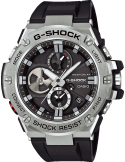
When cleaning the steel portions of your hybrid watch, such as the prominent metal bezel on the Casio G-SHOCK G-Steel GST-B400-1AER, use the soapy toothbrush to gently agitate the surface. Pay close attention to the directional grain of any brushed surfaces. If the steel has a vertical or horizontal brush stroke, try to move your brush in the same direction to clean deep within the grain without creating cross-directional micro-marring. For high-polish areas, use the absolute minimum amount of pressure necessary; let the soap do the work of dissolving the fingerprints and oils.
Drying is the most critical step when dealing with stainless steel. Tap water contains trace minerals like calcium and magnesium. If water droplets are left to evaporate on a polished steel surface, they will leave behind hard water spots that can be incredibly stubborn to remove and ruin the visual impact of the watch. Immediately after rinsing, use your high-GSM microfibre cloth to thoroughly dry the metal. For an extra level of shine, once the watch is completely dry, you can use a clean, dry section of the microfibre cloth to gently buff the polished facets, restoring the factory gleam and highlighting the sharp architectural lines of the case.
How to Safely Remove Dirt from a Watch Bezel
The bezel is often the most visually prominent part of a watch, but it is also a magnet for debris. Learning how to safely remove dirt from a watch bezel is essential, especially for hybrid models that feature complex, multi-layered constructions with exposed screws and deep recesses. Dirt trapped between a steel bezel and a resin case not only looks unsightly but can act as an abrasive, slowly wearing away at the materials as the watch flexes during wear.
Begin by using a dry, wooden toothpick to carefully trace the perimeter where the bezel meets the crystal and where the metal meets the resin. The wood is soft enough that it will not scratch the mineral glass or the steel, but firm enough to dislodge compacted lint, dust, and dried sweat. Gently run the tip of the toothpick through the heads of any decorative or functional bezel screws. Once the compacted dirt has been loosened, use your dry, soft-bristled toothbrush to sweep the debris away before introducing any water or soap.
Dealing with Pushers and Sensor Guards
Hybrid tool watches often feature large, textured pushers and intricate sensor guards. These areas are notorious for trapping grime. When cleaning around the pushers, never press the buttons while the watch is submerged or covered in soapy water, as this can force moisture past the internal O-rings and flood the module. Instead, use the soapy toothbrush to gently clean the textured surfaces of the buttons and the surrounding resin guards. If dirt is deeply embedded in the knurling of a pusher, a toothpick can be used to carefully clear the grooves.
Managing Articulated Lugs and Bracelets
If your hybrid watch features a metal bracelet or articulated resin lugs, the spaces between the links and the lug pins require special attention. Over time, a black sludge—a mixture of sweat, dead skin, and metallic dust—can build up inside the bracelet joints. This sludge acts as a grinding paste, causing premature "bracelet stretch" and wear on the pins. Flex the links or lugs gently while brushing with soapy water to ensure the bristles reach inside the joints, flushing out the abrasive buildup and preserving the structural integrity of the band.
What to Avoid: Common Mistakes in Hybrid Watch Care
Even with the best intentions, it is easy to inadvertently damage a hybrid watch by using improper cleaning methods. One of the most common and destructive mistakes is the use of harsh chemicals. Never allow your watch to come into contact with acetone (nail polish remover), bleach, or industrial solvents. Furthermore, be incredibly cautious with aerosol sunscreens and DEET-based insect repellents. As noted by horological experts, DEET is a plasticiser that can literally melt certain types of synthetic polymers and resins on contact,
causing irreversible cosmetic and structural damage to watch bands and bezels.
Another major pitfall is the misuse of ultrasonic cleaners. While ultrasonic baths are fantastic for cleaning detached solid steel bracelets, you must never place a complete watch head into an ultrasonic cleaner. The high-frequency sound waves create microscopic cavitation bubbles that implode with immense force. This process can easily destroy the delicate rubber gaskets that provide water resistance, forcing water into the case. Furthermore, the intense vibrations can disrupt the delicate quartz oscillator in electronic modules or damage the escapement in mechanical watches.
Finally, avoid exposing your watch to extreme thermal shock during the cleaning process. Do not clean your watch under scalding hot water, and avoid wearing it in hot showers, saunas, or hot tubs. The rapid expansion and contraction of the different materials—steel expands at a different rate than resin and glass—can cause the water-resistance gaskets to temporarily deform, allowing moisture to bypass the seals and condense on the inside of the crystal.
Upgrading Your Collection: The Evolution of the G-Steel Line
If you are currently maintaining an older, all-resin timepiece that has seen better days, or if you are simply captivated by the aesthetic of mixed materials, exploring the modern Casio G-SHOCK G-Steel collection is a logical next step. This line represents the pinnacle of hybrid watch design, offering the legendary toughness of G-SHOCK wrapped in premium, office-appropriate metal finishes. The evolution of this series has seen a dramatic reduction in case thickness and the introduction of advanced horological technologies.
For those who appreciate bold, mechanical-inspired aesthetics, the Casio G-SHOCK G-Steel GST-B100-1AER is a standout piece. It features a striking turbine dial indicator and a robust stainless steel chassis that commands attention. It perfectly demonstrates how steel and resin can be layered to create a watch that is both visually aggressive and structurally sound. Maintaining the brushed finish on its prominent bezel using the techniques outlined above will ensure it remains a centerpiece of any collection.
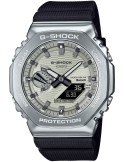
Alternatively, if you prefer a sleeker, more contemporary profile, the newer GBM-2100 series is a masterclass in refined utility. Models like the Casio G-SHOCK G-Steel GBM-2100A-2BER and the Casio G-SHOCK G-Steel GBM-2100A-8BER utilise the iconic octagonal bezel design, rendered in beautifully finished stainless steel. These models are equipped with Tough Solar technology and Bluetooth smartphone link capabilities, proving that hybrid watches can be as technologically advanced as they are durable. Keeping the crystal and dial clean on these models is particularly important, as a layer of grime can impede the efficiency of the solar panels hidden beneath the dial. You can explore these and other advanced models in our dedicated G-Shock PRO category.
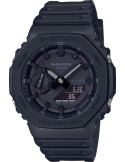
For those who want the hybrid look in a lighter, more traditional resin-heavy format, the incredibly popular Casio G-SHOCK Classic GA-2100-1A1ER utilises a Carbon Core Guard structure. While primarily resin on the exterior, the internal carbon-reinforced case provides incredible rigidity, making it a perfect entry point into advanced material watchmaking.
Conclusion: Preserve Your Timepiece and Explore WatchExclusive
Maintaining a stainless steel and resin hybrid watch does not require a degree in horology, but it does demand a mindful approach and an understanding of the materials at play. By committing to a regular cleaning schedule using gentle soaps, soft brushes, and proper drying techniques, you can easily prevent the degradation of synthetic bands and preserve the sharp, lustrous finish of the metal case. Remember that the key to G-Steel maintenance is consistency; removing corrosive sweat and abrasive dirt before they have a chance to settle will exponentially increase the lifespan and aesthetic appeal of your timepiece.
A well-maintained watch is a source of pride, reflecting the owner's appreciation for precision engineering and design. Whether you are meticulously cleaning the intricate bezel of a Casio G-SHOCK G-Steel GST-B400-1AER or simply wiping down your daily wearer after a long day, these small acts of care ensure your watch is always ready for the next adventure.
If your current watch has reached the end of its lifespan, or if you are inspired to add a premium hybrid timepiece to your collection, we invite you to discover the exceptional range of watches available at WatchExclusive. Explore our comprehensive Casio and G-Shock collections to find the perfect blend of indestructible resin and elegant stainless steel that suits your personal style.
References
- Adams, Ariel.
The Evolution of G-Shock Materials.
aBlogtoWatch. Accessed October 2026. - Broer, Robert-Jan.
How To Clean Your Watch: A Comprehensive Guide.
Fratello Watches. Accessed October 2026. - Casio Computer Co., Ltd.
G-SHOCK Technology: Layered Guard Structure & Carbon Core Guard.
Official G-SHOCK Technology Archive. Accessed October 2026. - Forster, Jack.
The Care And Feeding Of Your Mechanical Watch.
Hodinkee. Accessed October 2026.
Share this content