Shopping Cart




Davosa vs. Rolex: The Ultimate Swiss Watch Comparison
By :
F. Nagy -
Categories :
Interesting Watch Facts
, Watch Brand News
Table of contents
keyboard_arrow_down
- Key Takeaways
- The Philosophies of Two Swiss Marques
- Rolex: The Crown of Vertical Integration
- Davosa: The Champion of Accessible Luxury
- Head-to-Head: Davosa Ternos vs. Rolex Submariner
- Case Architecture and Metallurgy
- Bezel and Crystal Technology
- Dial and Luminescence
- The Engine Room: In-House Calibers vs. Ébauche Movements
- Rolex Caliber 3235
- Davosa DAV 3021 (Sellita SW200-1)
- Market Dynamics: Availability and Price
- The Rolex Waitlist Phenomenon
- The Davosa Value Proposition
- The "Homage" Debate: Is Davosa Just a Copy?
- Which Watch is Right for You?
- Conclusion: Discover Davosa at WatchExclusive
- References
Key Takeaways
- The Status vs. Value Debate: Rolex is the undisputed king of luxury watchmaking, offering unparalleled brand equity and vertical integration. Davosa, conversely, is a champion of accessible luxury, offering 90% of the physical build quality for roughly 5% of the price.
- Metallurgy and Materials: Rolex utilizes proprietary 904L Oystersteel, which is highly resistant to harsh acids. Davosa uses the industry-standard 316L surgical-grade stainless steel. Both brands utilize virtually scratch-proof high-tech ceramic for their bezel inserts.
- The Engine Room: Rolex powers its watches with proprietary, in-house calibers (like the 3235) regulated to Superlative Chronometer standards (-2/+2 seconds per day). Davosa relies on robust, easily serviceable Swiss ébauche movements, primarily the Sellita SW200-1.
- Availability and Market Dynamics: Acquiring a steel Rolex at retail requires navigating multi-year waitlists and authorized dealer politics. Davosa offers immediate gratification and transparent pricing without grey-market premiums.
- The Homage Factor: While the Davosa Ternos is heavily inspired by the Rolex Submariner, Davosa is a historic Swiss brand (rooted in the Hasler family legacy since 1881) that executes these classic designs with genuine Swiss mechanical integrity.
In the world of mechanical horology, comparisons are inevitable. Collectors are constantly weighing specifications, heritage, and price tags to determine the true value of a timepiece. However, no comparison is more fiercely debated on watch forums and in collector circles than the battle between the ultimate luxury status symbol and the high-quality Swiss alternative. Today, we are putting two distinct philosophies head-to-head: Davosa vs. Rolex.
To be clear from the outset, this is a David and Goliath scenario. Rolex is a multi-billion-dollar behemoth that produces approximately one million watches a year and controls roughly 30% of the entire Swiss watch market. Davosa is a relatively small, independent Swiss brand focused on delivering exceptional value to the pragmatic enthusiast.
Yet, the comparison is highly relevant. For the collector eyeing the legendary Rolex Submariner, the Davosa Ternos presents a compelling, disruptive question: Is the Crown truly worth ten to twenty times the price, or does Davosa offer the exact same tactile thrill and mechanical reliability for a fraction of the cost? This comprehensive guide dissects the engineering, the materials, and the market dynamics of both brands to help you make an informed horological decision.
The Philosophies of Two Swiss Marques
Before comparing the physical watches, one must understand the vastly different business models and historical trajectories of these two companies.
Rolex: The Crown of Vertical Integration
Founded by Hans Wilsdorf in 1905, Rolex did not invent the wristwatch, but they arguably perfected its marketing and mass production. Rolex operates on a philosophy of absolute vertical integration. They own their own foundries to smelt their own gold; they manufacture their own escapements, hairsprings, and shock absorbers; and they even produce their own proprietary lubricants.
Rolex does not just sell watches; they sell an aura of success. The brand has meticulously cultivated an image of exclusivity and achievement. When you buy a Rolex, a significant portion of the premium you pay is for the brand equity—the immediate, global recognition of the coronet logo on the dial.
Davosa: The Champion of Accessible Luxury
Davosa's history is deeply rooted in the traditional Swiss établisseur system. The brand's lineage traces back to 1881 with Abel Frédéric Hasler, a silver watchcase maker in the Jura Mountains. The Hasler family officially registered the Davosa brand name in 1993, focusing on a very specific mission: to create high-quality, mechanical Swiss watches that average enthusiasts could actually afford.
Davosa operates on a philosophy of pragmatic assembly. Rather than spending millions developing in-house movements (which would drastically inflate the retail price), they source the finest components available—sapphire crystals, ceramic bezels, and reliable Swiss movements from Sellita or ETA—and assemble them with meticulous quality control. They offer true Swiss Made pedigree without the luxury tax.
Head-to-Head: Davosa Ternos vs. Rolex Submariner
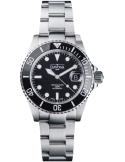
The most direct comparison between the two brands lies in their flagship dive watches. The Rolex Submariner is the archetype of the modern dive watch. The Davosa Ternos Ceramic is widely considered one of the finest Submariner alternatives on the market. Let us break down the hardware.
Case Architecture and Metallurgy
The foundation of any luxury sports watch is its steel.
- Rolex (904L Oystersteel): In 2003, Rolex transitioned its entire steel watch production to 904L stainless steel, which they later branded as "Oystersteel." 904L contains higher amounts of chromium, molybdenum, nickel, and copper than standard steel. This makes it exceptionally resistant to harsh acids and pitting in warm saltwater. Furthermore, it takes a slightly brighter, whiter polish than standard steel.
- Davosa (316L Surgical Steel): The Ternos is forged from 316L stainless steel. This is the industry standard for 99% of luxury watches (including brands like Omega, Breitling, and Patek Philippe). It is highly corrosion-resistant, hypoallergenic, and incredibly tough. While 904L is technically superior in extreme chemical environments, for 99.9% of wearers, the difference in daily durability between 316L and 904L is entirely negligible.
Bezel and Crystal Technology
Both watches excel in their use of modern, scratch-resistant materials.
- The Bezel: Rolex utilizes their proprietary Cerachrom ceramic for the Submariner's bezel insert, with the numerals coated in a thin layer of platinum. Davosa utilizes a High-Tech Ceramic insert on the Ternos. Both bezels are virtually scratch-proof, impervious to UV fading, and offer a brilliant, glossy sheen. The bezel action on the Rolex is famously smooth and buttery, while the Davosa offers a highly satisfying, crisp, and tactile 120-click rotation.
- The Crystal: Both watches feature flat sapphire crystals. Sapphire ranks a 9 on the Mohs scale of mineral hardness, making it virtually impossible to scratch with everyday objects. Both brands also feature the iconic "cyclops" magnification lens over the date window at 3 o'clock, drastically improving legibility.
Dial and Luminescence
A dive watch must be legible in the dark depths of the ocean.
- Rolex: Uses their proprietary Chromalight luminescent material, which emits a distinct, long-lasting blue glow.
- Davosa: Uses high-grade Super-LumiNova® BGW9. Like Chromalight, BGW9 appears crisp white in the daylight and glows a fierce, icy blue in the dark. The application on the Ternos is generous, ensuring excellent nighttime visibility that rivals the Submariner.
The Engine Room: In-House Calibers vs. Ébauche Movements
The most significant difference between a €1,000 watch and a €10,000 watch lies beneath the caseback.
Rolex Caliber 3235
The modern Submariner Date is powered by the in-house Caliber 3235. This movement is a masterpiece of modern micro-engineering. It features the highly efficient Chronergy escapement, a paramagnetic blue Parachrom hairspring, and a massive 70-hour power reserve. Furthermore, it is regulated to Rolex's "Superlative Chronometer" standard, guaranteeing an astonishing accuracy of -2/+2 seconds per day.
Davosa DAV 3021 (Sellita SW200-1)
The Davosa Ternos is powered by the DAV 3021, which is a customized version of the legendary Sellita SW200-1 automatic movement. The SW200-1 is the backbone of the accessible luxury industry. It beats at the same smooth 28,800 vph (4Hz) as the Rolex, but it offers a shorter 38-hour power reserve. While it is not regulated to Superlative Chronometer standards, a well-regulated Sellita can easily keep time within +/- 5 to 10 seconds a day.
The Service Advantage: Here is where Davosa wins on practicality. Servicing a Rolex in-house movement requires sending it to a certified Rolex service center, which can take months and cost upwards of €800 to €1,000. The Sellita SW200-1 inside the Davosa is a universally understood architecture. Any competent local watchmaker in the world can service it quickly and inexpensively, making the long-term cost of ownership drastically lower.
Market Dynamics: Availability and Price
The physical specifications only tell half the story. The reality of acquiring these watches is vastly different.
The Rolex Waitlist Phenomenon
You cannot simply walk into a Rolex boutique and buy a steel Submariner. Demand vastly outstrips supply, leading to artificial scarcity. Buyers are forced onto "expression of interest" lists (waitlists) that can last for years. To bypass the waitlist, buyers must turn to the grey market, where a standard Submariner Date (Retail: ~€10,500) often trades for €13,000 to €15,000.
The Davosa Value Proposition
Davosa respects the consumer's time and wallet. A Davosa Ternos Ceramic retails for roughly €850 to €1,000. It is available immediately. There are no waitlists, no required purchase histories, and no grey-market premiums. You are paying purely for the materials, the Swiss assembly, and the mechanical integrity of the watch.
The "Homage" Debate: Is Davosa Just a Copy?
It is impossible to discuss the Davosa Ternos without addressing the "homage" label. Yes, the Ternos is heavily inspired by the design language of the Rolex Submariner. For some purist collectors, this is a dealbreaker. They argue that a watch should have a 100% original design.
However, the Submariner design (the black dial, Mercedes hands, and rotating dive bezel) was established in 1953. It has transcended being a mere Rolex design; it has become the universal blueprint for what a dive watch should look like.
Davosa does not produce cheap, illegal counterfeits. They produce high-quality, legally branded homages that allow enthusiasts to enjoy a classic, mid-century aesthetic with genuine Swiss build quality. Furthermore, Davosa is not a one-trick pony. They produce highly original, unique designs as well, such as the rugged Davosa Argonautic and the historically inspired Davosa Newton collections, proving their capabilities as an independent design house.
Which Watch is Right for You?
Choosing between Davosa and Rolex comes down to your personal philosophy as a collector and your financial priorities.
- Buy the Rolex Submariner if: You have the disposable income, you value brand prestige and global recognition above all else, you want a watch that will likely appreciate in value, and you appreciate the bleeding-edge micro-engineering of an in-house caliber.
- Buy the Davosa Ternos if: You are a pragmatic enthusiast. You love the classic, iconic look of a Swiss dive watch but refuse to play authorized dealer games or pay grey-market premiums. You want a watch with a sapphire crystal, a ceramic bezel, and a reliable Swiss automatic movement that you can wear daily without the anxiety of scratching a €15,000 asset.
Conclusion: Discover Davosa at WatchExclusive
The comparison between Davosa and Rolex highlights the incredible diversity of the Swiss watch industry. Rolex will forever remain the undisputed king of luxury status. However, Davosa proves that you do not need to spend the equivalent of a down payment on a car to experience the joy, the heft, and the precision of a beautifully crafted Swiss mechanical sports watch.
The Davosa Ternos offers 90% of the physical experience of a luxury diver for 5% of the price. It is the ultimate "smart money" choice for the educated collector.
At WatchExclusive, we are proud to champion independent Swiss watchmaking. We invite you to explore our curated collection of Davosa timepieces. Experience the crisp bezel action, the glowing Super-LumiNova, and the undeniable value of accessible luxury. Elevate your wristwear game without the waitlist, and discover your next daily wearer at Watch Exclusive today.
References
- Davosa Swiss Official. (2026). The History of DAVOSA Watches. Retrieved from Davosa Watches.
- Hoffman, A. (2026). Rolex And Cartier Are In Another League – A Deep Dive On The Pains And Gains In Morgan Stanley's "Swiss Watcher" Report. Hodinkee. Retrieved from Hodinkee.
- Rolex Official. (2026). Rolex Watchmaking: Oystersteel. Retrieved from Rolex.
- The Slender Wrist. (2023). Davosa Ternos Ceramic Review: The Best Submariner Alternative? Retrieved from The Slender Wrist.
- WatchUSeek Forums. (2024). Davosa Ternos vs Rolex Submariner - A Pragmatic Comparison. Retrieved from WatchUSeek.
Share this content