Shopping Cart



The "Accessible GMT" Explosion: Why Travel Watches are 2026's Biggest Trend
By :
F. Nagy -
Categories :
Interesting Watch Facts
Table of contents
keyboard_arrow_down
- Key Takeaways
- The Historical Context: The Birth of the Travel Watch
- The Anatomy of a GMT: Caller vs. Flyer (True) GMTs
- The "Caller" (Office) GMT
- The "Flyer" (True or Traveler) GMT
- The Catalyst: How Movement Manufacturers Democratized the GMT
- The Seiko NH34 Revolution
- Miyota 9075: The True GMT for the Masses
- Swiss Alternatives: Sellita SW330-2 and Powermatic 80 GMT
- Why 2026 is the Year of the Travel Watch
- The Maturation of Global Travel and Remote Work
- The Shift from Dive Watches to Everyday Utility
- The Horological Appeal: More Than Just a Fourth Hand
- Bezel Action and Bi-Color Aesthetics
- The Engineering Challenge of Hand Stack Height
- Standout Accessible GMTs Dominating the Market
- The Heritage Divers: Davosa and Squale
- The Japanese Giants: Citizen and Seiko
- Conclusion: Finding Your Perfect Travel Companion at WatchExclusive
- References
Key Takeaways
- The Democratization of a Complication: Historically reserved for high-end luxury brands, the GMT complication has been fully democratized in 2026, allowing collectors to acquire robust, mechanical travel watches for under €1,500.
- The Movement Revolution: The explosion of accessible GMTs is driven by the mass availability of reliable third-party calibers, specifically the Seiko NH34 (Caller GMT) and the Miyota 9075 (Flyer/True GMT).
- Caller vs. Flyer GMTs: Educated enthusiasts now distinguish between "Caller" GMTs (featuring an independently adjustable 24-hour hand) and "Flyer" GMTs (featuring an independently jumping local 12-hour hand), with both architectures now widely available in the accessible luxury segment.
- The Ultimate Everyday Watch: As global travel normalizes and remote international work becomes standard, the GMT has surpassed the chronograph and the dive watch as the most practical, highly sought-after daily mechanical complication.
- Independent Brands Leading the Charge: Heritage microbrands and independent watchmakers are utilizing these new calibers to release vintage-inspired, highly finished travel watches that rival the build quality of Swiss conglomerates.
In the meticulously structured world of horology, certain mechanical complications carry an inherent aura of prestige. For decades, the GMT watch—a timepiece capable of tracking multiple time zones simultaneously—was the ultimate symbol of the jet-setting elite. If you wanted a mechanical travel watch, your options were largely confined to the upper echelons of Swiss watchmaking, with price tags that required a significant financial commitment. The complication was effectively gatekept by a handful of luxury conglomerates.
However, as we navigate the watch market of 2026, the landscape has been fundamentally and irreversibly altered. We are currently living through the "Accessible GMT" explosion. The secondary market premiums for steel sports watches have cooled, and consumer attention has pivoted sharply toward value, mechanical integrity, and everyday utility. The GMT has dethroned the dive watch as the most fiercely contested category in the sub-€2,000 market.
This horological renaissance did not happen by accident. It is the result of a quiet revolution in movement manufacturing, a shift in global lifestyle habits, and the relentless agility of independent watch brands. This comprehensive guide dissects the mechanics behind the GMT complication, explores the revolutionary calibers driving this trend, and explains why a mechanical travel watch is the most essential addition to your 2026 collection.
The Historical Context: The Birth of the Travel Watch
To understand the modern obsession with the GMT, one must look back to the dawn of the transatlantic jet age. In the early 1950s, commercial aviation was expanding rapidly. Pilots flying the newly introduced Boeing 707 for Pan American World Airways (Pan Am) were crossing multiple time zones in a single flight. This rapid travel induced a new physiological phenomenon: jet lag. Furthermore, pilots and navigators needed a reliable way to track Greenwich Mean Time (GMT)—the universal standard for aviation communication—while simultaneously reading their local destination time.
Pan Am approached Rolex with this specific operational requirement. The result, released in 1954, was the legendary Rolex GMT-Master Reference 6542. It featured a fourth hand on the central pinion that completed one rotation every 24 hours, pointing to a rotating bi-color bezel (the iconic blue and red "Pepsi" bezel) that differentiated between day and night hours.
For the next sixty years, the mechanical architecture required to drive that fourth hand remained relatively expensive to produce. While quartz GMTs became common, a true mechanical GMT was a luxury. That is, until the Japanese movement giants decided to rewrite the rules of the industry.
The Anatomy of a GMT: Caller vs. Flyer (True) GMTs
Before diving into the specific movements driving the 2026 trend, it is crucial to understand the mechanical distinction between the two types of GMT watches. In the enthusiast community, this is the most hotly debated topic regarding travel watches: the "Caller" versus the "Flyer."
The "Caller" (Office) GMT
A Caller GMT (sometimes referred to as an Office GMT) is designed for the individual who remains in their home time zone but needs to track the time in another part of the world—such as a businessman in London coordinating with an office in Tokyo.
Mechanically, when you pull the crown out to the first position on a Caller GMT, turning it in one direction quick-sets the date, while turning it in the opposite direction advances the 24-hour GMT hand in one-hour increments. The local 12-hour hand remains tied to the minute hand. This architecture is relatively simple to engineer, as it essentially adds a friction-fit 24-hour wheel to a standard three-hand movement.
The "Flyer" (True or Traveler) GMT
A Flyer GMT is designed for the physical traveler who is actively crossing time zones. When you land in a new country, you want to quickly adjust your local time without stopping the watch or messing up your home time reference.
On a Flyer GMT, pulling the crown to the first position allows you to "jump" the local 12-hour hand forward or backward in one-hour increments. The watch continues to run (the seconds hand does not hack), and the 24-hour GMT hand remains locked to your home time. Furthermore, the date wheel is tied to the local 12-hour hand, meaning if you jump the hour hand past midnight, the date will advance or retreat accordingly.
Engineering a jumping local hour hand is mechanically complex. It requires a sophisticated clutch system and a redesigned hour wheel. Historically, this "True GMT" functionality was exclusive to brands like Rolex, Tudor, Grand Seiko, and Omega. Today, that exclusivity has vanished.
The Catalyst: How Movement Manufacturers Democratized the GMT
The current explosion of accessible travel watches can be traced back to the release of three highly disruptive, mass-market mechanical calibers. These engines provided independent brands and microbrands with the firepower they needed to compete with the Swiss giants.
The Seiko NH34 Revolution
In the summer of 2022, Seiko Instruments Inc. (SII) released the NH34 automatic caliber (known internally as the 4R34). This was a seismic event in the watch industry. The NH35 three-hand movement was already the backbone of the accessible watch market; the NH34 added a Caller GMT complication to this bulletproof architecture.
Operating at 21,600 vibrations per hour (vph) with a 41-hour power reserve, the NH34 allowed brands to produce highly reliable, mechanical GMT watches for under €500. Because the dimensions of the NH34 were nearly identical to the NH35 (requiring only a slightly taller hand stack clearance to accommodate the fourth hand), brands could easily adapt their existing dive watch cases into GMTs. This sparked an immediate flood of vintage-inspired travel watches across the market.
Miyota 9075: The True GMT for the Masses
While the NH34 conquered the Caller GMT market, enthusiasts still yearned for an affordable Flyer GMT. Miyota (the movement manufacturing arm of the Citizen Watch Group) answered the call with the Miyota 9075.
The 9075 is a revelation. It is a true Flyer GMT featuring an independently jumping local hour hand. Furthermore, it belongs to Miyota's premium 9000 series, meaning it operates at a high-beat frequency of 28,800 vph (4Hz), offering a beautifully smooth sweep of the seconds hand and a 42-hour power reserve. As noted by horological experts at Worn & Wound, the introduction of the Miyota 9075 fundamentally changed the value proposition of the sub-€1,000 watch market, allowing independent brands to offer mechanical functionality that previously cost five times as much.
Swiss Alternatives: Sellita SW330-2 and Powermatic 80 GMT
The Swiss movement manufacturers did not sit idly by. Sellita heavily refined their Caller GMT offering with the SW330-2. By upgrading the barrel and the mainspring, they increased the power reserve to a highly respectable 56 hours while maintaining a slim profile, making it the engine of choice for premium independent brands looking for the "Swiss Made" designation.
Simultaneously, the Swatch Group leveraged their massive R&D budget to produce the Powermatic 80 GMT (the ETA C07.661). Featured heavily in brands like Tissot and Certina, this Flyer GMT movement offers a massive 80-hour power reserve and an anti-magnetic Nivachron™ hairspring, dominating the entry-level Swiss travel watch segment.
Why 2026 is the Year of the Travel Watch
The availability of these movements coincided perfectly with a massive shift in global consumer behavior, creating the perfect storm for the GMT explosion.
The Maturation of Global Travel and Remote Work
Following the travel restrictions of the early 2020s, the world experienced a surge of "revenge travel." By 2026, this has normalized into a highly mobile global workforce. The rise of digital nomadism and asynchronous international business means that tracking a second time zone is no longer just for airline pilots; it is a daily necessity for software developers, financial analysts, and remote executives.
A mechanical GMT watch offers a tactile, romantic alternative to checking a smartphone widget. Glancing at your wrist to see that the red GMT hand is pointing to 14:00 in Tokyo provides a physical connection to the global nature of modern life.
The Shift from Dive Watches to Everyday Utility
For the last twenty years, the dive watch was the default sports watch. However, collectors have begun to realize that a 60-minute elapsed time bezel is rarely used for its intended purpose. A GMT watch, conversely, offers genuine daily utility. Furthermore, because GMT watches do not require the massive, thick cases needed for 300 meters of water resistance, they are generally slimmer, more elegant, and easier to slide under a tailored shirt cuff. They represent the ultimate "Go Anywhere, Do Anything" (GADA) aesthetic.
The Horological Appeal: More Than Just a Fourth Hand
Beyond the mechanical utility, the GMT watch offers a unique canvas for aesthetic expression that other complications simply cannot match.
Bezel Action and Bi-Color Aesthetics
The defining visual characteristic of a traditional GMT is the 24-hour rotating bezel. Historically, these bezels were split into two colors to differentiate between daylight hours (typically 06:00 to 18:00) and nighttime hours. This birthed legendary colorways like the "Pepsi" (blue and red), the "Batman" (blue and black), and the "Root Beer" (brown and gold).
In 2026, brands are utilizing advanced materials like scratch-proof ceramic and domed sapphire crystal to execute these bi-color bezels. The manufacturing process required to seamlessly fuse two different colors of ceramic into a single, solid ring is incredibly complex. When executed correctly, it provides a brilliant, fade-resistant pop of color that elevates the entire watch.
The Engineering Challenge of Hand Stack Height
From a design perspective, adding a fourth hand to the central pinion creates a unique challenge: the hand stack height. The hour, GMT, minute, and seconds hands must all clear each other without touching, and they must all clear the underside of the crystal.
This requires watchmakers to utilize highly domed sapphire crystals or to engineer deeper rehauts (the inner ring between the dial and the crystal). This added depth gives GMT watches a distinct, three-dimensional architectural feel. When you look closely at a well-designed GMT dial, the hands appear to be floating in a deep, mechanical amphitheater.
Standout Accessible GMTs Dominating the Market
The democratization of the GMT movement has allowed a diverse array of brands to produce exceptional travel watches. Here are a few examples of how different brands are interpreting the complication in 2026.
The Heritage Divers: Davosa and Squale
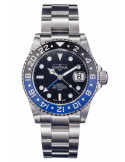
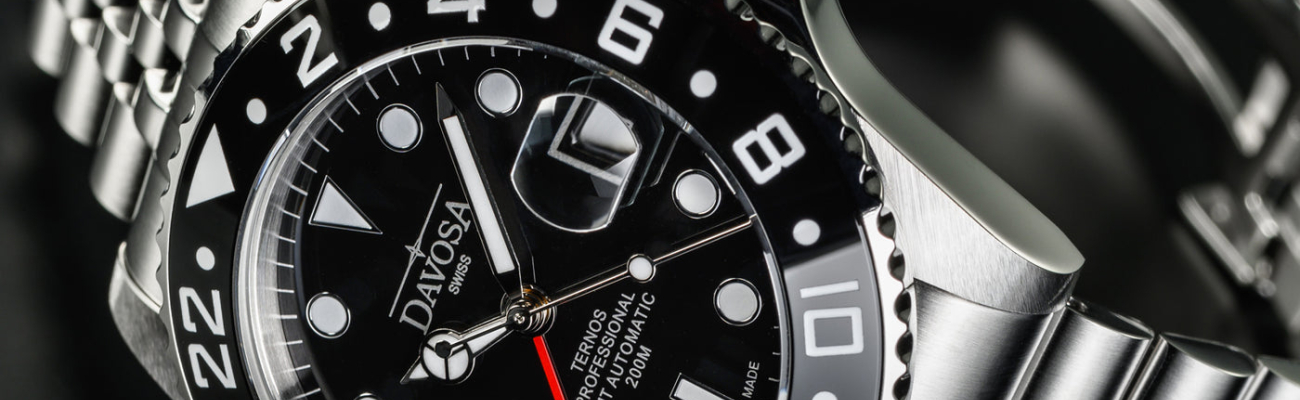
Swiss brands with deep dive-watch heritage have successfully integrated GMT functionality into their legendary cases. Davosa, for example, offers the Ternos GMT. By utilizing the Sellita SW330-2 movement and outfitting the watch with a high-tech, bi-color ceramic bezel and 200 meters of water resistance, they provide a robust, luxury travel companion that rivals watches costing three times as much.
Similarly, Squale—a brand famous for producing cases for Blancpain in the 1960s—has introduced GMT variants of their iconic Sub-39 and 1521 cases. These watches blend vintage, skin-diver aesthetics with modern travel utility, appealing directly to the hardcore horological historian.
The Japanese Giants: Citizen and Seiko
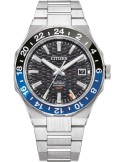
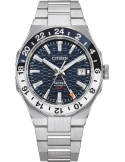
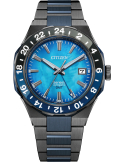
Citizen has aggressively entered the premium mechanical GMT space with the Citizen Series 8 GMT. Powered by their in-house Caliber 9054 (a Flyer GMT movement), this watch features a highly complex, octagonal integrated bracelet design and exceptional magnetic resistance, proving that Japanese watchmaking can dominate the accessible luxury sector.
Seiko, having started the revolution with the NH34, continues to refine their own offerings, producing stunning GMT variants within their Prospex and Presage lines, often featuring dials inspired by traditional Japanese craftsmanship.
Conclusion: Finding Your Perfect Travel Companion at WatchExclusive
The "Accessible GMT" explosion of 2026 is not a fleeting trend; it is a permanent correction in the watch market. The artificial gatekeeping of the travel complication has been dismantled. Today, the modern collector demands mechanical integrity, premium materials, and genuine utility without the arrogance of an inflated price tag.
Whether you are a frequent flyer crossing oceans, a remote professional managing global teams, or simply an enthusiast who appreciates the complex beauty of a four-hand dial and a bi-color sapphire bezel, there has never been a better time to acquire a mechanical GMT.
At WatchExclusive, we are passionate about this horological renaissance. We meticulously curate our collection to feature the finest accessible luxury travel watches from respected Swiss, Japanese, and independent brands. We invite you to explore our extensive GMT portfolio. Discover the smooth sweep of a high-beat caliber, the tactile click of a 24-hour bezel, and the undeniable romance of global timekeeping. Elevate your collection and find your ultimate travel companion at Watch Exclusive today.
References
- Bues, J. (2023). The Miyota 9075 GMT Movement Is A Game Changer For Affordable Watches. Hodinkee. Retrieved from Hodinkee.
- Broer, R. (2024). Caller vs. Flyer GMT Watches: What’s the Difference? Fratello Watches. Retrieved from Fratello Watches.
- Citizen Watch Global. (2026). Series 8 GMT Mechanical Collection. Retrieved from Citizen Watch Global.
- Davosa Swiss Official. (2026). Ternos Professional GMT. Retrieved from Davosa Watches.
- Worn & Wound. (2023). Review: The Impact of the Seiko NH34 on the Microbrand Market. Retrieved from Worn & Wound.
Share this content