Shopping Cart




The Retro-Futurism Boom: Why 80s and 90s Watches Dominate 2026
By :
F. Nagy -
Categories :
Industry News & Market Trends
, Interesting Watch Facts
Table of contents
keyboard_arrow_down
- Key Takeaways
- The Psychology of the Nostalgia Cycle: Why Now?
- Gen Z and the Y2K Aesthetic
- Fatigue from the Mid-Century Diver
- The Return of the Ana-Digi Masters
- Citizen Ana-Digi Temp: The Spaceship Dashboard
- Casio's Unstoppable Archive
- Integrated Bracelets and Geometric Steel
- The Tissot PRX Digital: 80s Glamour Reborn
- Bulova Computron: The Cyberpunk LED
- Material Science Meets Retro Aesthetics
- Transparent Resins and the Y2K Vibe
- Sapphire Crystals and Advanced PVD
- The Timex Revival: Q Timex and the T80
- The Q Timex Phenomenon
- The Timex T80: Pure 80s Joy
- Why Retro-Futurism is a Smart Investment for Collectors
- The "Conversation Starter" Factor
- Accessible Luxury and High-Tech Specs
- Conclusion: Embrace the Future-Past at Watch Exclusive
- References
Key Takeaways
- The Nostalgia Shift: The watch industry has pivoted away from mid-century (1950s/60s) mechanical dive watches, embracing the bold, technology-driven retro-futurism of the 1980s and 1990s, fueled by Gen Z's obsession with the Y2K aesthetic.
- The Ana-Digi Renaissance: Timepieces that combine traditional analog hands with digital LCD screens—such as the legendary Citizen Ana-Digi Temp and various Casio G-SHOCK models—are experiencing a massive resurgence due to their complex, dashboard-like "cyberpunk" aesthetics.
- Digital as a Design Statement: Digital watches are no longer viewed merely as cheap, utilitarian tools. Models like the Tissot PRX Digital and the Bulova Computron have elevated digital timekeeping to high fashion, utilizing premium stainless steel cases and integrated bracelets.
- Advanced Material Science: Modern retro-futuristic watches utilize 21st-century materials to improve upon 20th-century designs, incorporating scratch-resistant sapphire crystals, eco-friendly bio-based transparent resins, and highly durable Ion Plating (IP).
- Accessible Luxury: The 80s and 90s boom offers collectors a highly affordable entry point into statement-making horology, providing robust quartz oscillators and unique case architectures without the exorbitant maintenance costs of vintage mechanical calibers.
For the better part of the last decade, the luxury watch market was trapped in a mid-century time loop. Walk into any horological boutique between 2015 and 2023, and you would be greeted by an endless sea of 1950s-inspired skin divers, 1960s racing chronographs, and faux-patina luminous paint. The industry was obsessed with the mechanical purity of the post-war era. However, as we navigate the watch market of 2026, a profound and highly disruptive aesthetic shift has occurred. The faux-patina has been wiped away, replaced by neon accents, transparent resins, geometric steel, and glowing digital displays.
We have officially entered the era of the "Retro-Futurism" boom. The 1980s and 1990s—decades defined by the dawn of the personal computer, the arcade revolution, and an unbridled optimism about electronic technology—are now the primary driving forces in modern watch design. Collectors are no longer just looking backward; they are looking at how the past imagined the future.
This is not merely a fleeting fashion trend; it is a fundamental realignment of what the enthusiast community considers "cool" and collectible. From the high-end Swiss conglomerates reviving their forgotten digital archives to the Japanese giants reissuing their most bizarre, calculator-equipped wrist computers, retro-futurism is dominating the conversation. This comprehensive guide explores the psychology behind the 30-year nostalgia cycle, the specific horological technologies driving the trend, and why an 80s-inspired digital or ana-digi watch is the most essential addition to your 2026 collection.
The Psychology of the Nostalgia Cycle: Why Now?
To understand why a stainless steel digital watch with a red LED screen is suddenly the hottest item in the accessible luxury segment, one must understand the mechanics of cultural nostalgia. In fashion and industrial design, trends operate on a strict 30-to-40-year cycle. The people who were children or teenagers during a specific era eventually grow up, acquire disposable income, and seek to purchase the idealized artifacts of their youth.
Gen Z and the Y2K Aesthetic
However, the current retro-futurism boom is unique because it is being driven simultaneously by two different demographics: the Millennials who lived through it, and Generation Z, who are discovering it for the first time. For Gen Z, the late 1990s and early 2000s (the Y2K era) represent a fascinating, almost mythological period. It was a time before smartphones and constant social media connectivity, yet it was highly technological. Devices from this era—like the original translucent iMac G3, clear Nintendo Game Boys, and early digital watches—were designed to look fun, optimistic, and unapologetically electronic.
In 2026, wearing a mechanical watch is expected. Wearing a highly complex, geometric digital watch is a deliberate, counter-cultural style statement. It signals an appreciation for "vintage tech" and a rejection of the sterile, black-screen homogeneity of modern smartwatches like the Apple Watch.
Fatigue from the Mid-Century Diver
The second catalyst for this boom is sheer collector fatigue. There are only so many ways a brand can redesign a 1950s dive watch. The market became oversaturated with black dials, rotating bezels, and Mercedes hands. Enthusiasts, particularly those who already own several traditional mechanical watches, began craving variety. They wanted watches that sparked conversation, watches with unusual case shapes, and watches that did not take themselves too seriously. The bold, experimental designs of the 80s and 90s provided the perfect antidote to this horological monotony.
The Return of the Ana-Digi Masters
One of the most significant horological developments of the 1980s was the invention of the ana-digi (analog-digital) display. Watchmakers realized they could combine the intuitive, at-a-glance readability of traditional analog hands with the complex, multi-functional capabilities of a digital LCD screen (such as chronographs, alarms, and perpetual calendars). Today, these hybrid displays are experiencing a massive renaissance.
Citizen Ana-Digi Temp: The Spaceship Dashboard
No watch embodies the 1980s retro-futuristic aesthetic quite like the Citizen Ana-Digi Temp. Originally released in 1982, it was a marvel of micro-engineering. The dial layout is famously chaotic, resembling the instrument panel of a sci-fi spaceship or a fighter jet.
The watch features two separate analog dials at the top (one for local time, one for a second time zone or seconds), and two digital LCD screens at the bottom. Crucially, as the name implies, it features a built-in temperature sensor—a mind-blowing complication for a wristwatch in the early 80s. Citizen's recent reissues of the Ana-Digi Temp, including highly sought-after collaborations with fashion brands and pop-culture franchises (like Star Wars), have introduced this bizarre, brilliant piece of Japanese engineering to a new generation. It is the ultimate "nerd-chic" accessory, offering a level of visual complexity that no traditional mechanical watch can match.
Casio's Unstoppable Archive
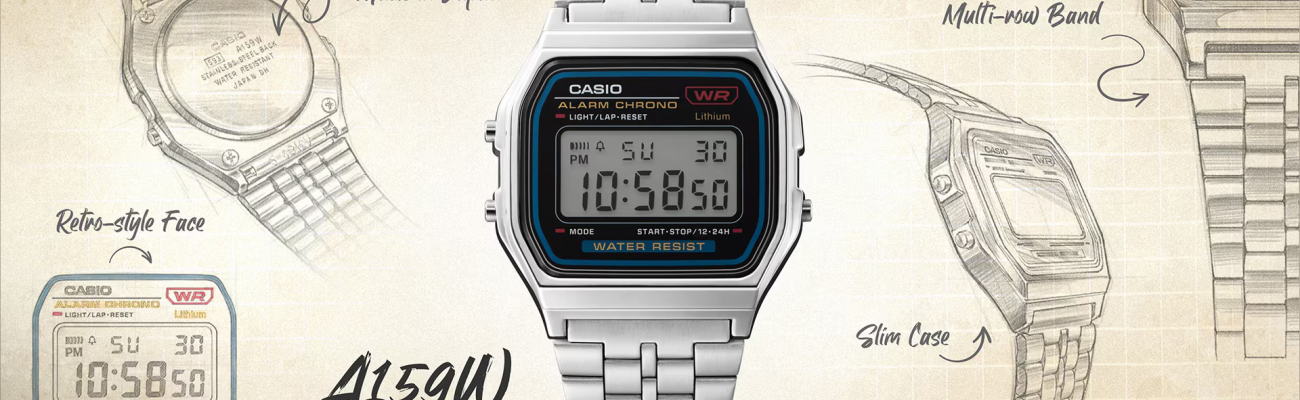
When discussing 80s and 90s digital dominance, Casio is the undisputed king. The brand has masterfully leveraged its extensive archive to dominate the 2026 market. The classic Casio Databank and calculator watches (like the legendary CA-53W, famously worn by Marty McFly in Back to the Future) have transitioned from cheap utilitarian tools to highly respected streetwear icons.
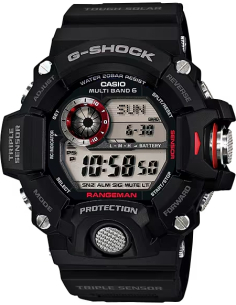
Furthermore, Casio has elevated its iconic 1983 G-SHOCK "Square" silhouette (the DW-5000C lineage) into the premium segment. By releasing full-metal versions in stainless steel and titanium, treated with advanced Ion Plating (IP) in vibrant, retro-futuristic colors like gradient rainbow, purple, and gold, Casio has proven that a digital watch can be a genuine luxury item. These full-metal squares offer the indestructible DNA of the 80s original, but with the finishing and heft of a modern Swiss sports watch.
Integrated Bracelets and Geometric Steel
The 1970s birthed the integrated bracelet sports watch (pioneered by Gérald Genta with the Royal Oak and Nautilus), but it was the 1980s that truly democratized the aesthetic, applying sharp, angular steel cases to quartz and digital movements.
The Tissot PRX Digital: 80s Glamour Reborn
The Tissot PRX Powermatic 80 was already a massive success, reviving a 1978 case design. However, Tissot recognized the shifting winds of the retro-futurism trend and released the Tissot PRX Digital. This watch is a masterclass in blending eras. It takes the beautifully finished, brushed and polished stainless steel integrated case of the PRX and replaces the mechanical dial with a minimalist, mirror-finished digital LCD screen.
The PRX Digital looks exactly like the vision of the future as imagined in 1982. It is sleek, reflective, and unapologetically electronic. By offering this watch in both 35mm and 40mm sizes, and in both stainless steel and gold PVD finishes, Tissot captured the essence of 80s Wall Street glamour and packaged it for the modern collector. It proves that a digital watch can be worn elegantly with a tailored suit.
Bulova Computron: The Cyberpunk LED
Before LCD (Liquid Crystal Display) became the standard for digital watches, there was LED (Light Emitting Diode). In the 1970s and early 80s, LED watches were the height of futuristic luxury. The Bulova Computron is the most famous survivor of this era, and its modern reissue is a cornerstone of the retro-futurism boom.
The Computron features a highly unusual, trapezoidal "driver's" case. The digital display is mounted on the angled side of the case rather than the top, allowing the wearer to read the time without taking their hands off a steering wheel. Because early LEDs drained batteries rapidly, the screen remains black until the wearer presses a button on the side of the case, at which point the time flashes in brilliant, glowing red digits.
Wearing a gold-plated Bulova Computron in 2026 is a profound stylistic statement. It looks like a prop from Blade Runner or Daft Punk. It is a watch that completely ignores traditional horological rules, prioritizing pure, unadulterated sci-fi aesthetics.
Material Science Meets Retro Aesthetics
While the designs of these watches are rooted in the past, the materials used to construct them are firmly planted in the 21st century. The retro-futurism boom is not about producing cheap, fragile replicas; it is about utilizing modern manufacturing to perfect the original concepts.
Transparent Resins and the Y2K Vibe
As mentioned earlier, the Y2K aesthetic relies heavily on translucent materials. Casio has capitalized on this with their G-SHOCK SKE (Skeleton) series. In the 1990s, clear plastic watches would rapidly yellow and degrade when exposed to UV light and sweat. Today, Casio utilizes advanced, UV-resistant polymer resins and eco-friendly biomass plastics.
These modern transparent cases allow light to pass through the watch, exposing the internal shock-absorbing structures and the metallic modules within. When paired with specialized vapor deposition treatments on the mineral glass—which create polarized, iridescent color shifts that change depending on the viewing angle—these watches look like glowing, kinetic pieces of futuristic armor.
Sapphire Crystals and Advanced PVD
In the 1980s, affordable digital and quartz watches almost exclusively used easily scratched acrylic or standard mineral glass. Today, brands reissuing these retro designs are upgrading the specifications to meet modern enthusiast standards. Many premium retro-futuristic models now feature highly scratch-resistant sapphire crystals with anti-reflective (AR) coatings, ensuring the digital displays remain perfectly legible and pristine for decades.
Furthermore, the gold and black coatings used in the 80s were often cheap electroplating that flaked off after a few years of wear. Modern reissues utilize Physical Vapor Deposition (PVD) and Ion Plating (IP). These high-tech vacuum processes bond the color to the stainless steel at a molecular level, providing exceptional scratch resistance and ensuring the vibrant, retro colors never fade.
The Timex Revival: Q Timex and the T80
No discussion of accessible retro-futurism is complete without mentioning the American giant, Timex. Timex has masterfully navigated the nostalgia cycle, releasing watches that perfectly capture the transition from mechanical to electronic timekeeping.
The Q Timex Phenomenon
The reissue of the 1979 Q Timex was a watershed moment for the industry. It reminded collectors that quartz watches have their own rich history. The Q Timex features a 38mm barrel-shaped case, a woven steel mesh bracelet, and a bi-color rotating bezel. But the most beloved feature is the functional, coin-slotted battery hatch on the caseback. In the late 70s and 80s, this was a practical feature allowing owners to change their own batteries. Today, it is a charming, tactile quirk that connects the wearer to the dawn of the quartz era.
The Timex T80: Pure 80s Joy
For pure digital nostalgia, the Timex T80 is the ultimate accessory. It is a faithful recreation of the brand's early digital watches, featuring a simple, octagonal resin or steel case, an expansion band, and the legendary Indiglo backlight. Timex has used the T80 as a canvas for pop-culture collaborations, releasing versions themed around 80s icons like Pac-Man, Space Invaders, and Stranger Things. These watches are inexpensive, incredibly fun, and serve as the perfect weekend palate cleanser for a collector accustomed to serious mechanical timepieces.
Why Retro-Futurism is a Smart Investment for Collectors
For the serious watch collector, it is easy to dismiss digital and quartz reissues as mere novelties. However, doing so ignores the fundamental shift in how the watch community assigns value in 2026.
The "Conversation Starter" Factor
In a room full of people wearing standard steel dive watches and traditional chronographs, a person wearing a gold Bulova Computron or a transparent, iridescent G-SHOCK will inevitably draw the most attention. These watches are unparalleled conversation starters. They project confidence, a sense of humor, and a deep understanding of industrial design history. They prove that the wearer does not take themselves too seriously, yet still cares deeply about horology.
Accessible Luxury and High-Tech Specs
From a financial perspective, the retro-futurism boom offers incredible value. To acquire a highly complex, uniquely shaped mechanical watch from a Swiss brand, you must spend tens of thousands of euros. However, because these retro-futuristic designs are powered by highly reliable, mass-produced quartz oscillators and digital modules, brands can offer radical case architectures and premium exterior finishing for under €500.
Furthermore, these watches are the ultimate "grab-and-go" timepieces. They do not require expensive servicing every five years, they do not need to be kept on a watch winder, and they are inherently more shock-resistant than their mechanical counterparts. They offer the aesthetic thrill of luxury watch collecting without the logistical headaches.
Conclusion: Embrace the Future-Past at Watch Exclusive
The "Retro-Futurism" boom of 2026 is a celebration of an era when technology was viewed with unbridled optimism and design was fearless. It is a rejection of the sterile, homogenous smartwatches of today in favor of the bold, geometric, and neon-soaked visions of the 1980s and 1990s.
Whether you are drawn to the complex, spaceship-dashboard aesthetics of the Citizen Ana-Digi Temp, the sleek, Wall Street glamour of the Tissot PRX Digital, or the indestructible, translucent armor of a Casio G-SHOCK SKE, these timepieces offer a unique opportunity to wear a piece of cultural history on your wrist.
At WatchExclusive, we are passionate about every era of horological design. We meticulously curate our collection to feature the finest retro-futuristic reissues from the world's most respected brands. We invite you to explore our extensive portfolio, discover the flawless finishing and advanced modern materials that elevate these classic designs, and secure a timepiece that perfectly captures the spirit of the future-past. Step out of the mid-century loop and elevate your collection at Watch Exclusive today.
References
- Bues, J. (2023). The Tissot PRX Digital Is The 1980s Fever Dream We Didn't Know We Needed. Hodinkee. Retrieved from Hodinkee.
- Casio Official. (2026). The Evolution of G-SHOCK: From 1983 to the Transparent SKE Series. Retrieved from G-Shock.
- Citizen Watch Global. (2025). The Return of the Ana-Digi Temp: A Sci-Fi Icon Reborn. Retrieved from Citizen Watch Global.
- Fratello Watches. (2024). Why the Bulova Computron is the Ultimate Cyberpunk Watch. Retrieved from Fratello Watches.
- Worn & Wound. (2022). Review: The Q Timex and the Vintage Quartz Revival. Retrieved from Worn & Wound.
Share this content