Shopping Cart





How to Charge and Maintain Your Solar Watch: A Complete Eco-Drive and Tough Solar Guide
By :
F. Nagy -
Categories :
Watch Care & Technical Guides
Table of contents
keyboard_arrow_down
- Key Takeaways
- The Mechanics of Light-Powered Calibers
- Optimal Charging Strategies for Solar Watches
- Direct Sunlight: The Ultimate Power Source
- Cloudy Days and Window Sills
- Artificial Indoor Lighting: Maintenance Only
- Recognizing Low Power Warnings and Power Save Modes
- Preventing Deep Discharge and Capacitor Degradation
- Temperature Management During Charging
- Long-Term Maintenance and Secondary Battery Replacement
- Top Solar Watch Recommendations for Everyday Wear
- Conclusion: Embrace the Convenience of Solar Horology
- References
Key Takeaways
- Direct sunlight is optimal: Natural sunlight provides up to 100,000 lux, requiring only a few hours for a full charge, compared to hundreds of hours under artificial indoor lighting.
- Recognize the two-second tick: A skipping second hand moving in two-second intervals is the universal low-charge warning for most solar calibers, signaling an immediate need for light exposure.
- Avoid the dark drawer: Storing solar watches in complete darkness for extended periods causes deep discharge, which can permanently degrade the rechargeable lithium-ion cell.
- Manage charging temperatures: Extreme heat (above 60°C/140°F), such as on a car dashboard, can warp dials, dry out movement lubricants, and damage the solar cell; always charge in ambient temperatures.
- Expect a 15 to 20-year lifespan: With proper light management and regular gasket maintenance, modern solar capacitors are highly sustainable horological investments that rarely require replacement.
The advent of light-powered horology fundamentally altered the landscape of quartz timekeeping. By integrating microscopic photovoltaic cells beneath the dial, watchmakers eliminated the frustrating ritual of biennial battery replacements, ushering in an era of autonomous, eco-friendly wristwatches. Today, technologies like the pioneering Citizen Eco-Drive and the ultra-resilient Casio Tough Solar dominate this space, offering unparalleled reliability for both casual wearers and demanding professionals. These calibers represent a perfect synthesis of traditional analog displays and advanced micro-electronics, capturing ambient light and converting it into sustained mechanical energy.
However, a pervasive misconception exists within the watch community: the belief that solar watches require absolutely zero maintenance. While it is true that they free you from the constant cycle of silver-oxide battery swaps, light-powered movements demand a different kind of attention—specifically, proactive energy management. A solar watch is essentially a miniature power plant on your wrist. It requires a consistent fuel source, a healthy storage medium, and protection from environmental extremes that could compromise its internal chemistry or physical architecture.
Understanding the nuances of photovoltaic conversion, the chemistry of secondary power cells, and the specific charging thresholds of your timepiece is crucial for maximizing its lifespan. Whether you are navigating the urban jungle with a sleek titanium three-hander or trekking through the wilderness with a sensor-packed tactical instrument, proper care ensures your watch remains a reliable companion. This comprehensive guide delves into the mechanics, optimal charging strategies, and long-term maintenance protocols necessary to keep your solar-powered caliber running flawlessly for decades.
The Mechanics of Light-Powered Calibers
To properly maintain a solar watch, one must first understand the sophisticated engineering operating beneath the dial. The journey of light-powered horology began in earnest in 1976 when Citizen unveiled the Crystron Solar Cell, the world's first light-powered analog quartz watch. According to historical archives detailed by Hodinkee, this early iteration featured prominent, visible solar panels on the dial. Over the decades, the technology evolved dramatically. By 1995, Citizen perfected the system we now know as Eco-Drive, utilizing highly translucent dials that conceal the solar apparatus entirely, allowing for limitless aesthetic possibilities without compromising energy absorption.
The core mechanism relies on the photovoltaic effect. When photons from a light source strike the solar cell—typically a highly efficient silicon-based disc located directly beneath the dial—they excite electrons, generating a small electrical current. This current is then directed through an integrated circuit (IC) to a secondary power cell. Unlike traditional disposable batteries, this storage unit is a rechargeable titanium lithium-ion capacitor (often a Panasonic MT920 or similar variant). This specialized cell is engineered to withstand thousands of charge and discharge cycles while maintaining a stable voltage output to drive the stepper motors that move the hands.
Casio's approach, known as Tough Solar technology, operates on a similar fundamental principle but is optimized to handle the massive power draws of their multifunctional digital and analog-digital modules. A G-Shock equipped with Tough Solar must power not only the timekeeping IC but also power-hungry features like radio-controlled atomic time syncing, altimeters, barometers, and high-luminosity LED backlights. To achieve this, Casio utilizes highly sensitive, film-like solar panels integrated into the dial's rehaut or digital display surrounds, ensuring that even the faintest ambient light contributes to the watch's power reserves.
Optimal Charging Strategies for Solar Watches
The most critical aspect of solar watch maintenance is understanding that not all light sources are created equal. The efficiency of the photovoltaic conversion process is directly proportional to the illuminance of the light source, measured in lux. Many owners mistakenly believe that wearing their watch in a brightly lit office is sufficient to keep it fully charged. In reality, indoor lighting is often only strong enough to maintain the current charge level, not to replenish a depleted battery. To build a robust power reserve, you must expose the dial to high-lux environments.
Direct Sunlight: The Ultimate Power Source
Direct outdoor sunlight is the undisputed king of solar charging. On a clear day, direct sunlight provides an illuminance of approximately 100,000 lux. At this intensity, a completely depleted Eco-Drive caliber can often reach a full charge in just 9 to 12 hours of continuous exposure. For daily maintenance, merely 10 to 15 minutes of direct sunlight is sufficient to generate enough power for a full day of operation. If you want to ensure your watch is operating at peak efficiency, making a habit of exposing it to direct sunlight for a few hours once a month is highly recommended.
Cloudy Days and Window Sills
When direct sunlight is unavailable, overcast outdoor light or light filtered through a window remains highly effective. A cloudy day typically yields around 10,000 lux. While this is a tenfold decrease from direct sunlight, it is still vastly superior to artificial lighting. Charging a depleted watch to full capacity under cloudy skies may take 30 to 40 hours. Placing your watch on a window sill that receives indirect sunlight is an excellent, safe strategy for passive charging, provided you monitor the temperature to avoid overheating the case.
Artificial Indoor Lighting: Maintenance Only
Standard office lighting or residential LED bulbs generally output a mere 500 lux. According to official technical documentation from brands like Citizen and Casio, it can take upwards of 200 to 300 hours of continuous exposure to a 500-lux source to fully charge a depleted secondary battery. Therefore, artificial light should be viewed strictly as a maintenance source. It will prevent a fully charged watch from draining during the workday, but it is entirely inadequate for reviving a watch that has entered a low-power state.
Recognizing Low Power Warnings and Power Save Modes
Modern solar calibers are equipped with intelligent power management systems designed to alert the wearer before the watch stops completely. The most universal and recognizable of these alerts is the low charge warning function. When the voltage in the secondary cell drops below a critical threshold, the integrated circuit alters the behavior of the stepper motor. Instead of ticking once per second, the second hand will pause and then jump forward two seconds at a time. The watch continues to keep accurate time during this phase, but the two-second tick is a visual distress signal indicating that the watch requires immediate exposure to bright light.
In more complex models, such as chronographs or perpetual calendars, a low battery state will trigger additional protective measures. The watch may automatically disable power-intensive complications. For instance, the chronograph pushers may become unresponsive, or the radio-controlled time-syncing receiver will shut down to conserve the remaining energy for basic timekeeping. If you notice your watch refusing to perform its advanced functions, a depleted power reserve is the most likely culprit.
To further extend battery life, many high-end solar watches feature a Power Save mode (often indicated as PS on digital displays). When the watch is left in the dark for an extended period—typically 24 to 72 hours, depending on the module—it enters a state of hibernation. The hands will stop moving entirely, usually resting at the 12 o'clock position, and digital displays will go blank. However, the internal IC continues to track the time. The moment the watch is exposed to light, the hands will rapidly spin to catch up to the current time. This feature drastically reduces parasitic drain and can extend the power reserve from a few months to several years.
Preventing Deep Discharge and Capacitor Degradation
The greatest enemy of any solar-powered timepiece is the dark drawer. While mechanical watches can be left in a safe for years and simply wound back to life, solar watches rely on a rechargeable lithium-ion cell that is highly sensitive to deep discharge. When a lithium-ion capacitor is allowed to drain completely to zero volts and is left in that state for an extended period, the internal chemistry begins to degrade. The cell loses its ability to hold a full charge, and eventually, it will fail to power the watch even after days of sunlight exposure.
To prevent this irreversible degradation, you must adopt proper storage habits. Never store a solar watch in a dark box, a drawer, or a safe for months on end. If you have a large collection and rotate your watches infrequently, invest in a glass-top watch box. Place the box in a room that receives ambient natural light. This passive exposure is usually sufficient to keep the watches topped up and prevent them from entering a deep discharge state. If you must store the watch in the dark, ensure it is fully charged first, and make a calendar note to take it out for a "sun bath" every three to four months.
It is also worth noting that the efficiency of the solar cell itself does not degrade significantly over time. If an older solar watch refuses to hold a charge, the fault almost always lies with a degraded secondary battery caused by poor charging habits, rather than a failure of the photovoltaic dial. By maintaining a healthy charge level, you preserve the chemical integrity of the capacitor, ensuring it lasts for its intended lifespan.
Temperature Management During Charging
While sunlight is the best source of energy for your watch, it brings a significant risk: heat. The thermal management of your timepiece during charging is just as important as the lux levels it receives. A common and often fatal mistake made by owners is leaving their watch on the dashboard of a car parked in direct summer sunlight. The greenhouse effect inside a vehicle can push dashboard temperatures well above 80°C (176°F) in a matter of minutes.
Subjecting a watch to extreme heat can cause catastrophic damage. Temperatures exceeding 60°C (140°F) can warp the delicate plastic components of the dial, damage the microscopic wiring of the solar cell, and cause the synthetic lubricants within the gear train to dry out or migrate. Furthermore, extreme heat can cause the internal air to expand rapidly, potentially compromising the rubber gaskets that ensure the watch's water resistance. In severe cases, the lithium-ion cell itself can swell or leak, destroying the movement entirely.
To charge your watch safely, always prioritize environments with ambient temperature control. If you are charging the watch on a window sill, ensure there is adequate ventilation or a slight breeze to dissipate heat. A practical rule of thumb is the touch test: if the watch case is too hot to hold comfortably against your skin, it is too hot for the movement. If you need to charge the watch outdoors on a hot day, place it in a glass of water (provided the watch has a water resistance rating of at least 50 meters and the crown is securely pushed in). The water acts as a highly effective heat sink, keeping the watch cool while allowing the light to penetrate the dial.
Long-Term Maintenance and Secondary Battery Replacement
One of the primary selling points of solar horology is the drastically reduced maintenance schedule. However, "low maintenance" does not mean "no maintenance." The MT920 titanium lithium-ion cell (or its equivalents) used in modern solar watches is an engineering marvel, but it is still subject to the laws of chemistry. Under ideal conditions—meaning the watch is regularly charged and never allowed to deep discharge—these capacitors have an expected lifespan of 15 to 20 years. Eventually, the cell's capacity will diminish to the point where it can only hold a charge for a few days, necessitating a replacement.
Replacing a solar capacitor is slightly more complex than a standard battery swap. The cells often feature spot-welded metallic tabs that must align perfectly with the movement's contact points. Attempting to force a standard silver-oxide battery into a solar watch will not only fail to work but can permanently short-circuit the charging IC. When the time comes for a replacement, it is highly recommended to have the service performed by a certified watchmaker who can source the exact proprietary cell required for your specific caliber.
Beyond the power cell, the physical integrity of the watch must be maintained. The rubber O-rings and gaskets that seal the caseback, crown, and crystal degrade over time due to exposure to sweat, UV light, and temperature fluctuations. Even if your solar watch is running perfectly, it should be pressure tested every three to five years to ensure its water resistance remains intact. Moisture intrusion is a death sentence for the delicate electronics of a solar movement. Regular gasket maintenance is a small price to pay to protect the sophisticated technology inside.
Top Solar Watch Recommendations for Everyday Wear
If you are looking to add a reliable, light-powered timepiece to your collection, the current market offers incredible diversity. From rugged field watches to sophisticated chronographs, solar technology has been seamlessly integrated into every style category. Below, we highlight some of the most compelling models available, showcasing the versatility of modern solar calibers.
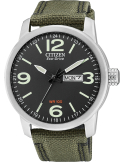
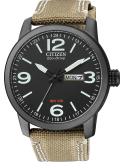
For those who appreciate a utilitarian aesthetic combined with bulletproof reliability, the Citizen Eco-Drive BM8470-11EE is an exceptional choice. This field-inspired timepiece features a highly legible dial with bold Arabic numerals and robust luminous hands, making it perfect for outdoor adventures. The stealthy black case is paired with a durable canvas strap, ensuring comfort during extended wear. Powered by a proven Eco-Drive caliber, it offers a substantial power reserve and eliminates the worry of a dead battery during a camping trip or hike.
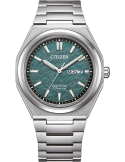
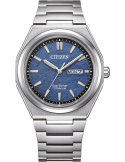
If you demand the ultimate in material engineering, the Citizen Super Titanium series is unmatched. The Citizen Super Titanium Eco-Drive AW0130-85ZE features a striking, vibrant dial housed in a case crafted from Citizen's proprietary titanium alloy. Treated with a Duratect surface hardening coating, this watch is five times harder than standard stainless steel while being 40% lighter and completely hypoallergenic. This model is also available in stunning alternative colorways, including the earthy AW0130-85XE and the deep blue AW0130-85LE, allowing you to choose the perfect aesthetic to match your personal style while enjoying the benefits of an advanced in-house caliber.
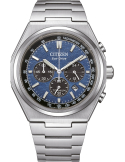
For enthusiasts who require timing functionality, the Citizen Super Titanium Eco-Drive CA4610-85L delivers exceptional performance. This chronograph integrates a complex multi-subdial layout without compromising the efficiency of the solar absorption. The lightweight titanium construction ensures that the sporty, slightly larger case remains incredibly comfortable on the wrist, while the tachymeter scale adds a touch of motorsport heritage to the design. To see more models featuring this incredible technology, explore our complete Citizen Eco-Drive collection.
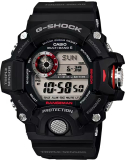
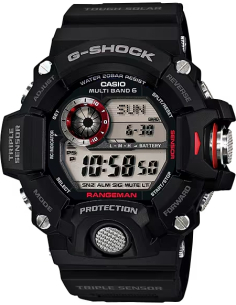
Finally, for the ultimate in rugged, survival-ready horology, the Casio G-SHOCK Rangeman GW-9400-1ER stands alone. This legendary timepiece is equipped with Casio's Triple Sensor technology (altimeter/barometer, compass, and thermometer) and Multi-Band 6 atomic timekeeping. Powering these heavy-draw functions requires a massive amount of energy, which is flawlessly managed by the integrated Tough Solar technology. The Rangeman is built to withstand mud, extreme shocks, and deep water, making it the definitive choice for military personnel and extreme sports enthusiasts. Discover more indestructible timepieces in our G-Shock PRO collection.
Conclusion: Embrace the Convenience of Solar Horology
Owning a solar-powered watch is a commitment to sustainable, low-friction horology. By understanding the basic principles of light absorption, recognizing the low-power warnings, and protecting your timepiece from extreme heat and deep discharge, you can ensure that your watch remains a faithful timekeeper for decades. The transition from traditional battery-powered quartz to advanced light-powered calibers represents one of the most significant leaps in everyday watchmaking convenience.
Whether you are drawn to the refined, lightweight elegance of the Citizen Super Titanium Eco-Drive AW0130-85ZE or the indestructible, feature-packed architecture of the Casio G-SHOCK Rangeman GW-9400-1ER, there is a solar watch perfectly suited to your lifestyle. We invite you to explore the extensive selection of premium light-powered timepieces available at WatchExclusive. Invest in a watch that harnesses the power of the sun, and experience the ultimate peace of mind that comes with never needing a battery change again.
References
- Citizen Watch Global - Eco-Drive Technology and History
- Casio International - G-SHOCK Tough Solar Technology
- Hodinkee - The Evolution of Light-Powered Watches
- Fratello Watches - Maintenance and Care for Modern Quartz and Solar Calibers
Share this content