Shopping Cart







Eco-Conscious Horology in 2026: The Rise of Recycled Ocean Plastics and Bio-Based Resins
By :
F. Nagy -
Categories :
Industry News & Market Trends
Table of contents
keyboard_arrow_down
- Key Takeaways
- The Evolution of Sustainable Watchmaking in 2026
- Bio-Based Resins: Casio’s Material Revolution
- Surfing with Purpose: The G-LIDE Kanoa Igarashi Edition
- Eliminating Battery Waste: The Legacy of Solar Technology
- Super Titanium Meets Eco-Drive: The Ultimate Sustainable Tool Watch
- Recycled Ocean Plastics: From Fishing Nets to Fine Horology
- Why Eco-Conscious Materials Don't Compromise Durability
- Conclusion: Embrace the Future of Horology at WatchExclusive
- References
Key Takeaways
- The Shift to Bio-Based Resins: Leading brands are replacing traditional petroleum-based plastics with renewable bio-based resins derived from castor seeds and corn, significantly reducing carbon footprints while maintaining extreme shock resistance.
- Upcycling Ocean Waste: The horology industry is actively combating marine pollution by transforming discarded fishing nets and PET plastics into high-quality watch cases, dials, and durable NATO-style straps.
- The Legacy of Solar Power: Advanced light-powered movements have saved over 100 million disposable batteries from landfills, proving that sustainable energy is both ecologically responsible and highly practical for everyday wear.
- Uncompromised Durability: Modern eco-materials undergo the same rigorous testing as traditional metals and synthetic rubbers, ensuring that sustainable tool watches remain robust enough for professional diving and extreme sports.
- Longevity as Sustainability: Combining proprietary surface-hardening technologies with light-powered calibers creates timepieces designed to last for decades, fundamentally rejecting the culture of disposable fashion.
For decades, the luxury watch industry operated under a veil of exclusivity, where the origins of raw materials were often obscured by the sheer brilliance of the final product. Enthusiasts marveled at the flawless polishing of a stainless steel case or the supple texture of a synthetic rubber strap, rarely questioning the environmental cost of their creation. However, as we navigate through 2026, the horological landscape has undergone a profound and necessary transformation. Sustainability is no longer a fringe concept or a marketing gimmick relegated to limited-edition releases; it has become a foundational pillar of modern watchmaking engineering.
This paradigm shift is driven by a collective realization that the preservation of time is intimately linked to the preservation of our planet. Watchmakers are now actively addressing the environmental impact of their manufacturing processes, focusing heavily on the materials that encase their precision movements. The reliance on virgin petroleum-based plastics and disposable power sources is rapidly diminishing, replaced by a new wave of innovative, eco-conscious alternatives. From the depths of the ocean to the laboratories of material scientists, the quest for sustainable horology has yielded remarkable results that challenge our traditional understanding of luxury and durability.
Today, the conversation among seasoned collectors and everyday wearers alike centers on the integration of recycled ocean plastics, renewable bio-based resins, and highly efficient solar technologies. These advancements prove that environmental responsibility does not require a compromise in performance, aesthetics, or the tactile satisfaction that comes from wearing a finely crafted tool watch. As we explore the forefront of this movement, it becomes clear that the most respected brands in the industry are not just keeping time—they are actively working to extend the time we have left on a thriving, healthy planet.
The Evolution of Sustainable Watchmaking in 2026
To truly appreciate the current state of eco-conscious horology, one must understand the historical context of luxury manufacturing. Historically, the allure of a high-end timepiece was rooted in its flawless execution, often achieved through resource-intensive processes. As noted by veteran horology journalist Jack Forster in Hodinkee Magazine, the traditional mindset dictated that you're actually not supposed to notice where raw materials come from. You're just supposed to admire the results.
The ultimate goal was to erase any trace of the arduous labor and environmental extraction required to produce the watch, presenting the consumer with an object of pure, unblemished perfection.
However, the modern collector is vastly more informed and ethically driven. The realization that millions of tons of plastic waste enter our oceans annually, and that the extraction of virgin metals carries a heavy ecological toll, has forced a reckoning within the industry. Brands can no longer afford to operate in a vacuum. The response has been a surge in material innovation, moving away from the "take-make-dispose" linear economy toward a circular model. This involves not only rethinking the materials used in the watches themselves but also overhauling packaging, reducing factory emissions, and ensuring ethical supply chains.
In 2026, we are witnessing the maturation of these efforts. What began a few years ago as experimental capsule collections has now permeated core product lines. The integration of sustainable materials is now expected by consumers, pushing brands to develop proprietary eco-materials that meet stringent horological standards. This evolution signifies a maturing industry that recognizes its responsibility to the environment, proving that the creation of a lasting timepiece can coexist harmoniously with the preservation of the natural world.
Bio-Based Resins: Casio’s Material Revolution
When discussing extreme durability in watchmaking, the conversation inevitably turns to the legendary shock resistance of the G-Shock. For decades, the standard material for these indestructible cases and straps was petroleum-based polyurethane resin. However, in a monumental shift toward sustainability, Casio has aggressively transitioned its lineup to utilize bio-based resins. This innovative material is synthesized from renewable organic resources, primarily castor seeds and corn, representing a significant departure from fossil fuel dependency.
The environmental benefits of this transition are substantial. Because the biomass used to create these resins absorbs carbon dioxide during its growth phase, the resulting material is largely carbon-neutral over its lifecycle. This drastically reduces the overall CO2 emissions associated with the manufacturing process. Yet, the true engineering marvel lies in the fact that this eco-friendly material sacrifices none of the legendary toughness expected from the brand. The bio-resin maintains the exact same molecular resilience, flexibility, and resistance to hydrolysis (the dreaded "resin rot") as its petroleum-based predecessor.
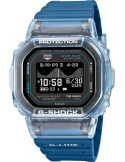
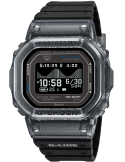
A prime example of this technology in action is the Casio G-SHOCK GBX-H5600-1ER. This stealthy, all-black model utilizes bio-based resin for its bezel and band, offering a comfortable, lightweight fit on the wrist. Beyond its sustainable construction, it is a formidable piece of technology, featuring a high-contrast MIP LCD display, an optical heart rate monitor, and comprehensive tide graph data. For those who prefer a splash of color, the Casio G-SHOCK GBX-H5600-2ER offers the exact same robust feature set and eco-conscious build in a striking deep blue colorway, perfectly echoing the marine environments it is designed to explore.
Surfing with Purpose: The G-LIDE Kanoa Igarashi Edition
The connection between sustainable watchmaking and ocean conservation is perhaps most authentically expressed through collaborations with professional athletes who spend their lives in the water. The G-LIDE collection has long been the timepiece of choice for the global surfing community, offering critical marine data in an indestructible package. In 2026, this connection is deepened through targeted signature models that champion both high performance and environmental stewardship.
Enter the Casio G-SHOCK G-LIDE Kanoa Igarashi Signature GBX-H5600KI-5ER. Designed in collaboration with the world-renowned professional surfer, this specific reference is a masterclass in thematic design and sustainable engineering. The watch features a unique wood-grain aesthetic across its bio-based resin bezel and strap, paying homage to traditional surfboard construction while utilizing cutting-edge, renewable materials. It is a visual representation of harmony with nature, built for an athlete whose career depends on the health of the oceans.
Functionally, the Kanoa Igarashi edition is equipped with everything a serious waterman requires. It boasts 20-bar water resistance, precise tide and moon phase graphs, and Bluetooth connectivity for seamless data logging via a smartphone app. By integrating these advanced features into a chassis made from renewable resources, Casio demonstrates that high-tech sports watches can be both highly capable and ecologically responsible. Enthusiasts looking to explore more of these rugged, purpose-built timepieces can discover the full range in our G-Shock collection at WatchExclusive.
Eliminating Battery Waste: The Legacy of Solar Technology
While the materials used for cases and straps are highly visible indicators of a watch's environmental footprint, the movement inside plays an equally critical role. The quartz crisis of the 1970s introduced unprecedented accuracy to the masses, but it also created a massive ecological problem: the disposable silver-oxide watch battery. Millions of these toxic cells end up in landfills every year, leaking harmful chemicals into the soil and groundwater. The solution to this crisis was pioneered half a century ago and remains the gold standard for sustainable timekeeping today.
In 1976, Citizen unveiled the world's first light-powered analog watch, a technology that would eventually evolve into the legendary Eco-Drive caliber. The premise is elegantly simple yet technologically profound: a highly sensitive solar cell sits beneath a translucent dial, converting any light source—be it direct sunlight, a cloudy sky, or a dim office lamp—into electrical energy. This energy is stored in a rechargeable lithium-ion titanium capacitor, which can power the watch for over six months in total darkness on a single full charge. According to Citizen's official sustainability reports, this innovation has saved over 100 million disposable batteries from entering landfills.
The practical application of this technology is beautifully realized in the Citizen Eco-Drive BM8470-11EE. This rugged field watch embodies the "set it and forget it" philosophy. With its highly legible black dial, bold Arabic numerals, and robust construction, it is designed for everyday reliability. Because it is powered by light, the case back never needs to be opened for a routine battery change, ensuring that the factory water resistance seals remain intact for years, if not decades. It is a testament to how sustainable engineering inherently improves the longevity and reliability of the product.
Super Titanium Meets Eco-Drive: The Ultimate Sustainable Tool Watch
Sustainability in horology is not solely about using recycled or renewable materials; it is fundamentally about longevity. A watch that is built to last a lifetime, resisting scratches, corrosion, and mechanical failure, is inherently more eco-friendly than a cheap, disposable fashion watch that must be replaced every few years. When a brand combines a perpetual power source with virtually indestructible case materials, the result is the pinnacle of sustainable tool watch design.
Citizen has mastered this combination by pairing their light-powered movements with their proprietary Super Titanium. Standard titanium is prized for being lightweight, hypoallergenic, and highly resistant to saltwater corrosion, but it is notoriously prone to surface scratching. Citizen solved this by applying their patented Duratect surface hardening technology, altering the molecular structure of the metal's surface to make it up to five times harder than traditional stainless steel. The result is a watch that maintains its factory-fresh finish through years of rigorous use.
This synergy of technologies is perfectly showcased in the Citizen Super Titanium Eco-Drive AW0130-85ZE. Featuring a striking, textured dial that catches the light beautifully, this timepiece offers the sophisticated aesthetics of a luxury sports watch with the rugged durability of a professional tool. For those who prefer a different visual dynamic, the Citizen Super Titanium Eco-Drive AW0130-85XE provides the exact same robust specifications—including a sapphire crystal and 100 meters of water resistance—in an equally compelling colorway. Both models represent an investment in a timepiece that will not degrade, require battery replacements, or contribute to environmental waste. Explore more of these lifetime companions in our Eco-Drive category.
Recycled Ocean Plastics: From Fishing Nets to Fine Horology
Beyond bio-based resins and solar power, the most visually striking trend in 2026 is the upcycling of ocean plastics. The statistics are grim: an estimated 13 million tons of plastic waste enter the global oceans annually, devastating marine ecosystems. In response, the horology industry has partnered with environmental organizations to harvest this waste—specifically discarded PET bottles and ghost fishing nets—and transform it into high-grade components for luxury timepieces.
This process is incredibly complex. The harvested plastic must be cleaned, shredded, melted, and re-polymerized to ensure it meets the strict tolerances required for watchmaking. Brands like Oris have pioneered the use of recycled PET plastics to create unique, multicolored dials for their Aquis line, where the random nature of the recycling process ensures that no two dials are exactly alike. Similarly, Breitling has championed the use of ECONYL yarn, a material woven entirely from recycled fishing nets, to create highly durable, comfortable NATO-style straps that rival traditional nylon in both strength and aesthetics.
Other notable examples include Alpina's Seastrong Diver Gyre, which features a case constructed from 70% recycled plastic debris sourced from the Indian Ocean, reinforced with fiberglass for structural integrity. These initiatives prove that ocean waste can be successfully integrated into the rigid architecture of a mechanical dive watch. By wearing these timepieces, collectors are not only making a statement about their personal style but also actively participating in the funding and promotion of global ocean cleanup efforts.
Why Eco-Conscious Materials Don't Compromise Durability
A common, albeit fading, skepticism among traditional watch enthusiasts is whether these new eco-materials can truly withstand the rigors of daily wear and extreme environments. When a collector is accustomed to the cold, hard reassurance of 316L stainless steel or the proven track record of vulcanized rubber, the introduction of corn-derived resins and recycled fishing nets can naturally invite questions about longevity and structural integrity.
The reality, backed by rigorous materials science and extensive field testing, is that there is zero compromise. The bio-polyurethane used in modern shock-resistant watches undergoes the exact same brutal testing protocols—drop tests, hammer shocks, extreme temperature fluctuations, and deep-water pressure chambers—as traditional petroleum-based plastics. Chemically, the polymer chains are identical in their strength and flexibility; the only difference is the origin of the carbon atoms used to build those chains.
Similarly, the upcycled ocean plastics used in cases and straps are often reinforced with fiberglass or ceramic composites to ensure they meet ISO standards for dive watches. The solar capacitors used in light-powered movements are engineered to last for decades before experiencing any significant degradation in charge capacity. The horology industry understands that a sustainable watch that breaks after two years is a failure of both engineering and environmentalism. Therefore, these modern eco-conscious timepieces are built to be definitive tool watches, fully capable of surviving whatever adventures their owners embark upon.
Conclusion: Embrace the Future of Horology at WatchExclusive
The landscape of watchmaking in 2026 is defined by a profound respect for the environment, driven by technological innovations that were once thought impossible. The integration of bio-based resins, the upcycling of destructive ocean plastics, and the continued refinement of light-powered movements represent a monumental leap forward. These advancements ensure that the timepieces we cherish do not come at the expense of the natural world we seek to explore.
Whether you are drawn to the indestructible, renewable construction of the Casio G-SHOCK GBX-H5600-2ER, the surf-inspired ethos of the Kanoa Igarashi Signature GBX-H5600KI-5ER, or the lifetime durability of the Citizen Super Titanium Eco-Drive AW0130-85ZE, choosing a sustainable watch is a powerful statement. It is a commitment to quality, longevity, and ecological responsibility.
We invite you to discover how these incredible innovations feel on the wrist. Explore our curated collections and find a timepiece that aligns with both your horological passions and your environmental values at WatchExclusive.
References
- Forster, Jack.
Low-Impact Watchmaking For A Changing World.
Hodinkee Magazine. - Casio Computer Co., Ltd.
Eco-Materials: Bio-based resin.
Casio Official Sustainability Report. - Citizen Watch Global Network.
A mountain's worth of waste batteries. Vanished! Gone!
CITIZEN Sustainability. - Stacey, James.
The Oris Aquis Upcycle features a dial made of recycled plastics.
Hodinkee. - Breitling SA.
Breitling announces first watch made from recycled ocean plastic.
Official Press Release / Outerknown Collaboration.
Share this content