Shopping Cart




The Heritage Chronograph Boom: Nostalgia in Modern Watchmaking
By :
F. Nagy -
Categories :
Industry News & Market Trends
Table of contents
keyboard_arrow_down
- Key Takeaways
- The Rise of the Neo-Vintage Phenomenon
- Why Nostalgia Drives the Watch Market
- The Mechanics of Memory: Vintage Looks, Modern Reliability
- The 1970s and 1980s Chronograph Aesthetic
- Spotlight on American Horology: The Waterbury Legacy
- Exploring the Timex Waterbury Heritage Collection
- The Classic Appeal of the TW2Y24000
- The Chronograph Precision of the TW2Y70600UK and TW2Y70500
- The Future of Heritage Reissues
- Conclusion: Find Your Piece of History at WatchExclusive
- References
Key Takeaways
- The Neo-Vintage Shift: The watch industry has seen a massive pivot toward 1970s and 1980s retro-styled chronographs, blending historical aesthetics with modern manufacturing.
- Nostalgia as a Driver: Collectors and casual buyers alike are drawn to heritage reissues for their emotional resonance and connection to a pre-digital era of mechanical ingenuity.
- Modern Reliability: Heritage chronographs offer the visual charm of vintage pieces—such as domed crystals and pump pushers—without the fragility and high maintenance costs of true vintage watches.
- The Waterbury Legacy: Brands with deep historical roots, like Timex (originating from the 1854 Waterbury Clock Company), are uniquely positioned to offer authentic heritage designs.
- Accessible Heritage: The Timex Waterbury Heritage collection exemplifies this trend, providing meticulously designed retro chronographs that are both historically inspired and highly accessible.
The landscape of modern horology is currently defined by a fascinating paradox: to move forward, the industry is looking backward. Over the past decade, the watch market has been swept by a powerful wave of nostalgia, culminating in what enthusiasts and industry insiders call the "neo-vintage" boom. At the forefront of this movement is the resurgence of the heritage chronograph. These timepieces, heavily inspired by the bold, experimental designs of the 1970s and the refined, utilitarian aesthetics of the 1980s, have captured the imagination of a new generation of collectors. They offer a tangible connection to the past, serving as mechanical anchors in an increasingly digital world.
But this trend is not merely about replicating old blueprints. Today's heritage chronographs represent a sophisticated synthesis of old-school charm and contemporary engineering. Watchmakers are digging deep into their archives, resurrecting forgotten references and iconic dial layouts, and upgrading them with state-of-the-art materials. The result is a timepiece that looks like it was discovered in a grandfather's desk drawer but performs with the precision and durability expected of a modern tool watch. This delicate balance between historical reverence and modern practicality is exactly why buyers are increasingly favoring heritage reissues over entirely new, avant-garde designs.
Nowhere is this trend more evident—and more accessible—than in the revival of historic American watchmaking codes. Brands with genuine, centuries-old pedigrees are leveraging their archives to produce watches that tell a story. By examining the broader market forces driving this nostalgia and zooming in on specific success stories like the Timex Waterbury Heritage collection, we can understand why the retro-styled chronograph has become the defining watch of our era.
The Rise of the Neo-Vintage Phenomenon
The term "neo-vintage" has evolved from a niche collector's buzzword into a dominant force shaping the catalogs of almost every major watch brand. To understand the heritage chronograph boom, one must first look at the broader shift in consumer tastes. In the early 2000s, the industry was obsessed with hyper-modernity: oversized cases, exotic materials like forged carbon, and skeletonized dials that showcased avant-garde movements. However, as these designs became increasingly extreme, a natural pendulum swing occurred. Collectors began to experience fatigue, yearning for the classic proportions and legible layouts that defined mid-century horology.
The turning point arrived in the early 2010s, when several prominent Swiss houses released faithful re-editions of their mid-century dive watches and racing chronographs. These releases proved that there was a massive, untapped market for watches that looked old but felt new. According to a comprehensive analysis by Hodinkee, the watch industry has gone crazy for retro, reissues, and anything heritage-inspired
over the past decade, a trend that has only accelerated in recent years. This phenomenon quickly expanded beyond the 1950s and 1960s, moving into the distinct design language of the 1970s and 1980s.
The 1970s, in particular, was a golden era for the mechanical chronograph. It was a time of fierce competition and rapid innovation, spurred by the race to develop the first automatic chronograph movement in 1969. The resulting watches featured bold, contrasting sub-dials, tonneau-shaped cases, and vibrant accents of orange and red. The 1980s followed with a return to slightly more conservative, utilitarian designs, often integrating the newly perfected quartz chronograph movement which allowed for slimmer profiles and unprecedented accuracy. Today's neo-vintage chronographs draw heavily from these two decades, offering a visual language that is instantly recognizable yet distinct from the minimalist dress watches of earlier eras.
Why Nostalgia Drives the Watch Market
At its core, the appeal of the heritage chronograph is deeply psychological. In an era dominated by smartwatches and ubiquitous screens, a traditional analog watch serves as a rebellion against constant connectivity. It is a micro-mechanical machine that operates independently of software updates, batteries (in the case of mechanicals), and cellular networks. When that machine is styled to evoke the 1970s or 1980s, it taps into a powerful sense of nostalgia—even for buyers who were not alive during those decades.
This phenomenon, sometimes referred to as "faustalgia" or anemoia (nostalgia for a time you've never known), is a driving force in the luxury and fashion markets. A report by Forbes highlights that vintage reissues allow enthusiasts to step back in time
and that watchmakers are cashing in on clients' passion for historical timepieces by making reissues for those who wish to own a piece of history without all the problems of an old watch
. The 1970s and 1980s represent a perceived era of authenticity and analog adventure. A retro-styled chronograph on the wrist is a statement of appreciation for a time when timing a lap at the racetrack or calculating speed required physical interaction with a mechanical instrument.
Furthermore, heritage reissues democratize the romance of vintage watch collecting. The market for authentic, original vintage chronographs has become notoriously difficult to navigate. Prices for pristine examples from the 70s have skyrocketed, and the market is fraught with "frankenwatches" (watches assembled from mismatched parts) and outright fakes. A modern heritage reissue bypasses these pitfalls. It offers the exact aesthetic experience—the matte dials, the faux-patina luminous material, the vintage typography—with the peace of mind that comes from a factory warranty and guaranteed authenticity. It is the emotional payoff of vintage collecting, stripped of the anxiety.
The Mechanics of Memory: Vintage Looks, Modern Reliability
The true genius of the modern heritage chronograph lies in its construction. While the exterior is a love letter to the past, the interior and the materials used are firmly rooted in the 21st century. This combination solves the primary dilemma of owning an actual vintage watch: fragility. A genuine 1970s chronograph, while beautiful, is often a delicate artifact. Its original acrylic crystal is prone to deep scratches, its gaskets have likely degraded (rendering it vulnerable to even a splash of water), and its movement may require expensive, specialized servicing.
Modern reissues eliminate these compromises. Today's retro-styled chronographs typically feature scratch-resistant sapphire crystals, often domed to mimic the distortion of vintage acrylic without the vulnerability. Case manufacturing tolerances have improved exponentially, meaning that a modern heritage watch will feature robust water resistance, often secured by screw-down case backs and modern O-ring seals. The luminous material on the hands and indices, which in the 70s would have been tritium (which degrades and loses its glow), is now modern Super-LumiNova. Watchmakers often tint this modern lume to a warm cream or beige color—a technique known as "fauxtina"—to replicate the aged look of a 50-year-old watch while providing brilliant, long-lasting illumination in the dark.
Under the dial, the advancements are equally significant. While purists often chase mechanical movements with a traditional Swiss lever escapement and a lengthy power reserve, the reality is that quartz chronographs became highly prevalent and historically significant in the 1980s. A modern quartz heritage chronograph offers the exact visual layout of a complex mechanical piece—complete with sweeping chronograph hands and precise sub-dial readouts—but with grab-and-go convenience and exceptional accuracy. This blend of vintage aesthetics and modern reliability is the cornerstone of the heritage boom.
The 1970s and 1980s Chronograph Aesthetic
What exactly defines the look of a 1970s or 1980s chronograph? It is a specific set of design codes that prioritize legibility, contrast, and a certain rugged sportiness. Unlike the delicate, monochromatic dress chronographs of the 1940s, the watches of the 70s and 80s were built for action. They were the instruments of choice for pilots, divers, and racing drivers, and their designs reflected this utilitarian purpose. The chronograph is arguably the most interactive of all horological complications, and its design must facilitate immediate readability.
One of the most defining features is the high-contrast dial, most notably the "panda" (white dial with black sub-dials) or "reverse panda" (black dial with white sub-dials) configurations. This bi-compax layout (two sub-dials) or tri-compax layout (three sub-dials) was originally designed to make the chronograph registers instantly readable at a glance. Today, this high-contrast look is highly sought after for its striking visual impact. Additionally, the inclusion of a tachymeter scale—either printed on the outer edge of the dial or engraved into a fixed bezel—is a hallmark of the era. Originally used to calculate speed over a known distance, the tachymeter now serves as a powerful visual cue that ties the watch to the golden age of motorsport.
Other key elements include the shape and action of the pushers. The transition from rectangular pushers to robust pump pushers became standard, offering a more tactile and secure engagement. The tactile feel of the bezel action on models equipped with rotating bezels also became a marker of quality during this era. Dial typography shifted as well, moving away from ornate scripts toward clean, blocky, sans-serif fonts that emphasized modernity and precision. When modern brands design a heritage reissue, they meticulously recreate these elements. The matte finish of the dial, the specific slope of the rehaut, and the exact proportions of the sub-dials are all carefully calibrated to trigger that sense of horological nostalgia.
Spotlight on American Horology: The Waterbury Legacy
While Swiss brands often dominate the conversation around heritage watches, American horology possesses a rich, deeply influential history that is increasingly being celebrated. To truly appreciate the heritage trend, one must look at the pioneers of mass-produced timekeeping. One of the most significant names in this history is the Waterbury Clock Company, founded in 1854 in Waterbury, Connecticut—a region once proudly known as the "Switzerland of America".
The Waterbury Clock Company revolutionized the industry by combining European clockmaking traditions with American industrial ingenuity. They were instrumental in transitioning timepieces from expensive, handcrafted luxury items reserved for the elite into reliable, accessible tools for the working public. By the early 20th century, their innovations in brass manufacturing and assembly-line production allowed them to produce millions of pocket watches and, eventually, wristwatches. This company would eventually evolve into Timex, one of the most globally recognized watch brands in history.
This deep historical well provides incredible material for modern heritage reissues. When Timex looks to its past, it isn't inventing a faux-heritage; it is drawing upon over 170 years of continuous operation. The modern Timex Waterbury Heritage collection is a direct homage to this legacy. These watches are designed to reflect the robust, honest craftsmanship of early American watchmaking, updated with the design cues of the mid-to-late 20th-century chronograph boom. They represent a unique intersection: the accessible, democratic ethos of the original Waterbury Clock Company combined with the highly desired retro-chronograph aesthetic of the 1970s and 80s.
Exploring the Timex Waterbury Heritage Collection
The success of the heritage trend is perfectly encapsulated in the Timex Waterbury Heritage line. These timepieces demonstrate how a brand can honor its archives while delivering a product that meets the demands of modern consumers. By focusing on classic proportions, vintage typography, and reliable movements, Timex has created a collection that appeals to both seasoned watch enthusiasts and casual buyers looking for a stylish daily wearer. Let's examine some of the standout models that define this collection.
The Classic Appeal of the TW2Y24000
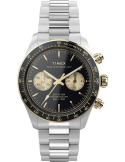
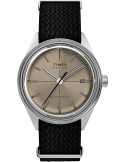
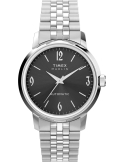
For those who appreciate the foundational elements of retro design, the Timex Waterbury Heritage TW2Y24000 Watch is a masterclass in understated nostalgia. This model strips away the unnecessary, focusing on a clean, highly legible dial that echoes the field and pilot watches of the mid-20th century. The use of traditional Arabic numerals, paired with a perfectly proportioned case, makes it an incredibly versatile piece. The TW2Y24000 features the iconic Waterbury logo on the dial, a subtle nod to the brand's 1854 origins. It is a watch that doesn't need to shout to be noticed; its appeal lies in its quiet confidence and historical authenticity.
The Chronograph Precision of the TW2Y70600UK and TW2Y70500
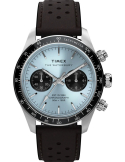
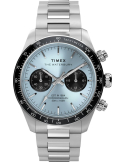
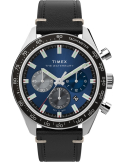
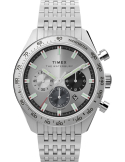
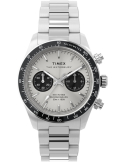
When it comes to capturing the specific magic of the 1970s and 1980s sports watch, the chronograph models in the Waterbury line truly shine. The Timex Waterbury Heritage Chronograph TW2Y70600UK Watch brings the classic tri-compax layout to the forefront. The arrangement of the sub-dials provides a balanced, instrument-like appearance that is essential to the retro racing aesthetic. The TW2Y70600UK utilizes a precise quartz movement, ensuring that the chronograph functions—whether timing a parking meter or a sprint—are flawlessly accurate.
Similarly, the Timex Waterbury Heritage Chronograph TW2Y70500 Watch offers a slightly different visual execution while maintaining the same high standards of heritage design. The TW2Y70500 features distinct pusher designs and a dial colorway that immediately evokes the golden era of analog timing. Both of these chronographs feature the signature Indiglo night-light technology—a modern Timex innovation that perfectly complements the vintage styling by providing unparalleled low-light visibility. By integrating these modern conveniences into a historically inspired chassis, Timex ensures that the Waterbury collection is not just a museum piece, but a functional tool for everyday life.
The Future of Heritage Reissues
As we look toward the late 2020s, a common question arises among horology circles: will the neo-vintage trend eventually fade? The consensus among industry experts is that while specific eras of inspiration may shift, the core desire for heritage-inspired watches is permanent. We are already seeing the definition of "vintage" expand. While the 1960s and 1970s have dominated the past decade, the focus is slowly creeping into the late 1980s and early 1990s.
However, the fundamental appeal of the retro-styled chronograph—its balanced proportions, its mechanical romance, and its high-contrast legibility—is timeless. Good design does not expire. The watches that got it right in 1975 still look right today, and they will continue to look right in fifty years. Brands that possess genuine history, like Timex with its Waterbury roots, will continue to have a distinct advantage. They do not have to invent a backstory; they simply have to curate their archives. As manufacturing technologies continue to improve, we can expect future heritage reissues to offer even better materials, slimmer case profiles, and more refined movements, all while maintaining the soulful aesthetics of the past.
Conclusion: Find Your Piece of History at WatchExclusive
The heritage chronograph boom is a testament to the enduring power of great design. It proves that in our fast-paced, digital world, there is a profound desire for objects that carry a sense of history, permanence, and mechanical integrity. Whether you are drawn to the high-contrast dials of 1970s racing chronographs or the rugged, utilitarian charm of early American watchmaking, a retro-styled timepiece offers a unique way to express your personal style while connecting with the rich lineage of horology.
At WatchExclusive, we are passionate about curating timepieces that tell a story. The Timex Waterbury Heritage collection perfectly embodies this philosophy, offering meticulously crafted watches that honor the legacy of the Waterbury Clock Company without compromising on modern reliability. We invite you to explore these exceptional pieces and find the one that resonates with your own sense of nostalgia. Discover the understated elegance of the Timex Waterbury Heritage TW2Y24000 Watch, or embrace the sporty precision of the TW2Y70600UK and the TW2Y70500 chronographs. To see the full breadth of what this historic brand has to offer, browse our complete Timex collection today and secure your own piece of watchmaking history.
References
- Forster, J. (2023). Buying, Selling, & Collecting: Commit It To Memory: How The Way We Experience Nostalgia Is Changing How We Buy Watches. Hodinkee.
- Mundel Salle, Y. (2024). Why Vintage Reissue Watches Are So Popular With Enthusiasts. Forbes.
- Timex Group USA. (n.d.). About Us: The Waterbury Clock Company Legacy. Timex Group.
- Wikipedia Contributors. (2024). Timex Group USA. Wikipedia, The Free Encyclopedia.
Share this content