Shopping Cart







The Small Seconds Revival: Why This Vintage Complication is Dominating 2026
By :
F. Nagy -
Categories :
Industry News & Market Trends
Table of contents
keyboard_arrow_down
- Key Takeaways
- The Historical Roots of the Small Seconds Complication
- The Mechanics: Central Seconds vs. Sub-Dial Architecture
- Why 2026 is the Year of the Sub-Dial
- The Citizen Tsuyosa Small Seconds: Democratizing Classic Horology
- Avant-Garde Interpretations: Alexander Shorokhoff's Vintage Approach
- The Visual Balance and Dial Symmetry
- Collecting and Styling the Modern Small Seconds Watch
- Conclusion: Embrace the Revival at WatchExclusive
- References
Key Takeaways
- Mechanical Authenticity: The transition from central seconds to a sub-dial layout reflects a broader industry shift toward vintage-inspired aesthetics and traditional gear train architecture.
- Direct Power Transmission: Mechanically, the small seconds complication connects directly to the fourth wheel, eliminating the need for the friction-inducing indirect pinions found in many center-seconds calibers.
- Accessible Luxury: The Citizen Tsuyosa Small Seconds demonstrates how brands are successfully integrating classic horological designs into modern, integrated-bracelet sports watches.
- Avant-Garde Artistry: Independent watchmakers like Alexander Shorokhoff utilize overhauled vintage movements to create highly artistic, limited-production interpretations of the sub-dial layout.
- Dial Symmetry: A well-placed sub-dial at 6 o'clock enhances visual balance, introduces dynamic textures like azurage finishing, and effectively breaks up the negative space on minimalist dials.
For the better part of the last half-century, the central seconds hand has been the undisputed standard in everyday mechanical watchmaking. It offered immediate legibility, a sweeping visual dynamism across the entire dial, and became synonymous with the modern sports watch era. However, as we navigate through 2026, a distinct and fascinating shift is occurring within the horological landscape. The industry is witnessing a massive revival of the sub-dial—specifically, the small seconds complication. This return to a more classical dial layout is not merely a fleeting aesthetic trend; it is a deliberate nod to the foundational mechanics of traditional watchmaking.
This resurgence speaks volumes about the evolving tastes of modern watch enthusiasts. Today's collectors are increasingly looking beyond the ubiquitous "Go Anywhere, Do Anything" (GADA) designs that have saturated the market. Instead, there is a growing appetite for timepieces that offer a deeper connection to horological history, characterized by nuanced dial textures, balanced asymmetry, and a tangible link to the pocket watches of the 19th and early 20th centuries. The small seconds layout forces a different kind of engagement with the dial, drawing the eye to a localized theater of mechanical motion rather than a sweeping global indicator.
From accessible luxury powerhouses to avant-garde independent artisans, watchmakers are embracing this vintage complication with renewed vigor. By integrating the sub-dial into contemporary case profiles and pairing it with robust, modern calibers, brands are bridging the gap between antique charm and everyday reliability. To understand why this specific layout is dominating the current market, we must first dissect its historical origins, the underlying mechanics that make it tick, and how modern releases are redefining the small seconds watch for a new generation of collectors.
The Historical Roots of the Small Seconds Complication
To fully appreciate the current revival, one must look back to the origins of portable timekeeping. Before the wristwatch became a ubiquitous accessory, the pocket watch reigned supreme. In the traditional architecture of a pocket watch movement—most notably the Lépine caliber developed in the 18th century—the gear train was laid out in a linear or semi-circular fashion. The mainspring barrel transmitted power through the center wheel, the third wheel, and finally to the fourth wheel, which completed exactly one rotation per minute.
Because this fourth wheel naturally rotated at the speed of a seconds hand, early watchmakers simply extended the pivot of this wheel through the dial and attached a small hand to it. This was an elegant, frictionless solution that required no additional gearing. As noted by horological historian David Boettcher in his extensive research on early timepieces, the subsidiary seconds dial was not a design choice, but a mechanical inevitability dictated by the most efficient layout of the going train.
In a standard open-faced pocket watch, this naturally placed the seconds sub-dial at the 6 o'clock position.
When the transition from pocket watches to wristwatches occurred—accelerated by the demands of soldiers in the trenches of World War I—these early wrist-worn timepieces utilized repurposed pocket watch movements. Consequently, the first generation of wristwatches almost exclusively featured a small seconds layout. It was the standard for military watches, early chronometers, and elegant dress watches throughout the 1920s and 1930s. The central seconds hand, which we now consider standard, was actually a later innovation that required complex modifications to the traditional gear train.
The dominance of the small seconds began to wane in the mid-20th century. As medical professionals, pilots, and engineers demanded highly legible seconds tracking for timing events, watchmakers developed more robust center-seconds movements. By the time the modern dive watch was born in the 1950s, the central seconds hand had become the industry norm, relegating the sub-dial to the realm of ultra-thin dress watches and vintage reissues. Today's revival is a deliberate homage to that pre-war era of watchmaking, celebrating the mechanical purity of the original design.
The Mechanics: Central Seconds vs. Sub-Dial Architecture
Understanding the appeal of the small seconds complication requires a brief foray into movement architecture. In a traditional mechanical watch, the flow of energy is strictly regulated. The fourth wheel pivot is the natural home for the seconds hand because of its rotational speed. To move the seconds hand from this sub-dial position to the center of the dial, watchmakers historically had to employ an indirect center seconds system.
This indirect system involves adding an extra pinion and a friction spring to drive a centrally located seconds hand off the third or fourth wheel. While effective, this approach introduces additional friction into the gear train, which can theoretically impact chronometric performance and amplitude. Furthermore, the extra gearing adds thickness to the movement. According to a technical breakdown by Fratello Watches, the indirect center seconds was often viewed by purists as a compromise of the movement's natural architecture.
Eventually, movement manufacturers developed direct center seconds calibers, where the gear train is rearranged so that the fourth wheel sits directly in the center of the movement. This solved the friction and thickness issues of the indirect method and became the blueprint for modern automatic movements like the ETA 2824 or the Miyota 9015. However, this modern layout sacrifices the historical charm and the specific dial aesthetics that only a sub-dial can provide.
By returning to the small seconds layout, modern watchmakers are often utilizing calibers that either revert to the traditional gear train layout or use modular additions to relocate the seconds display. This allows for a thinner overall profile in some cases, but more importantly, it provides a canvas for intricate dial finishing. The sub-dial requires a physical recess in the main dial, creating depth, shadow, and an opportunity for contrasting textures that a flat, center-seconds dial simply cannot accommodate.
Why 2026 is the Year of the Sub-Dial
The watch industry operates on cyclical trends, and 2026 has firmly established itself as the year of the sub-dial. This shift is driven by a collective consumer fatigue with the minimalist, utilitarian designs that dominated the early 2020s. Enthusiasts are now seeking timepieces that offer more visual complexity and a stronger sense of heritage, without sacrificing modern build quality. The small seconds complication perfectly bridges this gap, offering a vintage aesthetic wrapped in contemporary materials.
Furthermore, the current market is seeing a blurring of the lines between dress watches and sports watches. The rigid categorization of the past is giving way to versatile, everyday timepieces that can transition seamlessly from a boardroom to a weekend getaway. A small seconds layout elevates the formality of a steel sports watch, adding a touch of refinement that a sweeping central hand lacks. It breaks up the negative space on the dial, providing a focal point that draws the eye and invites closer inspection.
This trend is also heavily influenced by the rise of independent watchmaking and the increased education of the average consumer. As buyers become more knowledgeable about movement architecture and horological history, they are actively seeking out designs that reflect traditional watchmaking values. The sub-dial is a visual shorthand for mechanical authenticity. It signals to the wearer—and to onlookers—that the watch is rooted in a legacy that predates the quartz crisis and the era of mass-produced, homogenous timepieces.
The Citizen Tsuyosa Small Seconds: Democratizing Classic Horology
Perhaps the most compelling evidence of this trend's mainstream dominance is the introduction of the small seconds layout into highly accessible, wildly popular collections. A prime example is the Citizen Tsuyosa Automatic NK5010-51L Watch. The original Tsuyosa line took the watch world by storm with its integrated bracelet design and vibrant dials, but the introduction of the small seconds variant elevates the collection from a fun everyday wearer to a serious piece of horological design.
The Citizen Tsuyosa Automatic NK5010-51L features a striking blue dial that serves as the perfect backdrop for the recessed sub-dial at 6 o'clock. What makes this execution so successful is the attention to texture. While the main dial boasts a subtle sunburst finish, the interior of the small seconds register is treated with a stamped guilloché-like pattern. This contrast in finishing catches the light dynamically, ensuring that the sub-dial is not just a functional element, but the visual anchor of the entire watch.
Powering this model is the in-house Caliber 8322. This automatic movement is a significant upgrade, offering a robust 60-hour power reserve and a hacking seconds function for precise time-setting. By utilizing this specific caliber, Citizen has managed to maintain the sleek, wearable proportions of the Tsuyosa case while introducing a complication that traditionally commands a much higher price point. It is a masterclass in democratizing classic horology.
For collectors looking to explore this trend without venturing into haute horlogerie price brackets, the Citizen Tsuyosa collection represents the perfect entry point. It proves that the vintage charm of a small seconds display can be seamlessly integrated into a modern, sporty silhouette, creating a highly versatile timepiece that feels both fresh and historically grounded.
Avant-Garde Interpretations: Alexander Shorokhoff's Vintage Approach
While brands like Citizen are bringing the small seconds to the masses, independent watchmakers are utilizing the complication as a canvas for high art. Alexander Shorokhoff, a brand renowned for its "Art on the Wrist" philosophy, takes a radically different approach to the sub-dial revival. Instead of modernizing the complication, Shorokhoff leans heavily into its historical roots by utilizing actual vintage movements, completely overhauled and hand-finished to exacting modern standards.
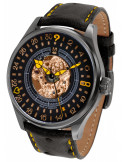
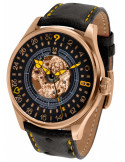
The Alexander Shorokhoff Lucky 8-2 AS.V3.02-BY mechanical Watch is a stunning example of this avant-garde approach. Housed within its case is a genuine vintage mechanical caliber, meticulously restored and elaborately hand-engraved. The small seconds layout here is not a modular add-on; it is the authentic, original architecture of the historical movement beating inside. The "BY" variant utilizes a striking black and yellow color palette, using the sub-dial to create a bold, asymmetrical visual tension that is a hallmark of Shorokhoff's design language.
Similarly, the Alexander Shorokhoff Lucky 8-2 AS.V3.02-GY mechanical Watch offers a sophisticated grey and yellow execution. In these models, the small seconds register is often oversized or creatively integrated into the broader dial artwork. Shorokhoff does not simply place a circle at 6 or 9 o'clock; the brand integrates the sweeping motion of the small hand into the overarching narrative of the dial, often using skeletonization or applied elements to highlight the mechanical heartbeat of the watch.
These timepieces, found within the broader Alexander Shorokhoff Vintage collection, represent the pinnacle of the small seconds revival for serious collectors. They offer a rare combination of genuine historical mechanics—via the restored vintage calibers—and unapologetically modern, artistic dial executions. They are conversation pieces that demand attention, proving that a traditional complication can still be deeply innovative.
The Visual Balance and Dial Symmetry
Beyond the mechanical heritage, the primary reason the small seconds complication is dominating 2026 is its profound impact on dial design. A central seconds hand, while dynamic, sweeps across the entire face of the watch, often obscuring text, logos, and applied indices. It creates a constant, global motion. A small seconds sub-dial, conversely, confines that kinetic energy to a specific quadrant of the dial, usually at 6 o'clock or 9 o'clock.
This localized motion creates a completely different visual experience. From a design perspective, a 6 o'clock sub-dial adheres beautifully to the principles of vertical symmetry. It anchors the bottom half of the dial, providing a visual counterweight to the brand logo typically placed at 12 o'clock. This creates a harmonious, balanced aesthetic that is incredibly pleasing to the eye. It is a design language heavily influenced by the Bauhaus movement and mid-century dress watches, where proportion and negative space were paramount.
Furthermore, the sub-dial allows watchmakers to play with azurage finishing (concentric circular graining) or contrasting colors. This breaks up the monotony of a flat dial, adding depth and architectural interest. When you look at a well-executed small seconds watch, your eye is naturally drawn to the interplay between the static elements of the main dial and the relentless, ticking heartbeat confined within its own dedicated arena.
Collecting and Styling the Modern Small Seconds Watch
Integrating a small seconds watch into a modern collection offers incredible versatility. Because the complication inherently straddles the line between dressy and sporty, these watches are uniquely suited to a wide variety of styling options. The key to maximizing their potential lies in understanding how the strap or bracelet interacts with the dial layout.
For a watch like the Citizen Tsuyosa, the integrated steel bracelet emphasizes the modern, sporty aspects of the design. The small seconds dial adds a touch of elegance, making it a perfect candidate for "smart casual" attire. It pairs just as well with a tailored blazer as it does with a premium knit polo. The robust nature of the automatic movement ensures it can handle the rigors of daily wear, while the vintage-inspired dial keeps it from looking like just another generic steel sports watch.
Conversely, highly artistic pieces like the Alexander Shorokhoff Lucky 8-2 models are best paired with premium leather straps. A high-quality calfskin or alligator strap accentuates the vintage nature of the mechanical caliber and allows the bold dial colors to take center stage. These are statement pieces, ideal for evening wear, art gallery openings, or any occasion where you want your wristwear to spark a conversation about horological artistry and mechanical heritage.
Conclusion: Embrace the Revival at WatchExclusive
The resurgence of the small seconds complication in 2026 is a testament to the enduring appeal of traditional watchmaking. It represents a sophisticated evolution in consumer taste, moving away from stark utilitarianism toward designs that celebrate mechanical authenticity, intricate dial textures, and historical proportions. Whether executed in a modern, accessible sports watch or an avant-garde, limited-edition masterpiece, the sub-dial offers a unique and captivating way to experience the passage of time.
As this trend continues to shape the industry, there has never been a better time to add a small seconds timepiece to your collection. We invite you to explore this horological revival at WatchExclusive. Discover the perfect blend of modern wearability and classic design with the Citizen Tsuyosa Automatic NK5010-51L, or make a bold, artistic statement with the vintage-powered Alexander Shorokhoff Lucky 8-2 AS.V3.02-BY. Elevate your wristwear and embrace the mechanical heartbeat of 2026.
References
- Boettcher, D. (2021). The Evolution of the Wristwatch: From Pocket to Wrist. Vintage Watch Straps Archive.
- Forster, J. (2019). In-Depth: The History of the Small Seconds Complication. Hodinkee.
- Broer, R. (2023). Understanding Movement Architecture: Direct vs. Indirect Seconds. Fratello Watches.
- Citizen Watch Global. (2024). Technical Specifications: Caliber 8322. Official Citizen Archives.
- Alexander Shorokhoff. (2025). Art on the Wrist: The Vintage Collection and Restored Calibers. Official Brand Documentation.
Share this content