Shopping Cart




Watch Water Resistance Explained: How to Maintain Your Citizen Promaster
By :
F. Nagy -
Categories :
Watch Care & Technical Guides
Table of contents
keyboard_arrow_down
- Key Takeaways
- The Reality of Water Resistance Ratings: Decoding ATM and Bar
- ISO 6425 vs. ISO 22810: The Diver's Standard Explained
- The Rigors of ISO 6425 Testing
- The Anatomy of a Seal: How Gaskets Keep Water Out
- Environmental Threats to Your Watch's Water Resistance
- Essential Maintenance: When and How to Pressure Test
- Caring for Your Citizen Promaster: Best Practices
- Specific Care for Promaster Sky and Marine Models
- Recognizing the Signs of Water Ingress
- Discover Your Next Citizen Promaster at WatchExclusive
- References
Key Takeaways
- ATM and Bar ratings indicate static pressure testing in a laboratory environment, not actual real-world diving depth; a 30m rated watch is generally only suitable for light splashes.
- True professional dive watches comply with the rigorous ISO 6425 standard, which mandates testing to 125% of the rated pressure resistance and includes severe thermal shock evaluations.
- The integrity of a watch relies on elastomer gaskets (O-rings) that naturally degrade over time due to temperature fluctuations, UV exposure, and chemical contact, necessitating annual pressure testing.
- Environmental factors such as hot tubs, soapy water, and sunscreen can compromise the surface tension of water and the chemical structure of seals, leading to catastrophic water ingress.
- Condensation forming under the sapphire or mineral crystal is a critical warning sign of a breached seal, demanding immediate professional horological intervention to save the movement.
The modern tool watch is a marvel of micro-engineering, designed to accompany us through the most extreme environments on Earth. Whether you are navigating the depths of the ocean or traversing time zones in the cockpit, the expectation is that the intricate mechanics on your wrist will remain impervious to the elements. However, one of the most misunderstood concepts in horology is the true nature of water resistance. It is not a permanent, impenetrable shield, but rather a carefully engineered system of tolerances, threads, and elastomers that requires understanding and active maintenance. The illusion of invincibility often leads watch owners to subject their timepieces to conditions that slowly degrade their protective barriers.
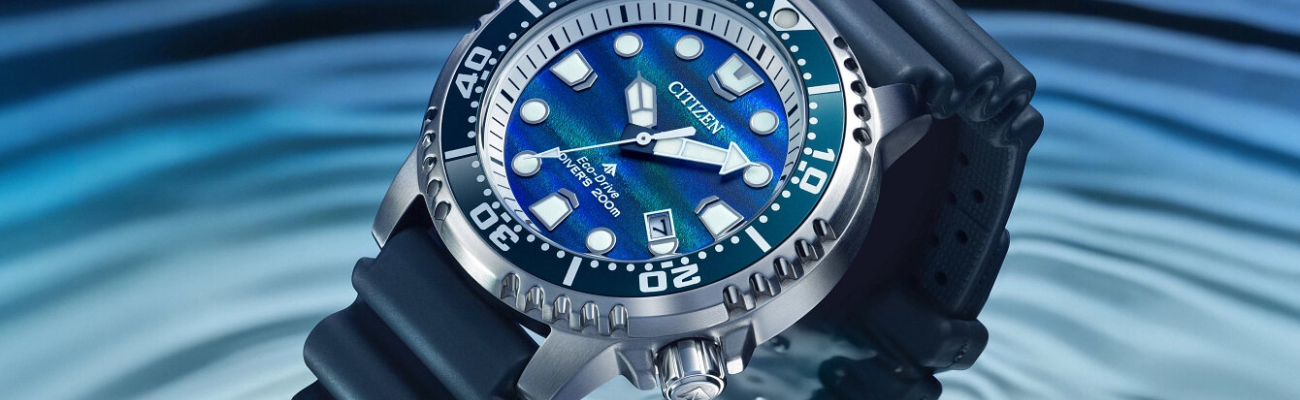
Nowhere is the demand for robust water resistance more apparent than in the Citizen Promaster collection. For decades, this line has served as the benchmark for professional-grade reliability, offering specialized instruments for the sea, sky, and land. Yet, even a watch built to the exacting standards of a Promaster is bound by the laws of physics and material science. The rubber seals that keep moisture away from the delicate Eco-Drive caliber or mechanical escapement are perishable components. They expand, contract, dry out, and eventually fail if not properly cared for. Understanding how these seals function is the first step in ensuring your timepiece outlasts your adventures.
This comprehensive guide delves deep into the science of horological water resistance. We will demystify the often-confusing ATM and Bar ratings, explore the rigorous international standards that define true dive watches, and break down the anatomy of the gaskets that safeguard your watch's movement. Furthermore, we will provide actionable, expert-level maintenance strategies specifically tailored for your Citizen Promaster, ensuring that whether you are desk-diving or exploring a coral reef, your timepiece remains a reliable, water-tight instrument for generations to come.
The Reality of Water Resistance Ratings: Decoding ATM and Bar
To properly maintain a water-resistant watch, one must first understand the terminology printed on the dial or engraved on the case back. The most common metrics used are ATM (Atmospheres), Bar, and meters. One ATM is roughly equivalent to the atmospheric pressure at sea level, which is also equal to one Bar, or the static pressure exerted by a 10-meter column of water. Therefore, a watch rated to 10 ATM or 10 Bar is theoretically capable of withstanding the pressure at a depth of 100 meters. However, this is where the horological reality diverges sharply from consumer expectations.
These ratings are derived from static pressure tests conducted in pristine laboratory environments. The watch is placed in a pressure chamber, and the pressure is gradually increased to the target rating. In the real world, water pressure is rarely static. According to technical documentation from the Federation of the Swiss Watch Industry (FH), the dynamic pressure created by the movement of the wearer's arm through the water—such as during a freestyle swimming stroke or diving into a pool—can momentarily spike the pressure exerted on the watch's seals far beyond the static depth equivalent.
Because of this discrepancy between static testing and dynamic real-world use, the horological industry has established practical guidelines for water resistance ratings. A watch rated to 30m (3 ATM) is merely splash-proof and should not be submerged. A 50m (5 ATM) rating allows for surface swimming but no diving. It is only when a watch reaches a 100m water resistance rating that it is considered safe for snorkeling and extended swimming. For any form of scuba diving, a minimum rating of 200m (20 ATM) is universally recommended by horological experts. Understanding these practical limitations is crucial for preventing accidental flooding of your timepiece.
ISO 6425 vs. ISO 22810: The Diver's Standard Explained
Not all water resistance ratings are created equal. The watch industry relies on two primary International Organization for Standardization (ISO) benchmarks to classify water resistance: ISO 22810 for standard daily-wear watches, and the far more stringent ISO 6425 for professional diver's watches. When a watch dial proudly displays the word "Diver's" alongside its depth rating, it is legally declaring compliance with ISO 6425, a standard that separates true aquatic tools from mere sports watches.
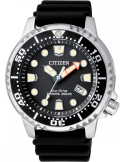
The ISO 22810 standard (which replaced the older ISO 2281 in 2010) dictates that a watch must resist water at its stated depth, but it only requires batch testing. This means that only a sample of watches from a production run is actually tested. In contrast, ISO 6425 demands that every single watch destined for the market must be individually tested. Furthermore, the standard requires an overpressure test of 125%. Therefore, a watch like the Citizen Promaster Eco-Drive BN0150-10E Watch, which boasts a 200m rating, has actually been successfully pressure-tested to a simulated depth of 250 meters before leaving the factory.
The Rigors of ISO 6425 Testing
The ISO 6425 certification involves a battery of torturous tests designed to simulate the harshest underwater conditions. Beyond the 125% static pressure test, the watch must undergo a thermal shock evaluation. The timepiece is heated to 40°C, rapidly submerged in water at 5°C, and then heated back to 40°C. If any condensation forms under the crystal during this transition, the watch fails. Additionally, the standard mandates tests for magnetic resistance, shock resistance, and the physical robustness of the strap attachments. It also requires a unidirectional rotating bezel with a minute scale to safely track dive times, and luminous material that remains visible in total darkness at a distance of 25 centimeters.
When you invest in a serious aquatic tool like the Citizen Promaster Eco-Drive BN2038-01L Watch, you are acquiring an instrument that has survived this exact gauntlet. The robust stainless steel case and thick mineral crystal are engineered specifically to pass these ISO mandates, ensuring that the watch will not fail when you rely on it most. However, even an ISO 6425 certified watch requires ongoing maintenance to retain its certification-level integrity over years of use.
The Anatomy of a Seal: How Gaskets Keep Water Out
The magic of water resistance does not lie in the metal of the case, but rather in the microscopic tolerances and the hidden elastomers known as gaskets or O-rings. A modern water-resistant watch typically features several critical sealing points: the case back, the crystal, the crown, and any chronograph pushers. Each of these points represents a potential vulnerability where water can bypass the armor of the case and reach the delicate gear train and escapement.
The most common material used for horological gaskets is Nitrile rubber (NBR), prized for its excellent resistance to oils and general wear. In higher-end or specialized dive watches, manufacturers may utilize fluorocarbon elastomers (Viton) or specialized silicone blends, which offer superior resistance to extreme temperatures and chemical degradation. These gaskets are seated in precisely machined grooves. When the case back is screwed down, or the crystal is pressed into place, the gasket is compressed. This compression creates a watertight barrier, filling any microscopic imperfections in the metal surfaces.
The crown is arguably the most complex sealing point. A standard push-pull crown relies on one or two tiny O-rings on the winding stem that slide inside the case tube. A screw-down crown, a hallmark of the Promaster Marine line, provides a vastly superior seal. By threading the crown directly onto the case tube, it compresses a thick gasket located inside the crown's cap against the top of the tube, creating a highly secure, static seal. As noted by horological technical writer Jack Forster in Hodinkee, The screw-down crown is the single most important innovation in the history of the water-resistant watch, transforming it from a fragile novelty into a reliable tool.
Environmental Threats to Your Watch's Water Resistance
While a watch may be engineered to withstand the crushing pressure of the deep ocean, it is often the mundane environments of daily life that pose the greatest threat to its water resistance. The most insidious enemy of the rubber gasket is not water, but temperature fluctuation. The classic "hot tub myth" is a perfect example. Many owners assume that if a watch can survive 200 meters of ocean depth, it can easily survive a 1-meter deep hot tub. This is a dangerous misconception.
The danger of hot tubs, saunas, and hot showers lies in thermal expansion. The metal case, the sapphire or mineral crystal, and the rubber gaskets all expand and contract at different rates when exposed to rapid temperature changes. A sudden shift from a hot environment to a cold one (such as jumping from a sauna into a cold pool) can cause the metal to contract faster than the rubber can adapt, momentarily breaking the seal and allowing moisture to be sucked into the case via a vacuum effect. Furthermore, prolonged exposure to high heat accelerates the vulcanization process of the rubber, causing the gaskets to dry out, harden, and lose their elasticity.
Chemicals present another severe threat. The surfactants found in everyday soaps and shampoos lower the surface tension of water, allowing it to slip past seals that would normally repel pure H2O. Chlorine in swimming pools and salt in seawater can crystallize in the crevices of the bezel and crown, acting as an abrasive that slowly grinds away at the gaskets every time the crown is turned. Even sunscreen and insect repellent contain solvents that can chemically degrade Nitrile gaskets over time, turning them into a sticky, ineffective paste.
Essential Maintenance: When and How to Pressure Test
Because gaskets degrade invisibly inside the watch case, visual inspection is impossible. The only way to verify the integrity of your watch's water resistance is through professional pressure testing. For a watch that sees regular aquatic use, such as scuba diving or frequent swimming, horological experts universally recommend an annual pressure test. For watches used primarily on land, a test every two to three years, typically coinciding with a battery change or movement service, is sufficient.
Modern watchmakers utilize two primary methods for testing: dry testing and wet testing. The dry test is the most common and safest initial diagnostic. The watch is placed in a specialized machine, such as a Witschi Proofmaster, which seals the chamber and increases the air pressure. A highly sensitive micrometer rests against the watch crystal. As the pressure increases, a properly sealed watch case will microscopically deform (compress) under the pressure. The machine measures this deformation in microns. If the case does not deform, it means air is leaking inside, equalizing the pressure, and the watch has failed the test.
If a watch fails a dry test, the watchmaker will often proceed to a wet test to locate the exact point of failure. The watch is suspended above water in a half-filled chamber. The air pressure is increased, forcing air into the leaky watch. The watch is then lowered into the water, and the air pressure in the chamber is slowly released. Because the pressure inside the watch is now higher than the surrounding water, air will escape from the compromised seal, creating a visible stream of bubbles. This allows the watchmaker to pinpoint whether the failure is at the crown, the crystal, or the case back gasket.
Caring for Your Citizen Promaster: Best Practices
Owning a robust timepiece from the Citizen Promaster collection requires a commitment to basic horological hygiene. The most critical habit to develop is the freshwater rinse. After any exposure to salt water, chlorinated pool water, or heavy perspiration, the watch must be rinsed thoroughly under lukewarm, gently running tap water. This dissolves and washes away salt crystals and chemical residues before they can attack the gaskets or cause the bezel to seize. For stubborn salt deposits, a soft-bristled toothbrush can be used gently around the bezel and case back.
Crown management is equally vital. Before any exposure to water, you must physically verify that the crown is fully secured. For models with a screw-down crown, ensure it is threaded down snugly against the case, but avoid over-tightening, which can crush and permanently damage the internal gasket. Never, under any circumstances, operate the crown or chronograph pushers while the watch is submerged or even wet. Pressing a pusher underwater acts like a syringe, actively injecting water past the seals and directly into the movement.
Specific Care for Promaster Sky and Marine Models
While dive watches naturally demand strict water care, aviation timepieces like the Citizen Promaster Sky Blue Angels JY8078-52L Watch and the highly technical Citizen Promaster Sky JV2006-55H Watch also require diligent gasket maintenance. Flight watches are subjected to rapid changes in atmospheric pressure and temperature within aircraft cabins. These fluctuations stress the seals in a manner similar to diving. Furthermore, the complex slide rule bezels and multiple pushers on models like the Citizen Promaster Sky Radio Controlled JY8100-80L Watch present multiple ingress points that must be kept clean of dust and debris to ensure the underlying gaskets remain uncompromised.
Recognizing the Signs of Water Ingress
Despite our best efforts, seals can fail. Recognizing the signs of water ingress early can mean the difference between a routine service and the total loss of the timepiece. The most obvious and critical warning sign is condensation or fogging on the underside of the crystal. A slight, temporary fog that appears when moving from a warm environment to a freezing one (and disappears within a minute) can sometimes be normal, representing the trace humidity trapped in the air during the watch's assembly. However, large droplets of water, or a persistent fog that does not clear, indicates a breached seal.
If water enters the case, it immediately begins to wreak havoc. In a mechanical watch, moisture will rapidly rust the high-carbon steel of the hairspring and the pinions of the gear train. In a quartz or Eco-Drive movement, water will short-circuit the integrated circuit and corrode the battery contacts and stepper motors. According to a technical bulletin from the American Watchmakers-Clockmakers Institute (AWCI), Water damage is progressive and exponential; a watch left with moisture inside for even 48 hours can suffer irreversible corrosion to the keyless works and escapement.
If you detect water ingress, do not attempt DIY remedies. Placing the watch in a bag of rice or using a hair dryer will not extract moisture from a sealed case; it will only heat the water, turning it into steam that penetrates deeper into the movement, accelerating corrosion. The only correct action is to pull the crown out to the time-setting position (to stop the movement and open a ventilation path) and immediately take the watch to a certified horologist. They will open the case back, dry the components professionally, and assess the damage.
Discover Your Next Citizen Promaster at WatchExclusive
Understanding the mechanics of water resistance transforms how you interact with your timepiece. It shifts the perspective from assuming invincibility to appreciating the incredible engineering that keeps the elements at bay. By respecting the limits of ATM ratings, avoiding thermal shocks, and committing to regular pressure testing and gasket replacement, you ensure that your watch remains a faithful companion on all your adventures.
The Citizen Promaster line represents the pinnacle of accessible, professional-grade tool watches, engineered to withstand the rigors of the real world when properly maintained. Whether you are drawn to the aviation heritage of the Citizen Promaster Sky Blue Angels JY8078-01L Watch or the uncompromising aquatic capability of the Citizen Promaster Eco-Drive BN0150-10E Watch, these instruments are built to perform.
We invite you to explore our curated selection of these exceptional timepieces. Equip yourself with a watch that matches your ambition, and trust in the expertise of WatchExclusive to provide you with the finest horological tools available. Discover the perfect blend of technology, durability, and design by browsing our complete Citizen Promaster collection today.
References
- Federation of the Swiss Watch Industry (FH). "Water-resistant watches." https://www.fhs.swiss/eng/water_resistant.html
- Forster, Jack. "The Mechanics of Water Resistance." Hodinkee.
- International Organization for Standardization. "ISO 6425:2018 Horology — Divers' watches." https://www.iso.org/standard/66517.html
- American Watchmakers-Clockmakers Institute (AWCI). "Best Practices for Water Resistance Testing and Maintenance." https://awci.com/
Share this content